MRC Cognition and Brain Sciences Unit, University of Cambridge, Cambridge, United Kingdom.
University Medical Center Hamburg-Eppendorf, Hamburg, DE, Germany.
Hum Brain Mapp. 2018 Oct;39(10):4018-4031. doi: 10.1002/hbm.24228. Epub 2018 Jun 8.
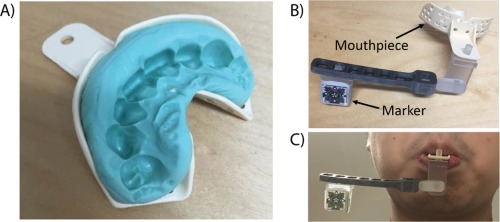
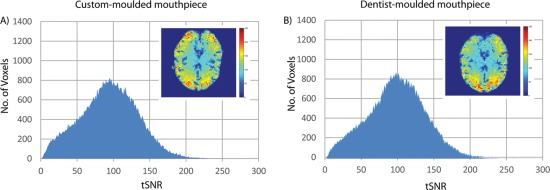
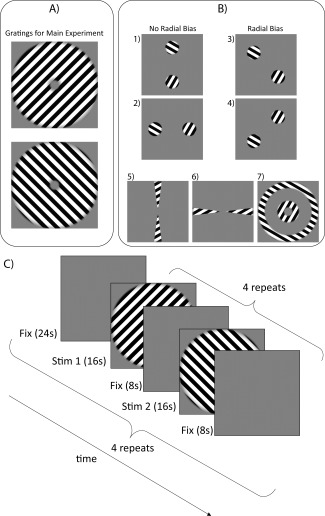
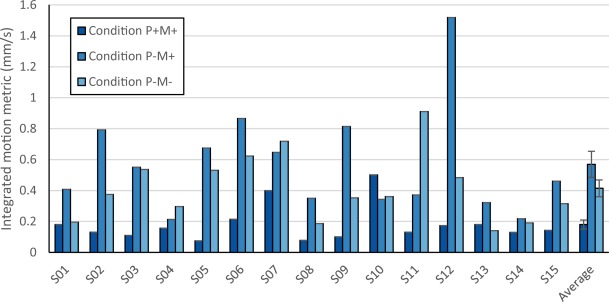
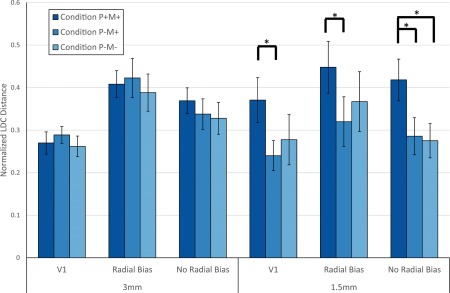
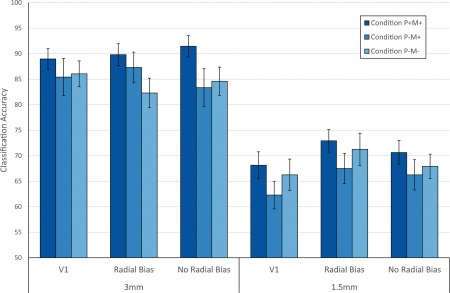
We evaluated the effectiveness of prospective motion correction (PMC) on a simple visual task when no deliberate subject motion was present. The PMC system utilizes an in-bore optical camera to track an external marker attached to the participant via a custom-molded mouthpiece. The study was conducted at two resolutions (1.5 mm vs 3 mm) and under three conditions (PMC On and Mouthpiece On vs PMC Off and Mouthpiece On vs PMC Off and Mouthpiece Off). Multiple data analysis methods were conducted, including univariate and multivariate approaches, and we demonstrated that the benefit of PMC is most apparent for multi-voxel pattern decoding at higher resolutions. Additional testing on two participants showed that our inexpensive, commercially available mouthpiece solution produced comparable results to a dentist-molded mouthpiece. Our results showed that PMC is increasingly important at higher resolutions for analyses that require accurate voxel registration across time.
我们评估了在没有故意运动的情况下,前瞻性运动校正(PMC)对简单视觉任务的有效性。PMC 系统利用腔内光学相机通过定制成型的口腔内固定器来跟踪附着在参与者身上的外部标记。该研究在两个分辨率(1.5mm 与 3mm)和三个条件(PMC 开启和口腔内固定器开启与 PMC 开启和口腔内固定器开启与 PMC 关闭和口腔内固定器关闭)下进行。我们采用了多种数据分析方法,包括单变量和多变量方法,并证明了在更高分辨率下,多体素模式解码时,PMC 的益处最为明显。对两名参与者的进一步测试表明,我们廉价的、商业可用的口腔内固定器解决方案与牙医成型的口腔内固定器产生了可比的结果。我们的结果表明,在需要在时间上进行精确体素配准的分析中,PMC 在更高分辨率下变得越来越重要。