Creative Arts Therapies, Drexel University College of Nursing and Health Professions, Philadelphia, Pennsylvania, USA.
National Intrepid Center of Excellence, Walter Reed National Military Medical Center, Bethesda, Maryland, USA.
BMJ Open. 2018 Jun 11;8(6):e021448. doi: 10.1136/bmjopen-2017-021448.
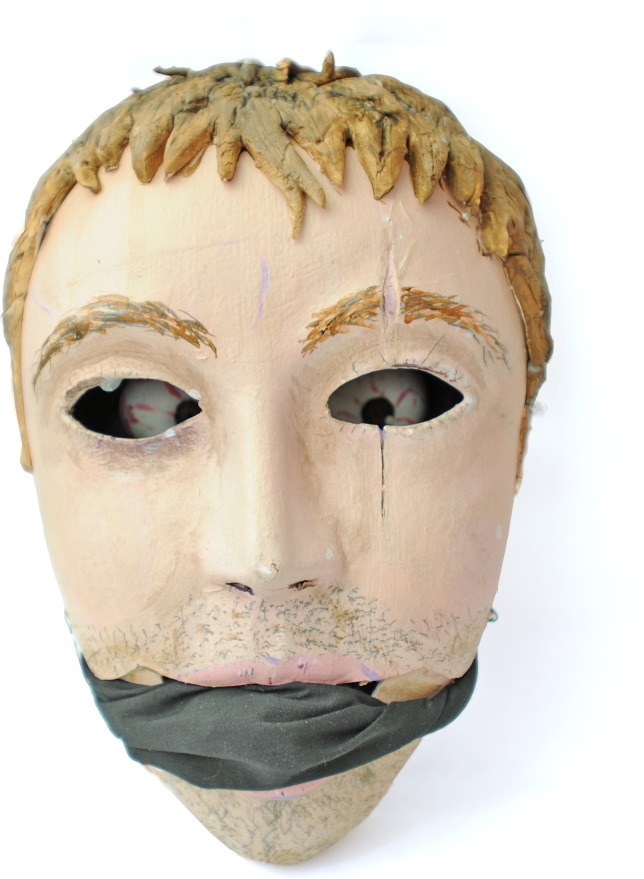
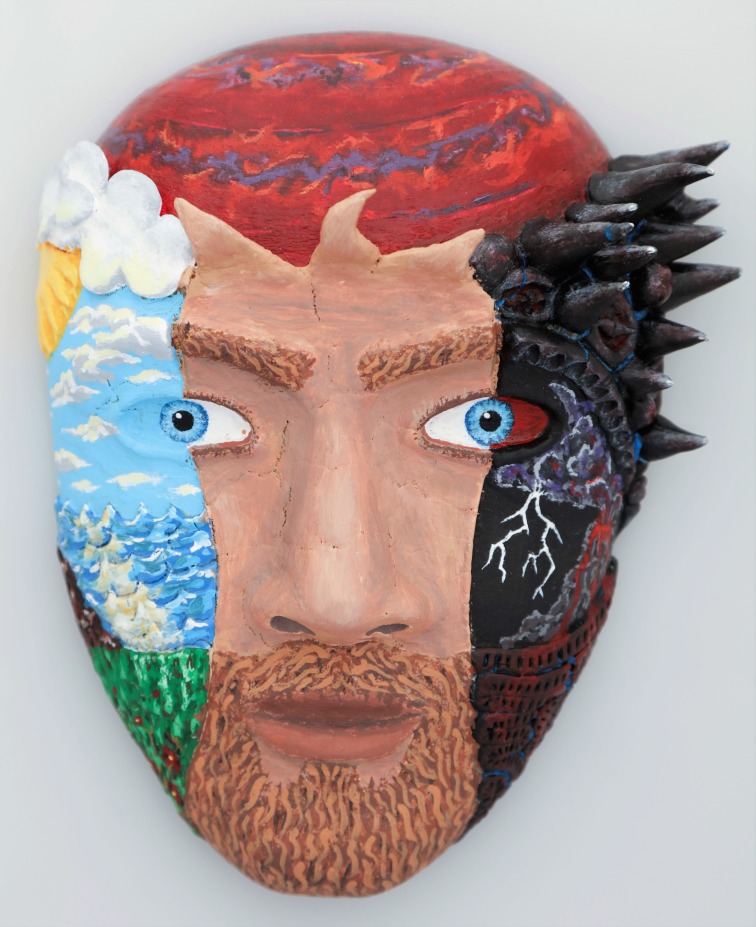
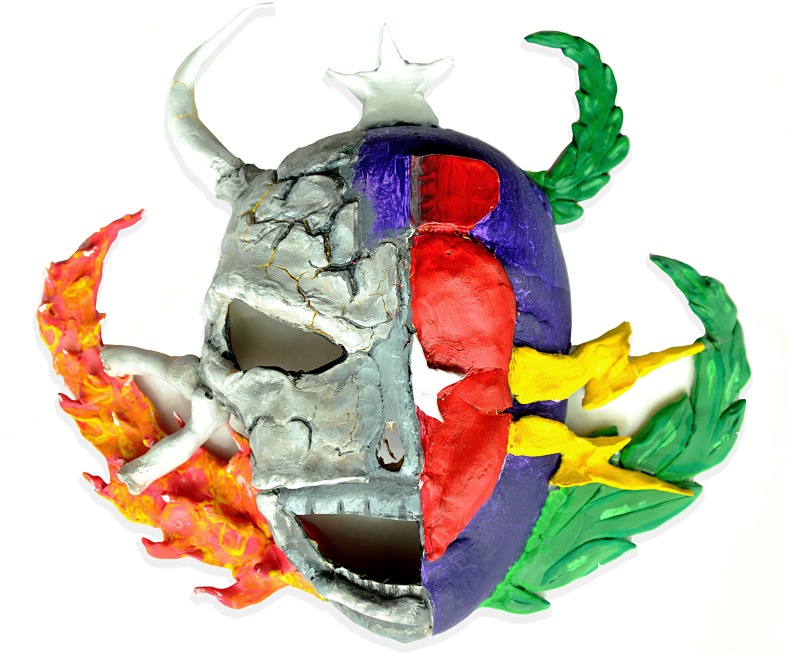
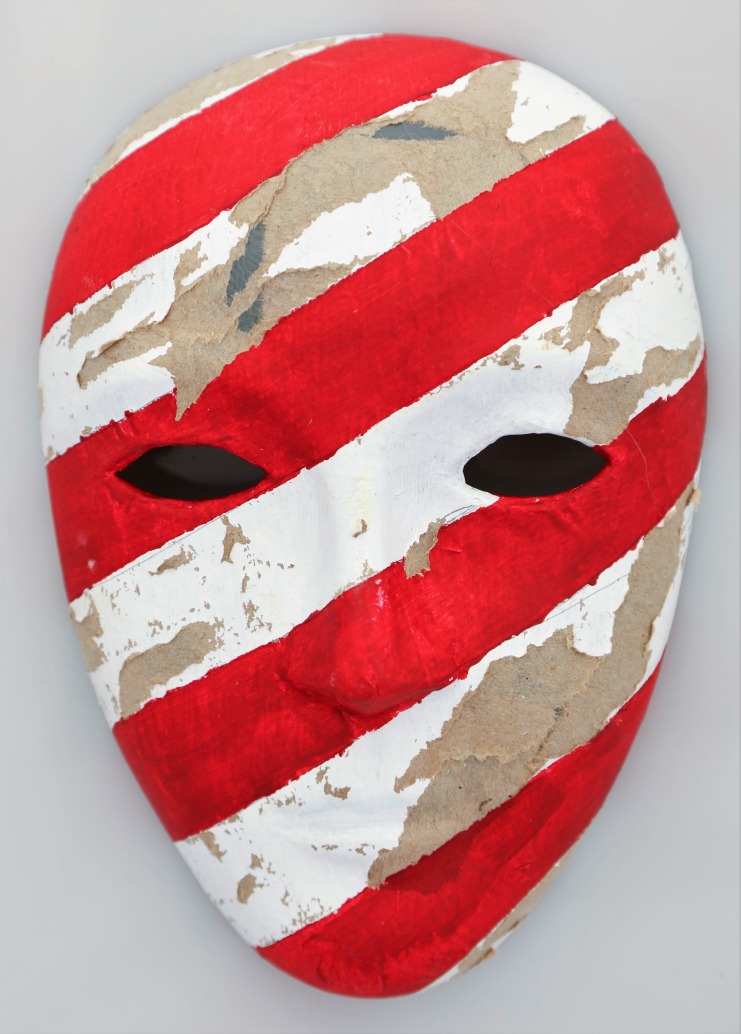
The study aimed tocompare recurring themes in the artistic expression of military service members (SMs) with post-traumatic stress disorder (PTSD), traumatic brain injury and psychological health (PH) conditions with measurable psychiatric diagnoses. Affective symptoms and struggles related to verbally expressing information can limit communication in individuals with symptoms of PTSD and deployment-related health conditions. Visual self-expression through art therapy is an alternative way for SMs with PTSD and other PH conditions to communicate their lived experiences. This study offers the first systematic examination of the associations between visual self-expression and standardised clinical self-report measures.
Observational study of correlations between clinical symptoms of post-traumatic stress, depression and anxiety and visual themes in mask imagery.
The National Intrepid Center of Excellence at the Walter Reed National Military Medical Center, Bethesda, Maryland, USA.
Active-duty military SMs (n=370) with a history of traumatic brain injury, post-traumatic stress symptoms and related PH conditions.
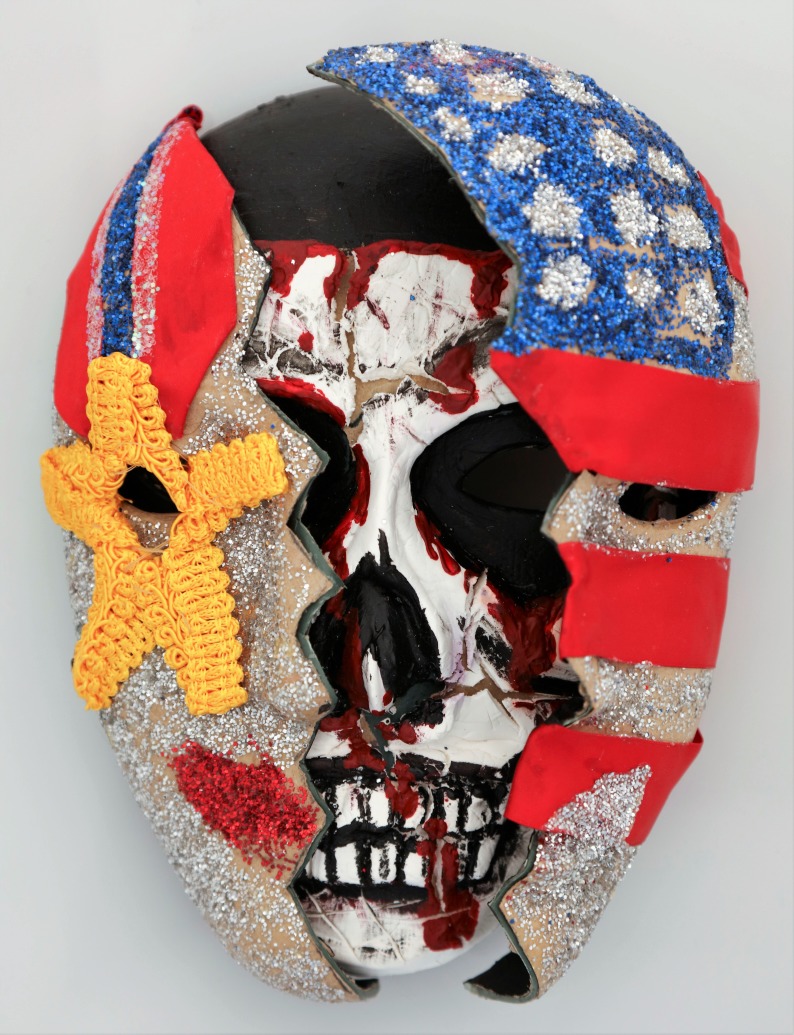
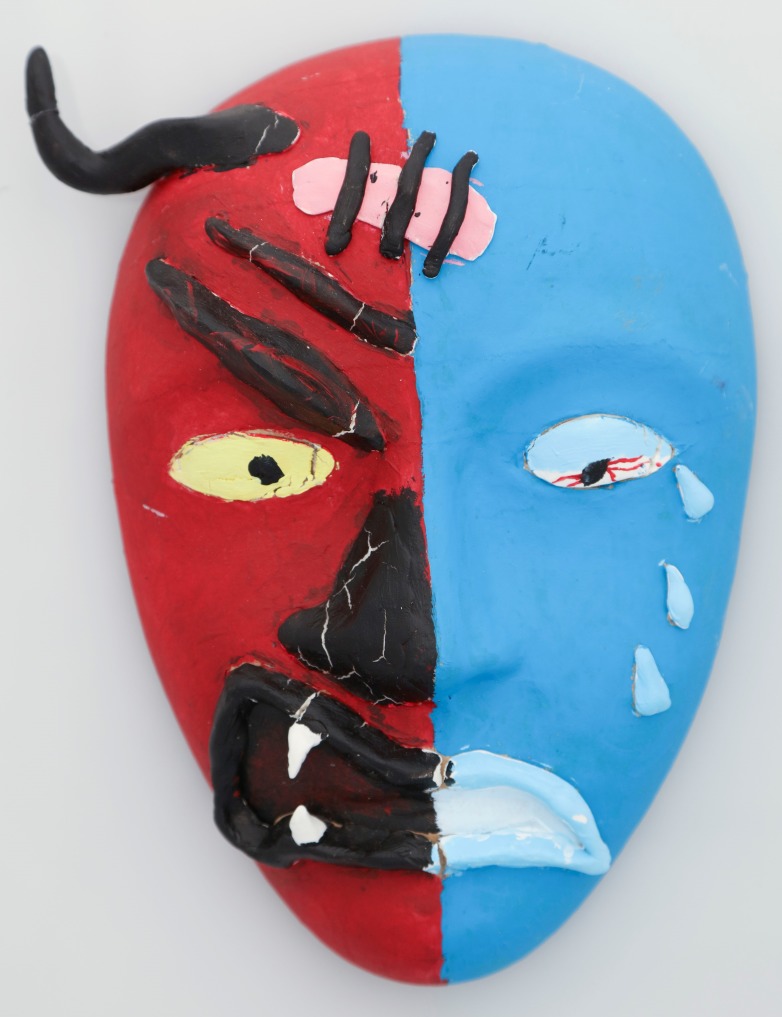
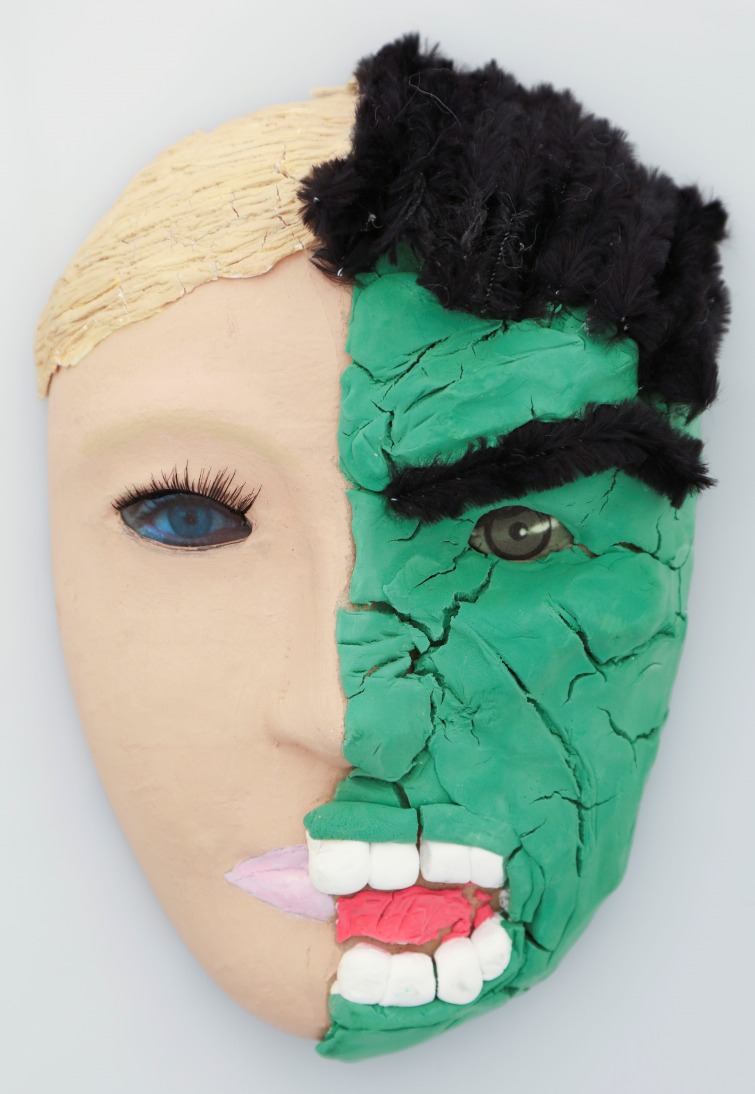
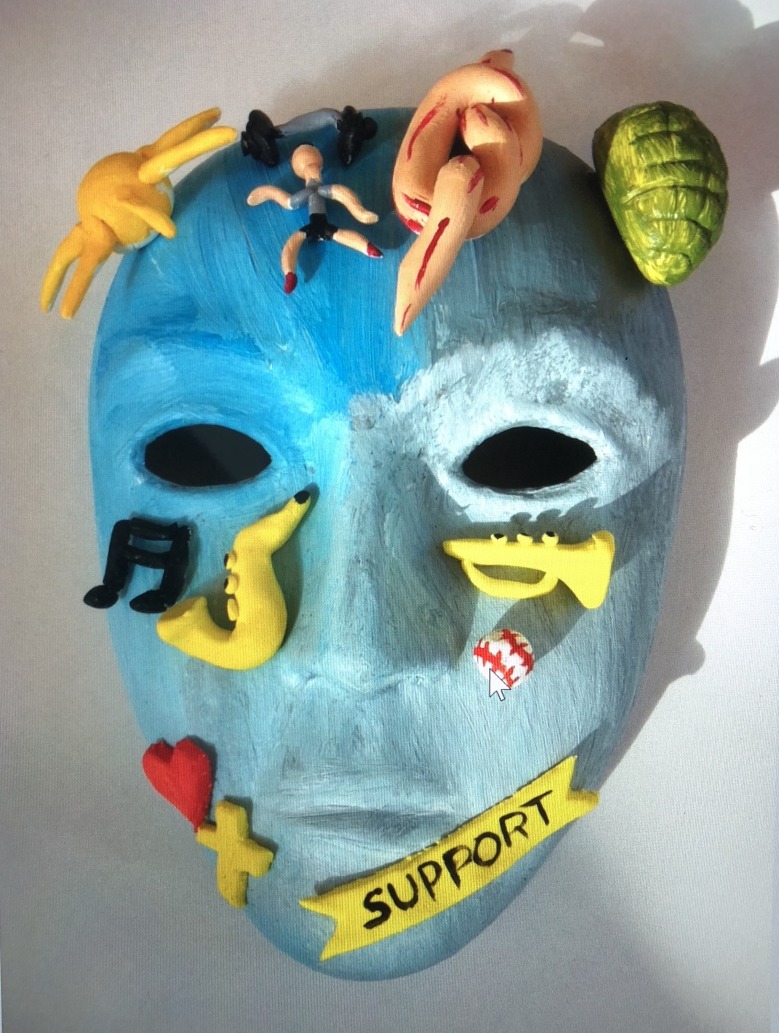
The masks used for analysis were created by the SMs during art therapy sessions in week 1 of a 4-week integrative treatment programme.
Associations between scores on the PTSD Checklist-Military, Patient Health Questionnaire-9 and Generalized Anxiety Disorder 7-item scale on visual themes in depictions of aspects of individual identity (psychological injury, military symbols, military identity and visual metaphors).
Visual and clinical data comparisons indicate that SMs who depicted psychological injury had higher scores for post-traumatic stress and depression. The depiction of military unit identity, nature metaphors, sociocultural metaphors, and cultural and historical characters was associated with lower post-traumatic stress, depression and anxiety scores. Colour-related symbolism and fragmented military symbols were associated with higher anxiety, depression and post-traumatic stress scores.
Emergent patterns of resilience and risk embedded in the use of images created by the participants could provide valuable information for patients, clinicians and caregivers.
本研究旨在比较患有创伤后应激障碍(PTSD)、创伤性脑损伤和心理健康(PH)等可测量精神科诊断的现役军人(SM)在艺术表达中反复出现的主题,与 PTSD、与部署相关的健康状况相关的情感症状和表达信息的斗争会限制有 PTSD 症状和与部署相关的健康状况的个体的沟通。通过艺术治疗进行视觉自我表达是 PTSD 和其他 PH 状况的 SM 进行沟通其生活经历的另一种方式。本研究首次系统地检查了视觉自我表达与标准临床自我报告测量之间的关联。
观察性研究,比较 PTSD 临床症状、抑郁和焦虑与面具意象中的视觉主题之间的相关性。
美国马里兰州贝塞斯达市沃尔特里德国家军事医疗中心国家坚韧卓越中心。
有创伤性脑损伤、创伤后应激症状和相关 PH 状况史的现役军人 SM(n=370)。
用于分析的面具是由 SM 在为期 4 周的综合治疗计划的第 1 周的艺术治疗课程中创作的。
个体身份各方面(心理创伤、军事符号、军事身份和视觉隐喻)描述中视觉主题与 PTSD 检查表-军事、患者健康问卷-9 和广泛性焦虑障碍 7 项量表得分之间的关联。
视觉和临床数据比较表明,描述心理创伤的 SM 患者 PTSD 和抑郁得分较高。描绘军事单位身份、自然隐喻、社会文化隐喻以及文化和历史人物与 PTSD、抑郁和焦虑得分较低相关。与颜色相关的象征主义和碎片化的军事符号与较高的焦虑、抑郁和 PTSD 得分相关。
参与者创作的图像中嵌入的弹性和风险的新兴模式可以为患者、临床医生和护理人员提供有价值的信息。