Gols Rieta, van Dam Nicole M, Reichelt Michael, Gershenzon Jonathan, Raaijmakers Ciska E, Bullock James M, Harvey Jeffrey A
1Laboratory of Entomology, Wageningen University & Research, PO Box 16, 6700 AA Wageningen, The Netherlands.
2German Centre for Integrative Biodiversity Research, Leipzig, Germany.
Chemoecology. 2018;28(3):77-89. doi: 10.1007/s00049-018-0258-4. Epub 2018 May 10.
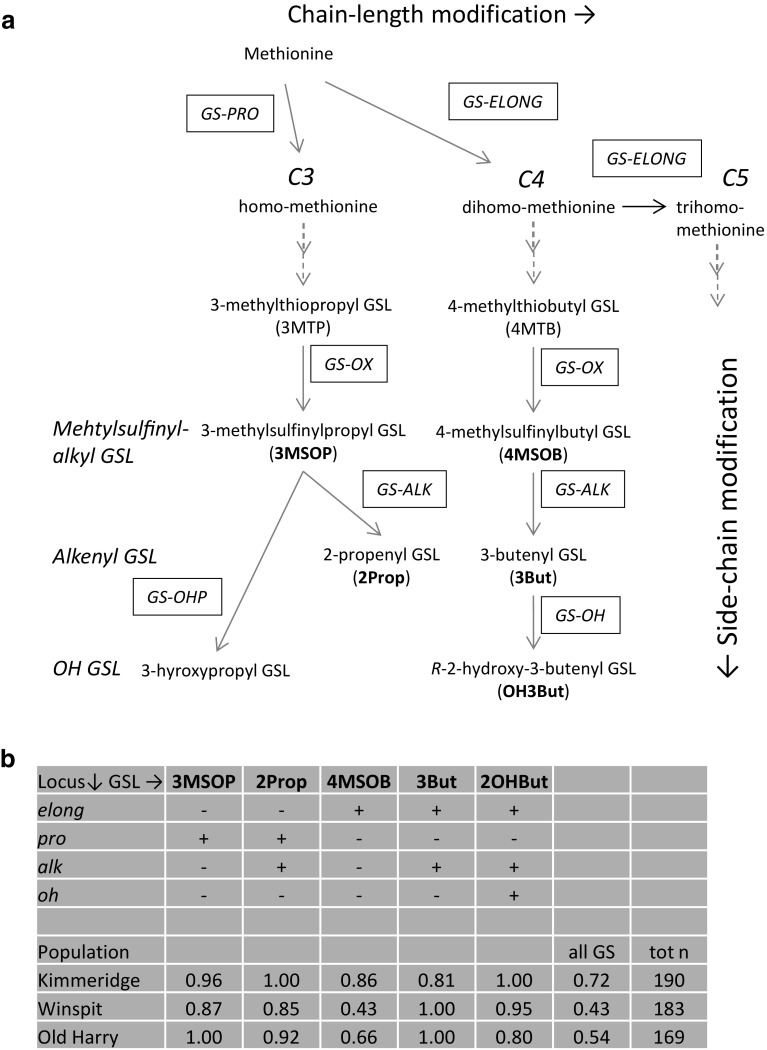
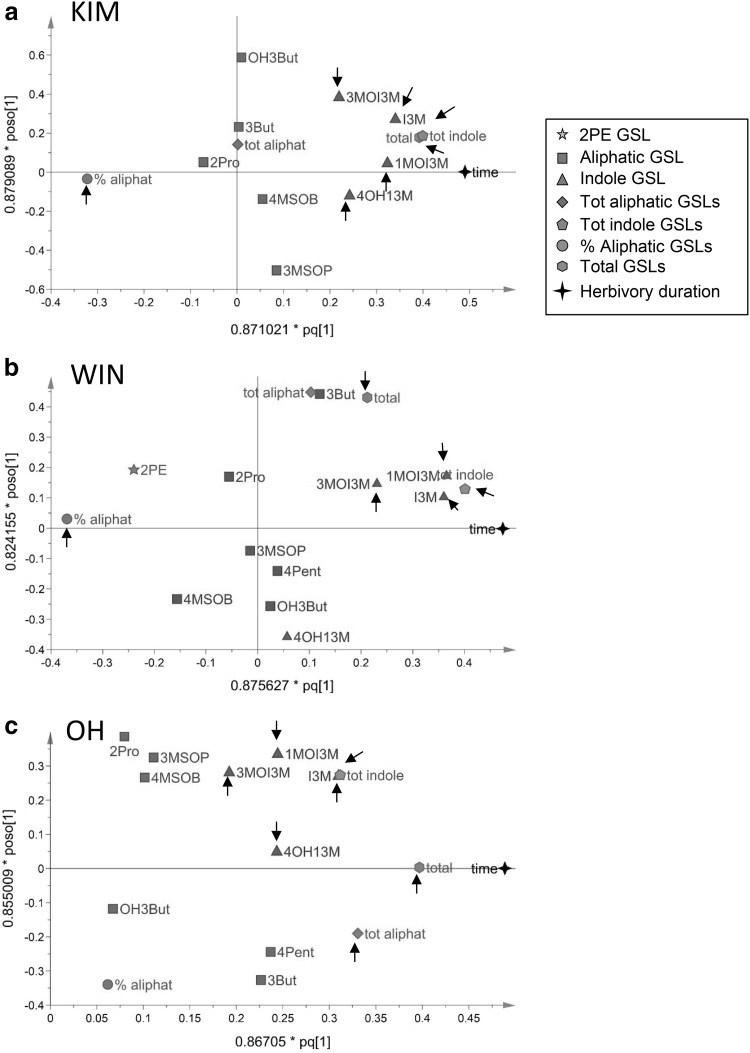
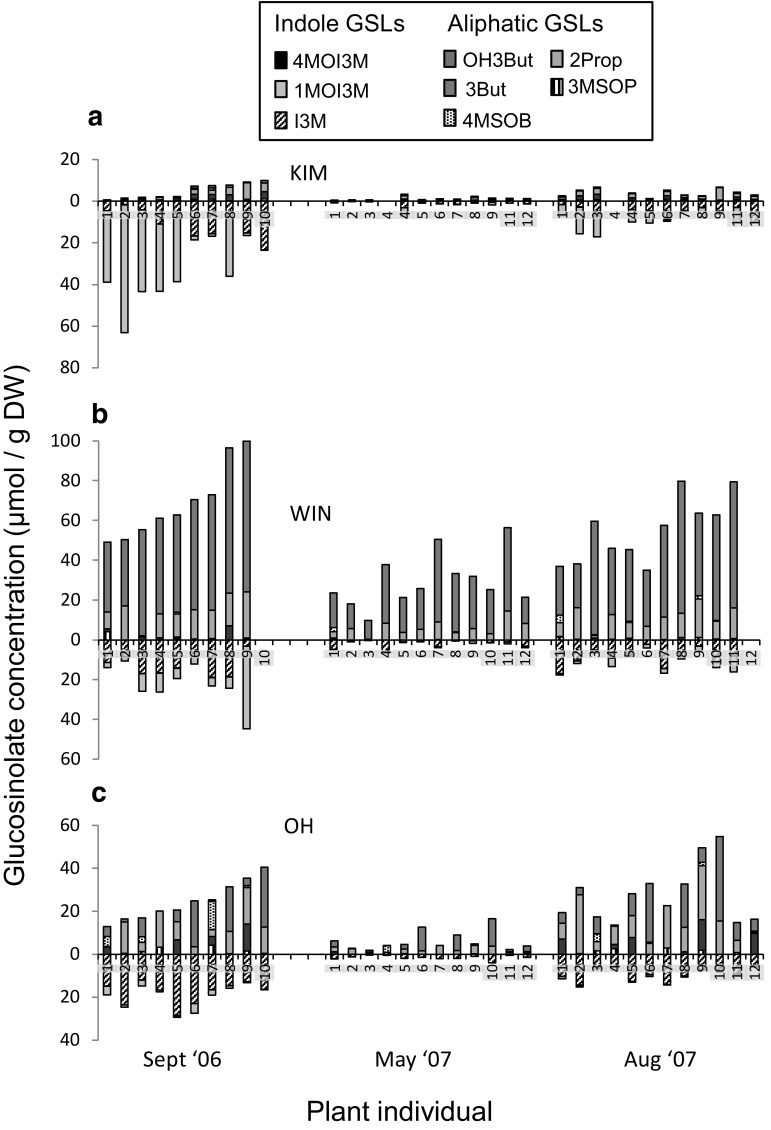
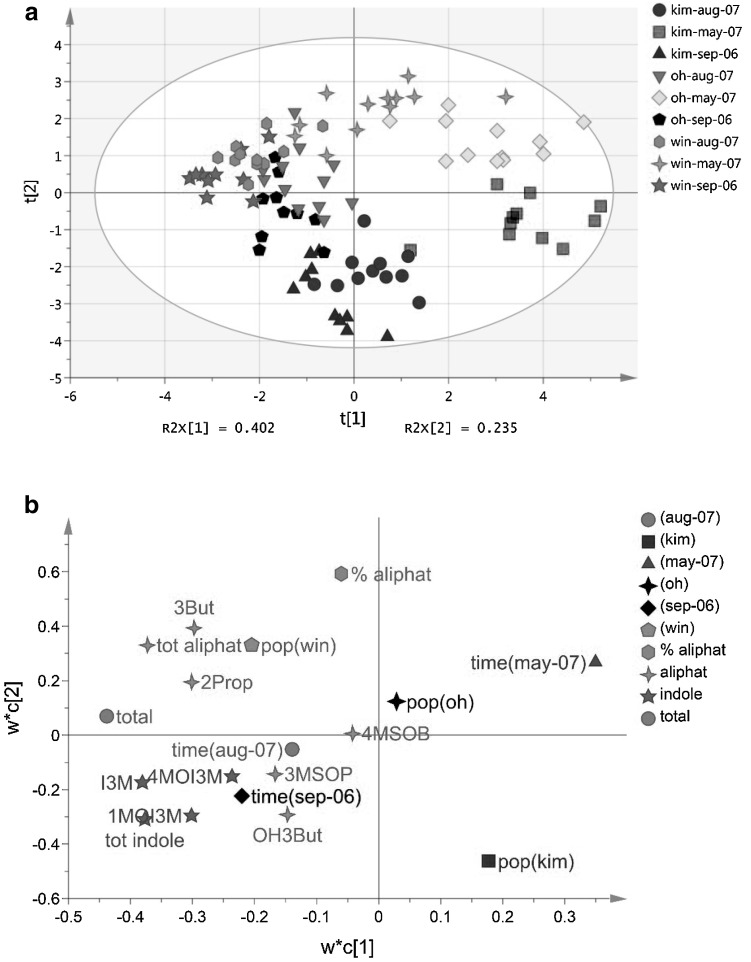
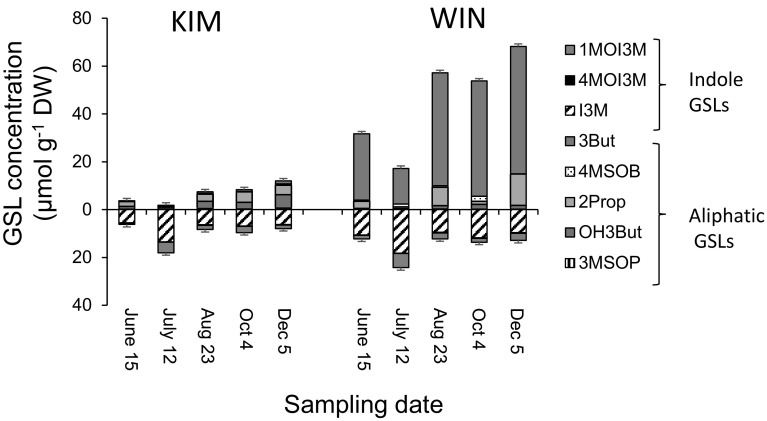
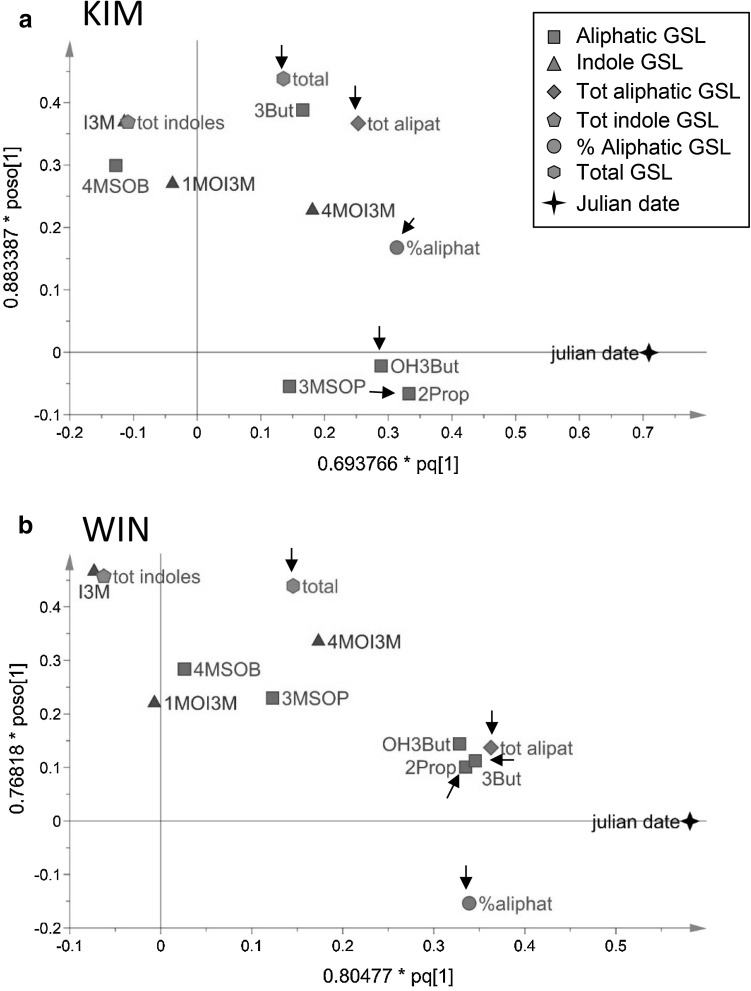
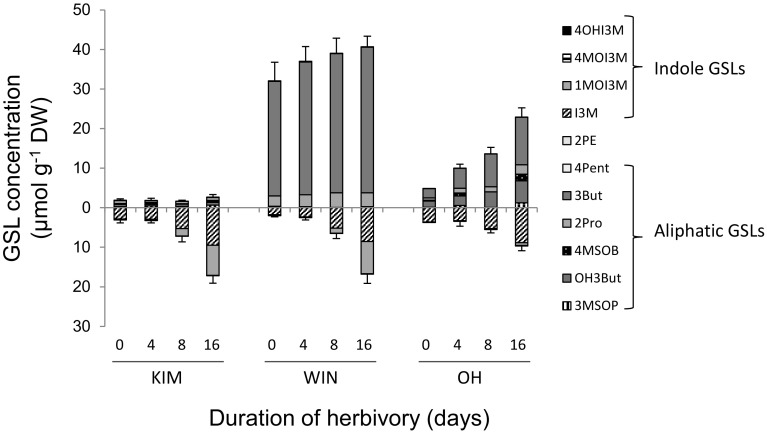
Levels of plant secondary metabolites are not static and often change in relation to plant ontogeny. They also respond to abiotic and biotic changes in the environment, e.g., they often increase in response to biotic stress, such as herbivory. In contrast with short-lived annual plant species, especially those with growing periods of less than 2-3 months, investment in defensive compounds of vegetative tissues in biennial and perennial species may also vary over the course of an entire growing season. In garden experiments, we investigated the dynamics of secondary metabolites, i.e. glucosinolates (GSLs) in the perennial wild cabbage (), which was grown from seeds originating from three populations that differ in GSL chemistry. We compared temporal long-term dynamics of GSLs over the course of two growing seasons and short-term dynamics in response to herbivory by caterpillars in a more controlled greenhouse experiment. Long-term dynamics differed for aliphatic GSLs (gradual increase from May to December) and indole GSLs (rapid increase until mid-summer after which concentrations decreased or stabilized). In spring, GSL levels in new shoots were similar to those found in the previous year. Short-term dynamics in response to herbivory primarily affected indole GSLs, which increased during the 2-week feeding period by . Herbivore-induced changes in the concentrations of aliphatic GSLs were population-specific and their concentrations were found to increase in primarily one population only. We discuss our results considering the biology and ecology of wild cabbage.
植物次生代谢产物的水平并非一成不变,而是常常随植物个体发育而变化。它们还会对环境中的非生物和生物变化做出反应,例如,它们通常会因生物胁迫(如食草作用)而增加。与一年生短命植物物种不同,尤其是那些生长周期少于2至3个月的物种,二年生和多年生植物物种中营养组织防御化合物的投入在整个生长季节中也可能有所不同。在花园实验中,我们研究了多年生野生甘蓝中次生代谢产物(即芥子油苷)的动态变化,该野生甘蓝由来自芥子油苷化学组成不同的三个种群的种子培育而成。我们比较了两个生长季节中芥子油苷的长期动态变化,以及在更可控的温室实验中毛虫取食导致的芥子油苷短期动态变化。脂肪族芥子油苷的长期动态变化(从5月到12月逐渐增加)和吲哚族芥子油苷的长期动态变化(直到仲夏迅速增加,之后浓度下降或稳定)有所不同。在春季,新梢中的芥子油苷水平与前一年的水平相似。对食草作用的短期动态反应主要影响吲哚族芥子油苷,其在2周的取食期内增加了 。食草动物诱导的脂肪族芥子油苷浓度变化具有种群特异性,仅在一个种群中发现其浓度增加。我们结合野生甘蓝的生物学和生态学来讨论我们的结果。