Blackwell Leonard F, Cooke Delwyn G, Brown Simon
Institute of Fundamental Sciences, Massey University, Palmerston North, New Zealand.
Science Haven Limited, Palmerston North, New Zealand.
Front Public Health. 2018 May 31;6:153. doi: 10.3389/fpubh.2018.00153. eCollection 2018.
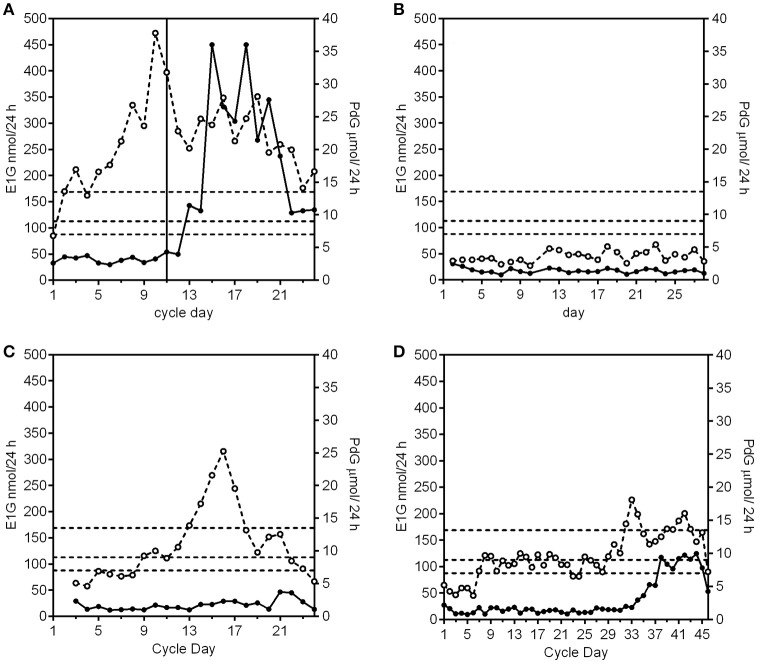
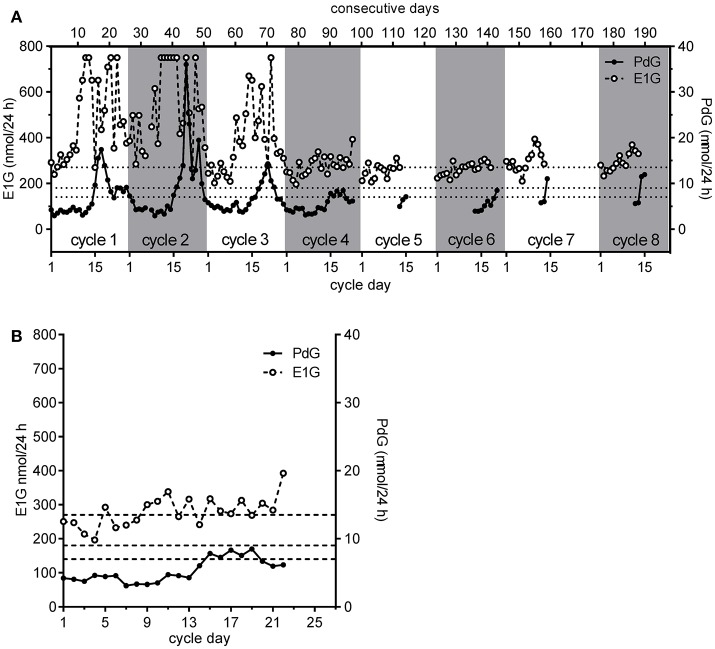
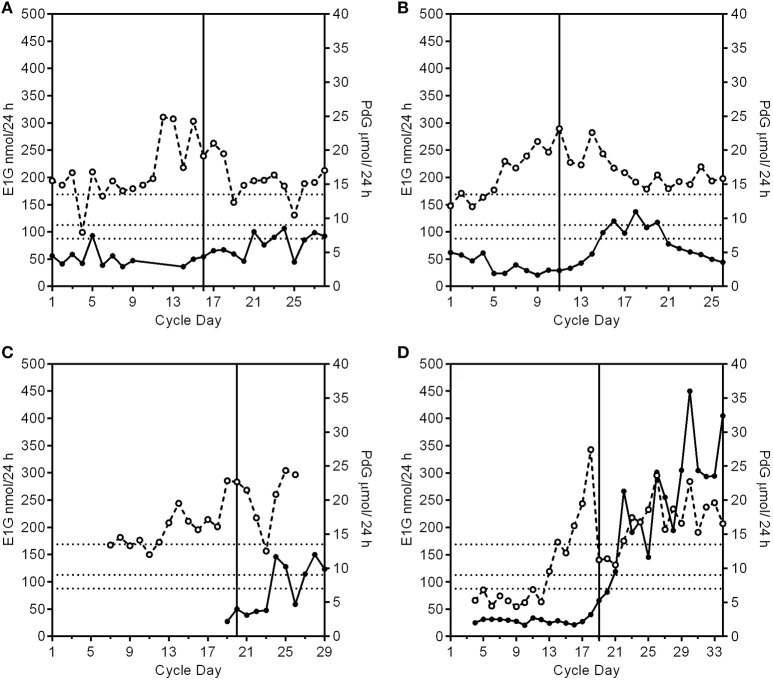
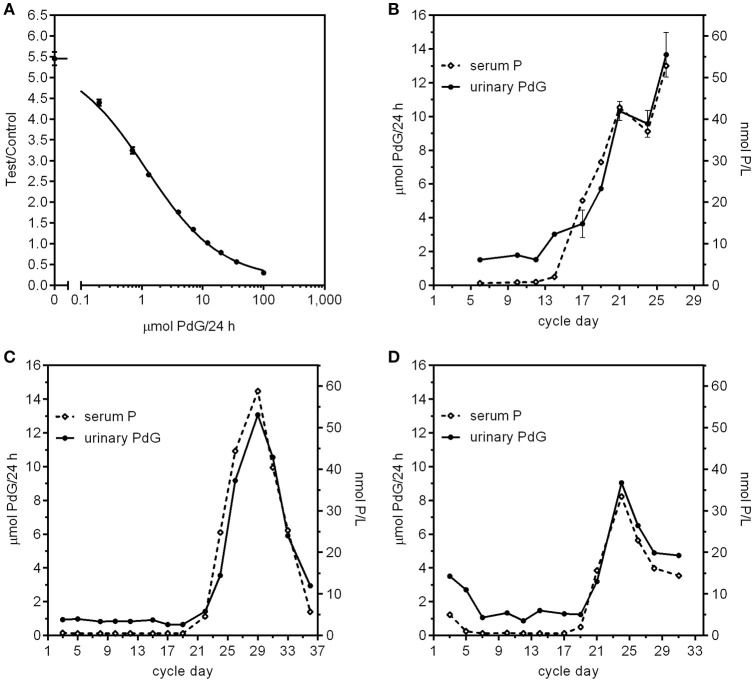
The patterns of a woman's normal ovarian activity can take many forms from childhood to menopause. These patterns lie on a continuum ranging from no ovarian activity to a fully fertile ovulatory cycle, but among the other defined patterns are cycles with anovulatory ovarian activity, including luteinized unruptured follicles (LUFs), and ovulatory cycles with deficient or short luteal phases. For any woman, these patterns can occur in any order, and one can merge into the next, without an intervening bleed, or be missed entirely. Consequently, it is not yet possible to predict the pattern of a future cycle, but it is possible to use our knowledge of the continuum to interpret the current cycle, which has clear implications for the management of personal fertility. An individual's position in the continuum can be monitored directly in real time by daily monitoring of ovarian hormone excretion rates, without either calendar-type calculations or reference to population means and standard deviations. The excretion of urinary estrone glucuronide (E1G) gives a direct measure of follicular growth, and the post-ovulatory rise in urinary pregnanediol glucuronide (PdG) following an E1G peak provides good evidence of ovulation. Specific values of the PdG excretion rate can be used to determine whether a cycle is anovulatory with or without a LUF, or is ovulatory and infertile or ovulatory and fertile. These specific values are important signposts for navigating the continuum. For a woman to take advantage of the knowledge of the continuum, the data must be reliable, and their interpretation has to be based on the underlying science and provided in an appropriate form. We discuss the various factors involved in acquiring and providing such information to enable each woman to navigate her own reproductive life.
从童年到更年期,女性正常卵巢活动的模式有多种形式。这些模式处于一个连续统一体中,范围从无卵巢活动到完全可生育的排卵周期,但在其他已定义的模式中,有无排卵性卵巢活动的周期,包括黄素化未破裂卵泡(LUFs),以及黄体期不足或短暂的排卵周期。对于任何女性来说,这些模式可以以任何顺序出现,一种模式可以无缝过渡到下一种模式,中间没有出血间隔,或者完全被遗漏。因此,目前还无法预测未来周期的模式,但利用我们对这个连续统一体的了解来解读当前周期是可行的,这对个人生育管理具有明确的意义。通过每日监测卵巢激素排泄率,可以直接实时监测个体在这个连续统一体中的位置,无需进行日历式计算,也无需参考总体均值和标准差。尿雌酮葡萄糖醛酸苷(E1G)的排泄直接反映卵泡生长情况,E1G峰值后尿孕二醇葡萄糖醛酸苷(PdG)的排卵后升高是排卵的良好证据。PdG排泄率的特定值可用于确定一个周期是有无LUF的无排卵周期,还是排卵但不育或排卵且可育的周期。这些特定值是在这个连续统一体中导航的重要路标。为了让女性能够利用对这个连续统一体的了解,数据必须可靠,其解读必须基于基础科学,并以适当的形式提供。我们讨论了获取和提供此类信息所涉及的各种因素,以使每位女性能够掌控自己的生殖生活。