Graduate School of Informatics and Engineering, The University of Electro-Communications, Tokyo, Japan.
Japan Society for the Promotion of Science, Tokyo, Japan.
PLoS One. 2018 Jun 18;13(6):e0198806. doi: 10.1371/journal.pone.0198806. eCollection 2018.
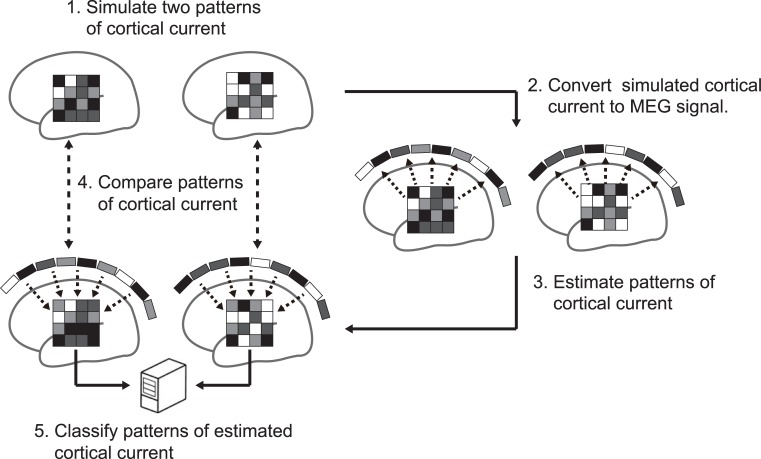
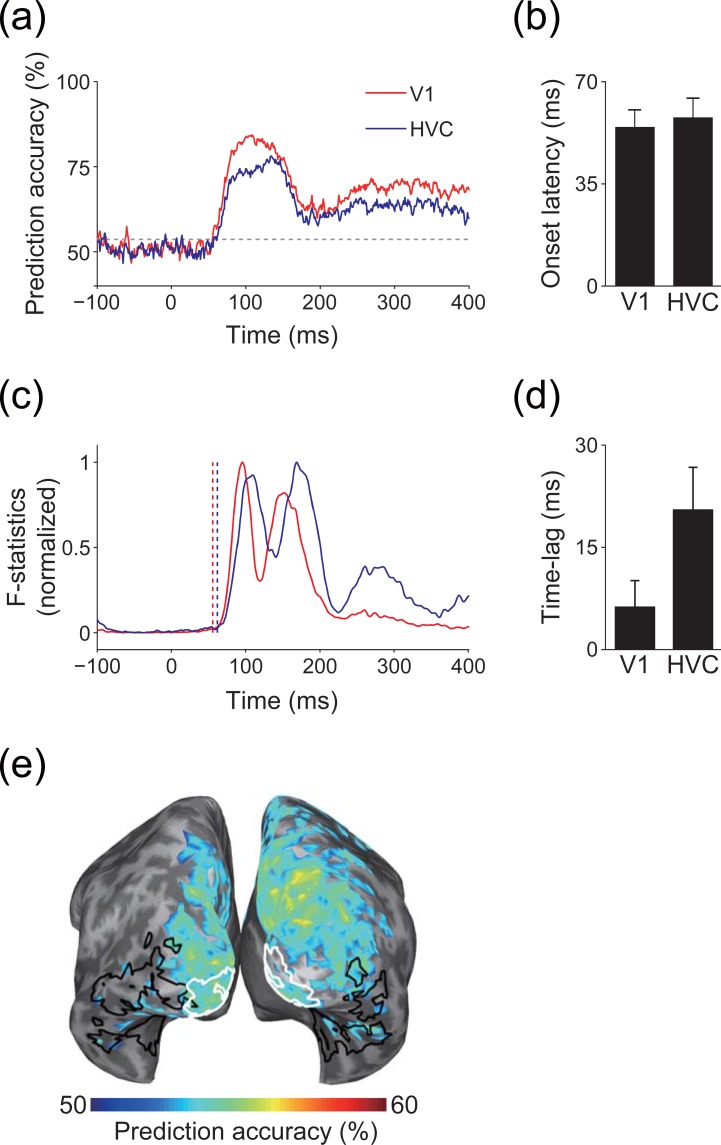
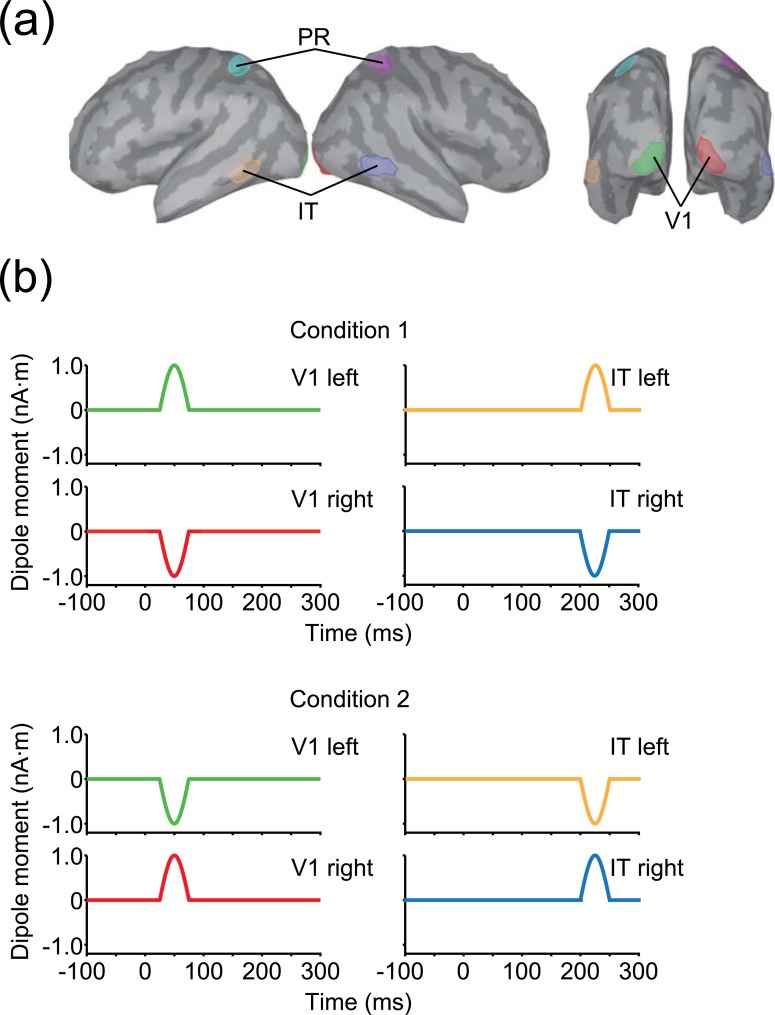
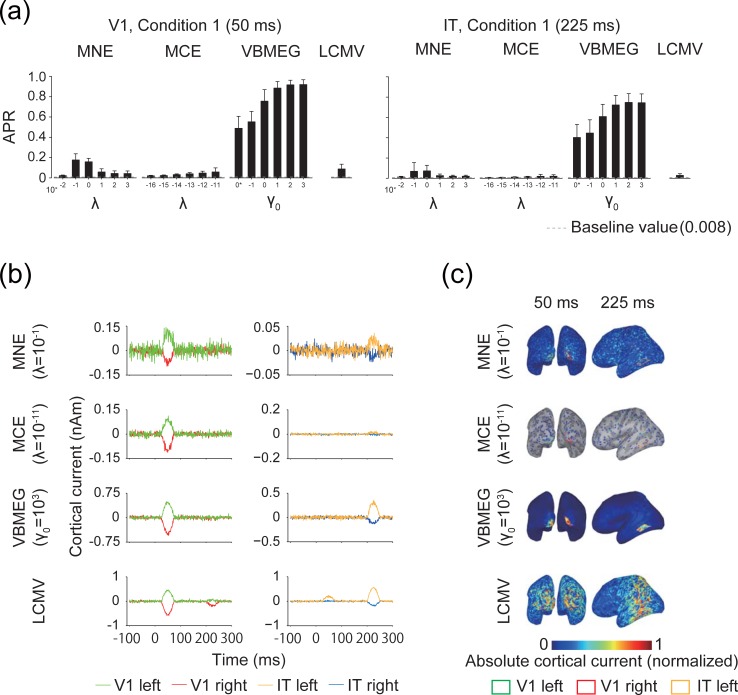
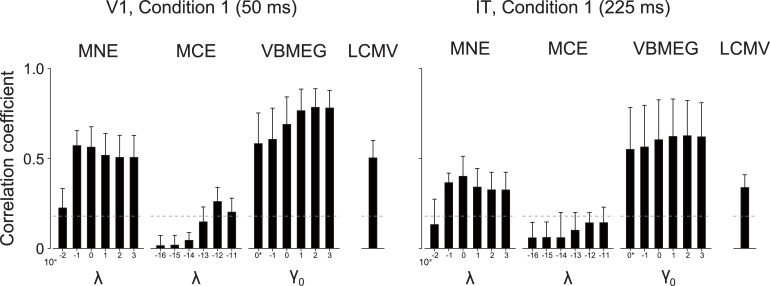
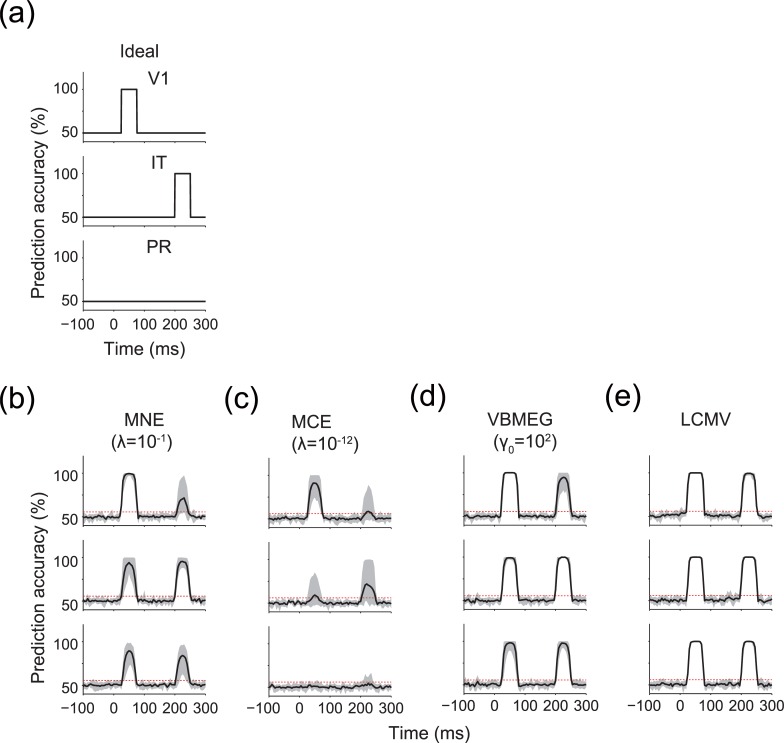
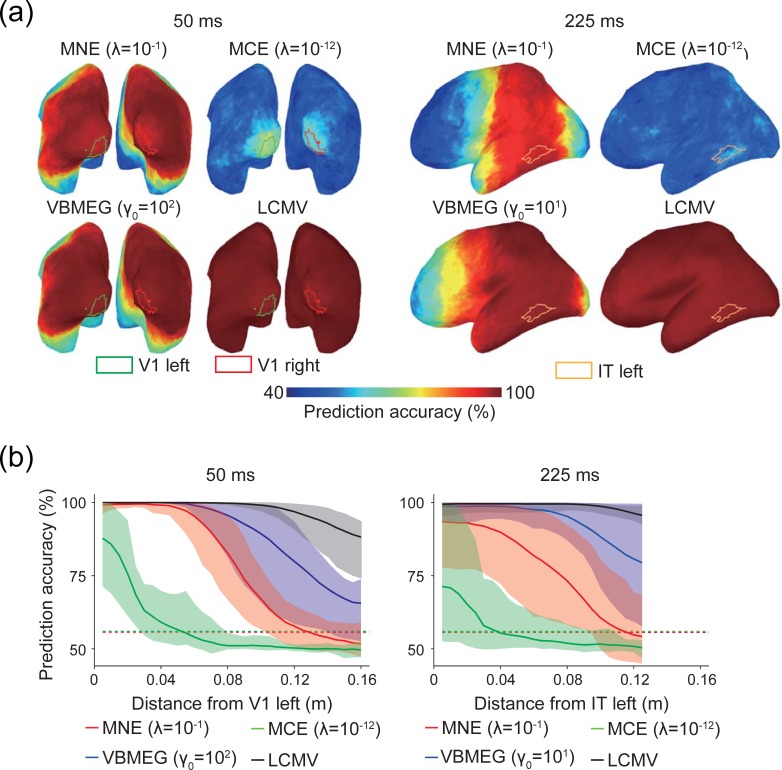
To understand information representation in human brain activity, it is important to investigate its fine spatial patterns at high temporal resolution. One possible approach is to use source estimation of magnetoencephalography (MEG) signals. Previous studies have mainly quantified accuracy of this technique according to positional deviations and dispersion of estimated sources, but it remains unclear how accurately MEG source estimation restores information content represented by spatial patterns of brain activity. In this study, using simulated MEG signals representing artificial experimental conditions, we performed MEG source estimation and multivariate pattern analysis to examine whether MEG source estimation can restore information content represented by patterns of cortical current in source brain areas. Classification analysis revealed that the corresponding artificial experimental conditions were predicted accurately from patterns of cortical current estimated in the source brain areas. However, accurate predictions were also possible from brain areas whose original sources were not defined. Searchlight decoding further revealed that this unexpected prediction was possible across wide brain areas beyond the original source locations, indicating that information contained in the original sources can spread through MEG source estimation. This phenomenon of "information spreading" may easily lead to false-positive interpretations when MEG source estimation and classification analysis are combined to identify brain areas that represent target information. Real MEG data analyses also showed that presented stimuli were able to be predicted in the higher visual cortex at the same latency as in the primary visual cortex, also suggesting that information spreading took place. These results indicate that careful inspection is necessary to avoid false-positive interpretations when MEG source estimation and multivariate pattern analysis are combined.
为了理解人类大脑活动中的信息表示,研究其在高时间分辨率下的精细空间模式非常重要。一种可能的方法是使用脑磁图(MEG)信号的源估计。以前的研究主要根据位置偏差和估计源的分散度来量化该技术的准确性,但尚不清楚 MEG 源估计如何准确地恢复由大脑活动空间模式表示的信息内容。在这项研究中,我们使用代表人工实验条件的模拟 MEG 信号进行了 MEG 源估计和多元模式分析,以检查 MEG 源估计是否可以恢复源脑区中大脑活动模式所表示的信息内容。分类分析表明,可以从源脑区中估计的皮质电流模式准确地预测出对应的人工实验条件。然而,从原始源未定义的脑区也可以进行准确的预测。搜索点解码进一步表明,这种出乎意料的预测可以在原始源位置之外的广泛脑区中进行,表明原始源中包含的信息可以通过 MEG 源估计传播。当将 MEG 源估计和分类分析结合起来识别代表目标信息的脑区时,这种“信息传播”现象可能会轻易导致假阳性解释。对真实 MEG 数据的分析还表明,在相同的潜伏期内,在更高的视觉皮层中可以预测呈现的刺激,这也表明信息传播发生了。这些结果表明,当将 MEG 源估计和多元模式分析结合起来时,需要进行仔细检查,以避免假阳性解释。