EMBL Heidelberg, Meyerhofstrasse 1, 69117, Heidelberg, Germany.
Nat Commun. 2018 Jun 18;9(1):2366. doi: 10.1038/s41467-018-04754-z.
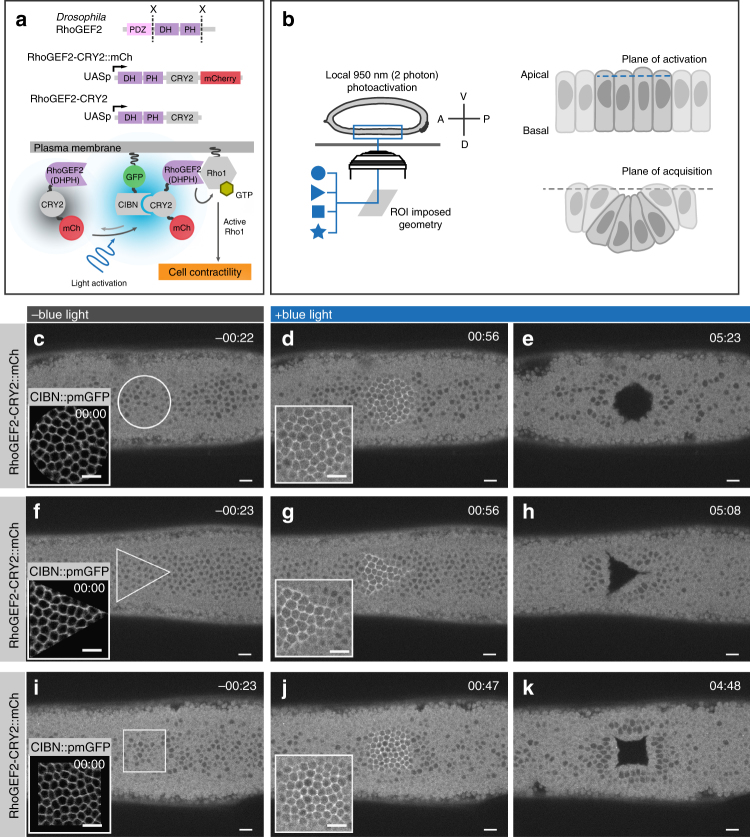
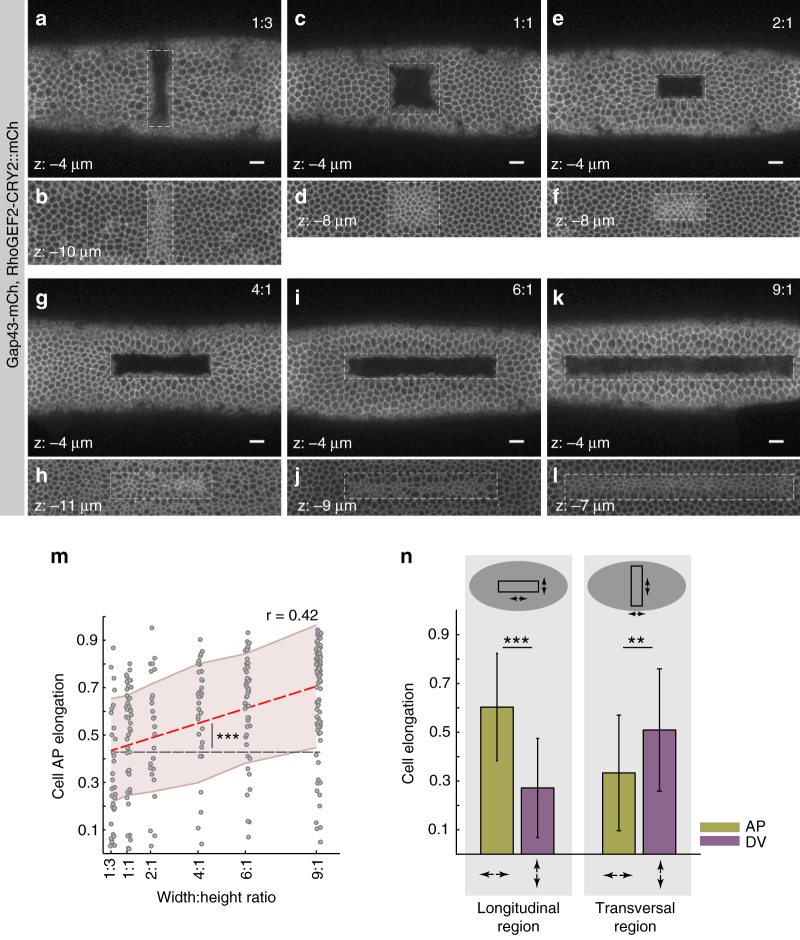
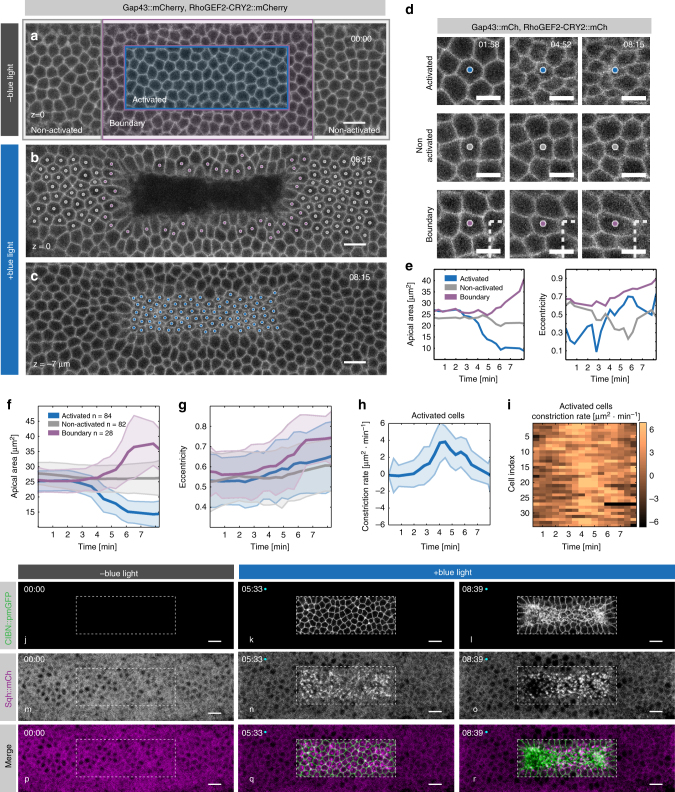
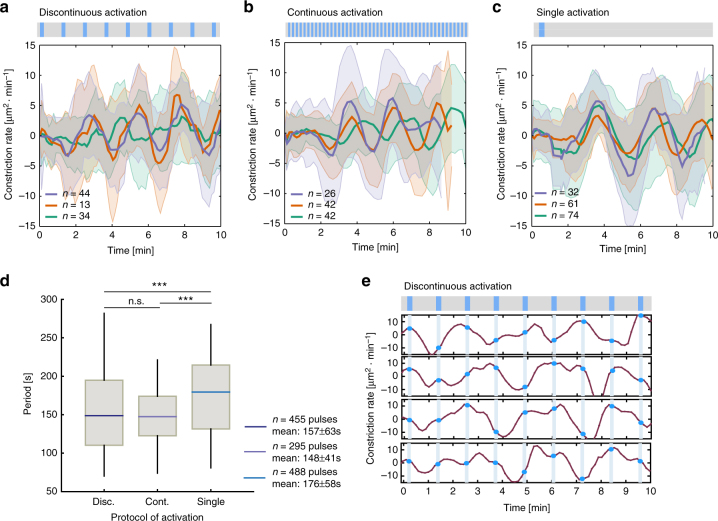
During organismal development, cells undergo complex changes in shape whose causal relationship to individual morphogenetic processes remains unclear. The modular nature of such processes suggests that it should be possible to isolate individual modules, determine the minimum set of requirements sufficient to drive tissue remodeling, and re-construct morphogenesis. Here we use optogenetics to reconstitute epithelial folding in embryonic Drosophila tissues that otherwise would not undergo invagination. We show that precise spatial and temporal activation of Rho signaling is sufficient to trigger apical constriction and tissue folding. Induced furrows can occur at any position along the dorsal-ventral or anterior-posterior embryo axis in response to the spatial pattern and level of optogenetic activation. Thus, epithelial folding is a direct function of the spatio-temporal organization and strength of Rho signaling that on its own is sufficient to drive tissue internalization independently of any pre-determined condition or differentiation program associated with endogenous invagination processes.
在生物发育过程中,细胞的形状会发生复杂的变化,但细胞形状变化与个体形态发生过程之间的因果关系尚不清楚。这些过程具有模块性,这表明应该有可能分离出单个模块,确定足以驱动组织重塑的最小要求集,并重新构建形态发生。在这里,我们使用光遗传学使胚胎果蝇组织中的上皮折叠重新形成,而这些组织在没有诱导的情况下不会发生内陷。我们表明,精确的空间和时间激活 Rho 信号足以引发顶端收缩和组织折叠。诱导的褶皱可以在沿背腹或前后胚胎轴的任何位置发生,这取决于光遗传学激活的空间模式和水平。因此,上皮折叠是 Rho 信号时空组织和强度的直接功能,它本身足以独立于任何与内陷过程相关的预先确定的条件或分化程序来驱动组织内化。