The Medical Research Council Mitochondrial Biology Unit, University of Cambridge, Cambridge, UK.
School of Biomedical Sciences, Faculty of Biological Sciences and Astbury Centre for Structural and Molecular Biology, University of Leeds, Leeds, UK.
Nat Struct Mol Biol. 2018 Jul;25(7):548-556. doi: 10.1038/s41594-018-0073-1. Epub 2018 Jun 18.
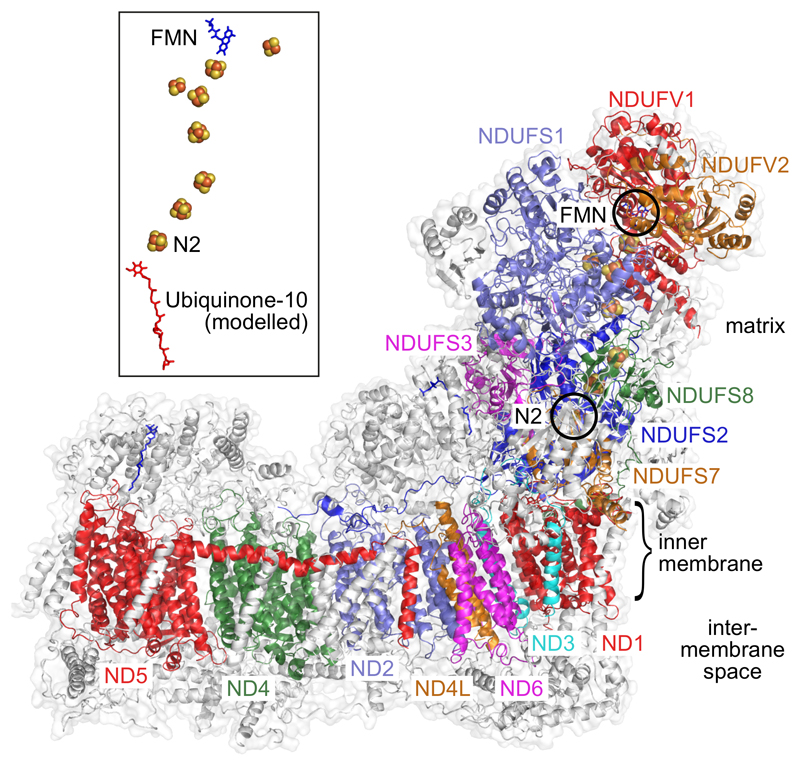
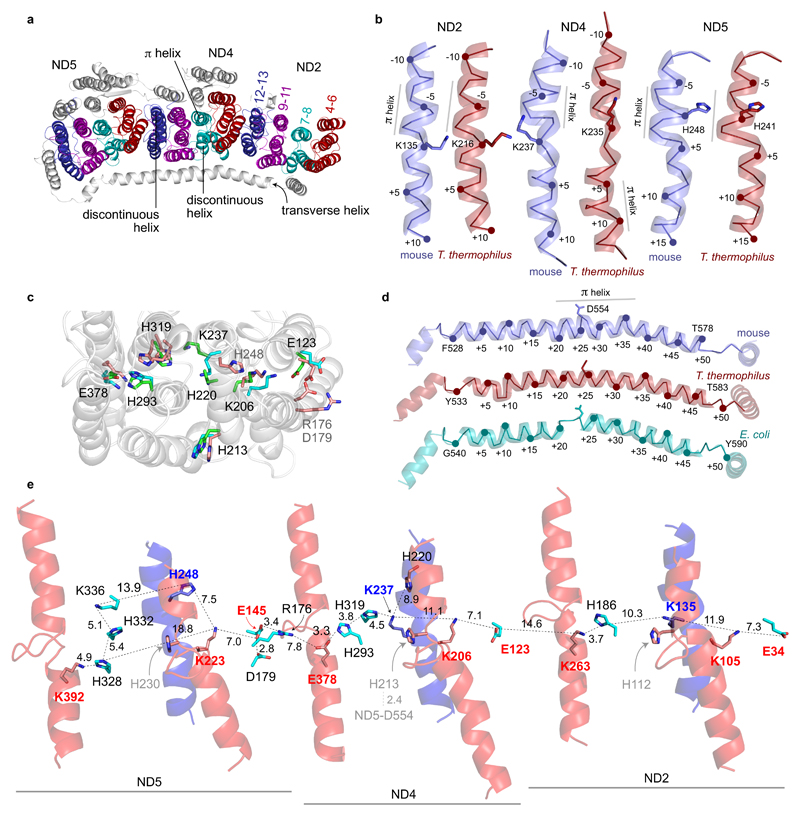
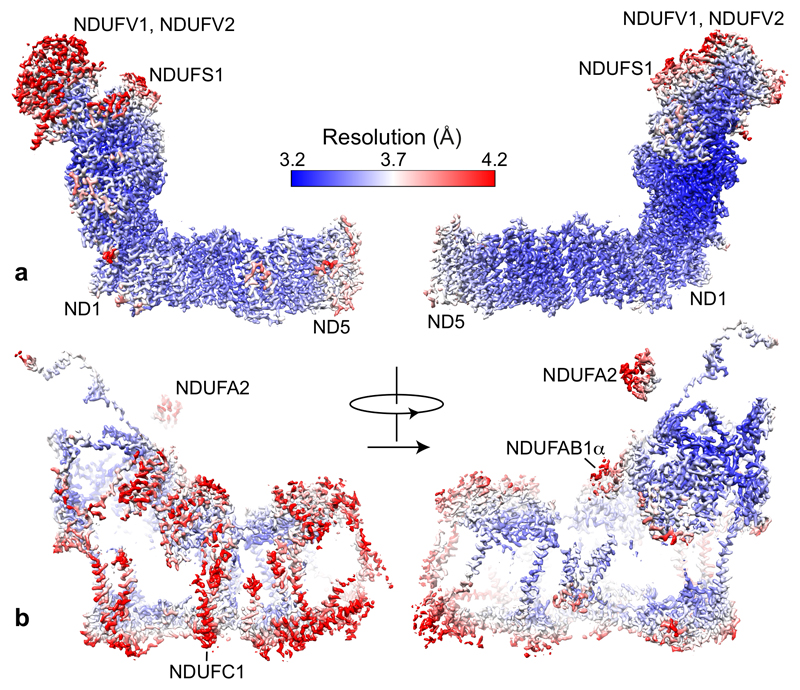
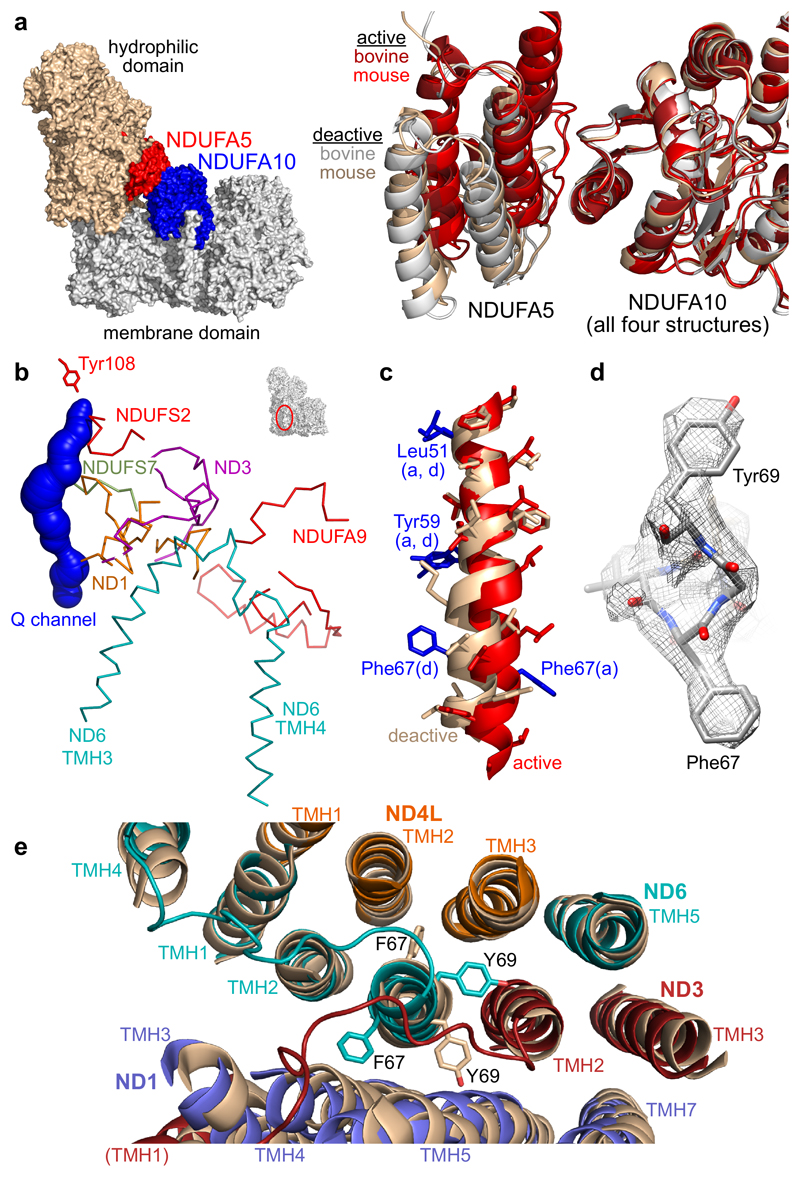
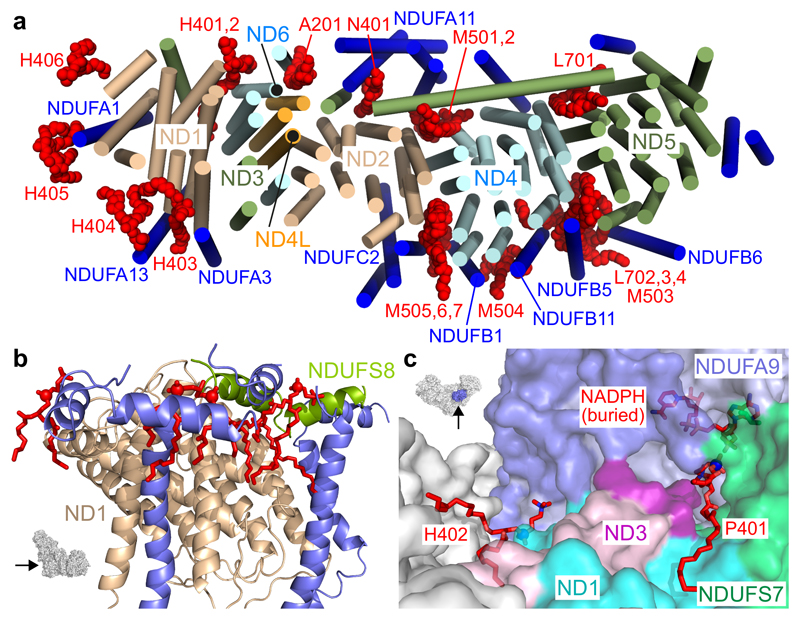
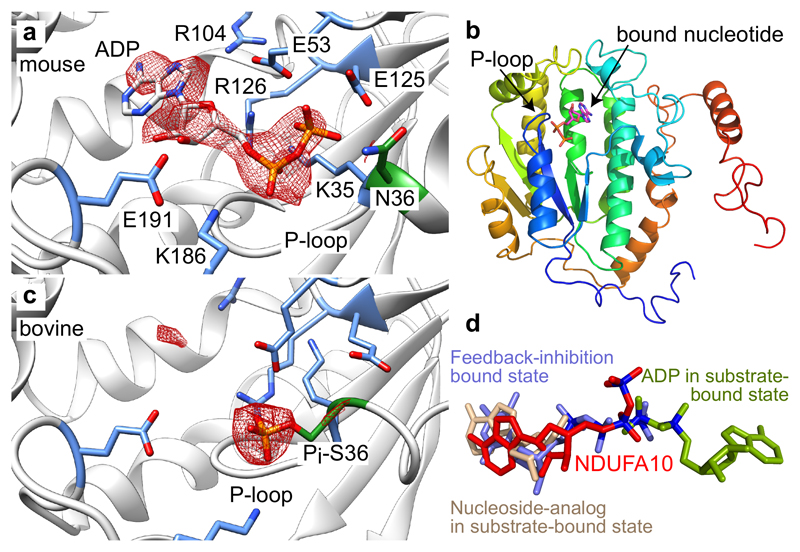
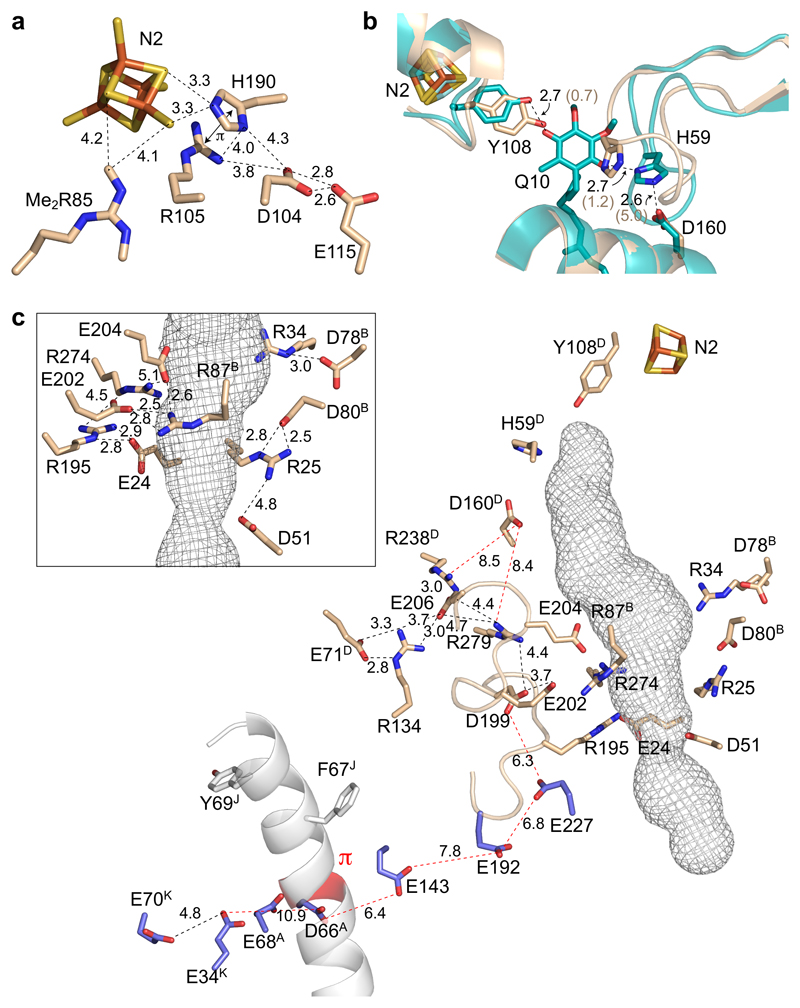
Complex I (NADH:ubiquinone oxidoreductase) uses the reducing potential of NADH to drive protons across the energy-transducing inner membrane and power oxidative phosphorylation in mammalian mitochondria. Recent cryo-EM analyses have produced near-complete models of all 45 subunits in the bovine, ovine and porcine complexes and have identified two states relevant to complex I in ischemia-reperfusion injury. Here, we describe the 3.3-Å structure of complex I from mouse heart mitochondria, a biomedically relevant model system, in the 'active' state. We reveal a nucleotide bound in subunit NDUFA10, a nucleoside kinase homolog, and define mechanistically critical elements in the mammalian enzyme. By comparisons with a 3.9-Å structure of the 'deactive' state and with known bacterial structures, we identify differences in helical geometry in the membrane domain that occur upon activation or that alter the positions of catalytically important charged residues. Our results demonstrate the capability of cryo-EM analyses to challenge and develop mechanistic models for mammalian complex I.
复合体 I(NADH:泛醌氧化还原酶)利用 NADH 的还原势能驱动质子穿过能量转换的内膜,并为哺乳动物线粒体中的氧化磷酸化提供动力。最近的冷冻电镜分析已经产生了牛、羊和猪复合物中所有 45 个亚基的近乎完整的模型,并确定了与缺血再灌注损伤中复合体 I 相关的两种状态。在这里,我们描述了来自小鼠心脏线粒体的复合体 I 的 3.3-Å 结构,这是一种具有生物医学相关性的模型系统,处于“活性”状态。我们揭示了亚基 NDUFA10 中结合的核苷酸,该亚基是核苷激酶同源物,并定义了哺乳动物酶中的关键机械元素。通过与 3.9-Å 的“非活性”状态结构以及已知的细菌结构进行比较,我们确定了在膜域中发生的激活时或改变催化重要带电残基位置的螺旋几何形状的差异。我们的结果证明了冷冻电镜分析能够挑战和发展哺乳动物复合体 I 的机械模型的能力。