de Macêdo Simone Regina Barros, de Lima Luiz André Rodrigues, de Torres Sandra Maria, de Oliveira Vinícius Vasconcelos Gomes, de Morais Rosana Nogueira, Peixoto Christina Alves, Tenorio Bruno Mendes, Junior Valdemiro Amaro da Silva
Department of Veterinary Medicine, Federal Rural University of Pernambuco, Recife, Brazil.
Department of Physiology, Federal University of Paraná, Curitiba, Paraná, Brazil.
Vet World. 2018 May;11(5):649-656. doi: 10.14202/vetworld.2018.649-656. Epub 2018 May 19.
Chemical sterilization is a non-surgical method of contraception based on compounds injected into the testis to induce infertility. However, these injections can cause discomfort and pain able to impair the recovery of animals after this treatment. The objective of this study was to investigate if anti-inflammatories or pain relievers inhibited the sterilizing effect of zinc gluconate-based solution on the testis.
Adult rats were treated in groups: G1 (control), G2 (dimethyl sulfoxide + dipyrone); G3 (dipyrone/zinc); G4 (dipyrone + celecoxib/zinc); G5 (dipyrone + meloxicam/zinc), and G6 (dipyrone + dexamethasone/zinc) in a single dose per day during 7 days. Animals were analyzed at 7, 15, and 30 days after treatments.
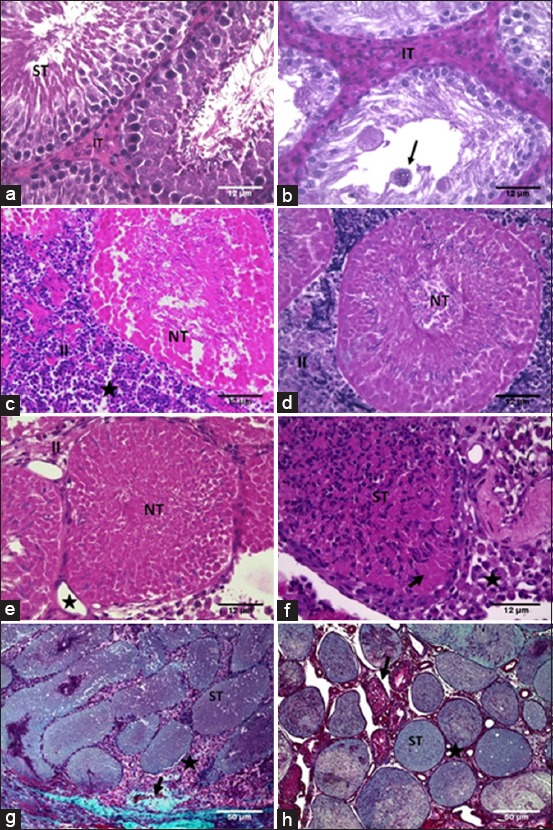
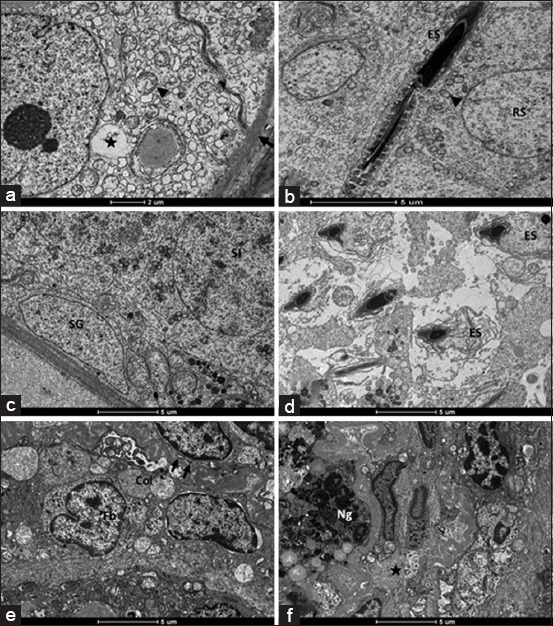
The zinc-induced a widespread testicular degeneration and decreased testosterone levels even in combination with anti-inflammatories or pain relievers. Testis, epididymis, prostate, and seminal vesicle had a weight reduction. The anti-inflammatory effect of dexamethasone interfered in the desired action of zinc gluconate in the 1 15 days and celecoxib up to 7 days.
Meloxicam plus dipyrone did not impair the chemical sterilization based on zinc gluconate, and it can be used to reduce nociceptive effects in animals after chemical sterilization.
化学绝育是一种非手术避孕方法,基于向睾丸注射化合物以诱导不育。然而,这些注射会引起不适和疼痛,可能会损害动物在此治疗后的恢复。本研究的目的是调查抗炎药或止痛药是否会抑制基于葡萄糖酸锌的溶液对睾丸的绝育作用。
将成年大鼠分组治疗:G1(对照组)、G2(二甲亚砜+安乃近);G3(安乃近/锌);G4(安乃近+塞来昔布/锌);G5(安乃近+美洛昔康/锌),以及G6(安乃近+地塞米松/锌),每天单剂量给药,持续7天。在治疗后7天、15天和30天对动物进行分析。
即使与抗炎药或止痛药联合使用,锌也会导致广泛的睾丸退化并降低睾酮水平。睾丸、附睾、前列腺和精囊重量减轻。地塞米松的抗炎作用在第15天干扰了葡萄糖酸锌的预期作用,塞来昔布在7天内有干扰作用。
美洛昔康加安乃近不会损害基于葡萄糖酸锌的化学绝育作用,并且可用于减轻动物化学绝育后的伤害感受效应。