Lopez-Carrizales Montserrat, Velasco Karla Itzel, Castillo Claudia, Flores Andrés, Magaña Martín, Martinez-Castanon Gabriel Alejandro, Martinez-Gutierrez Fidel
Laboratorio de Microbiología, Universidad Autónoma de San Luis Potosí, San Luis Potosí, CP 78210, Mexico.
Laboratorio de Células Neurales Troncales, CIACYT-Facultad de Medicina, Universidad Autónoma de San Luis Potosí, San Luis Potosí, CP 78210, Mexico.
Antibiotics (Basel). 2018 Jun 19;7(2):50. doi: 10.3390/antibiotics7020050.
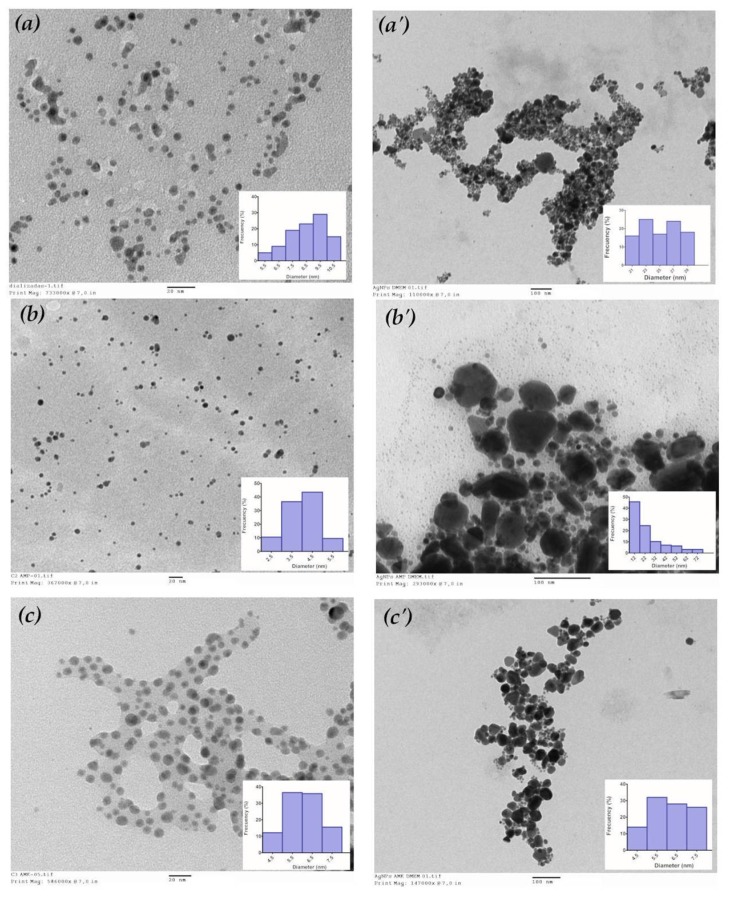
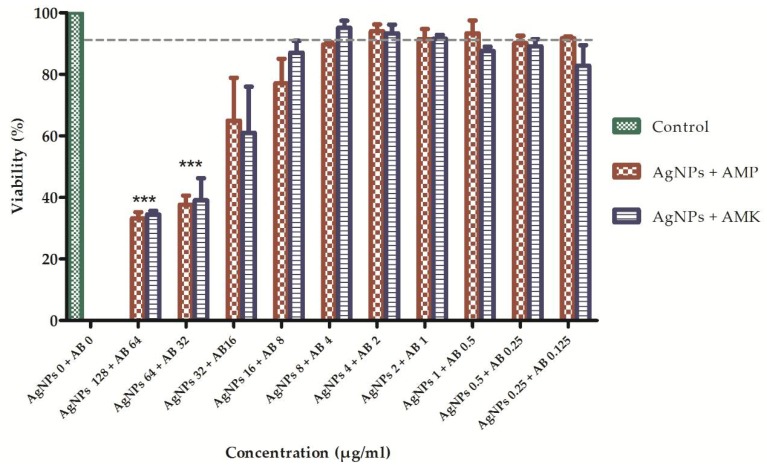
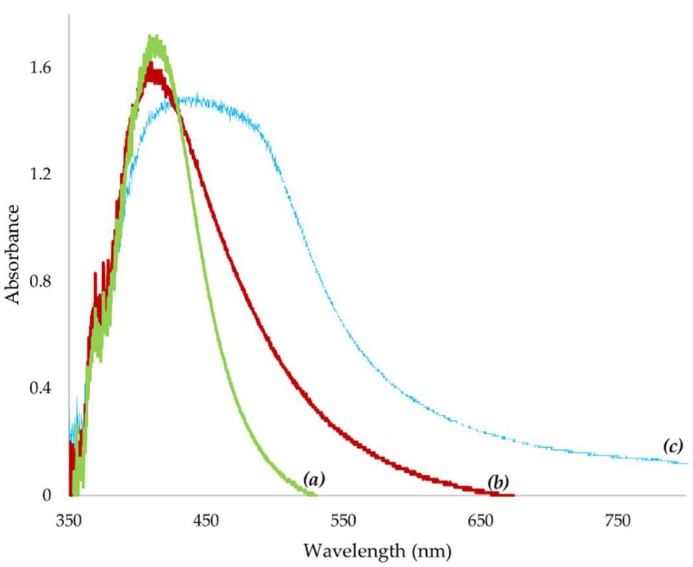
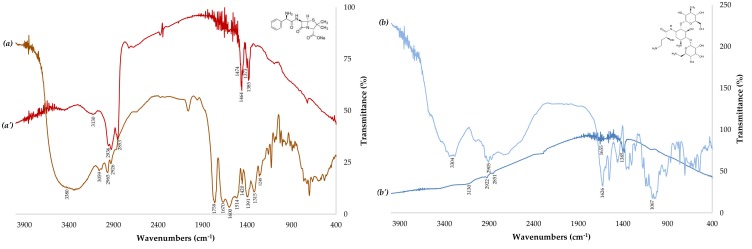
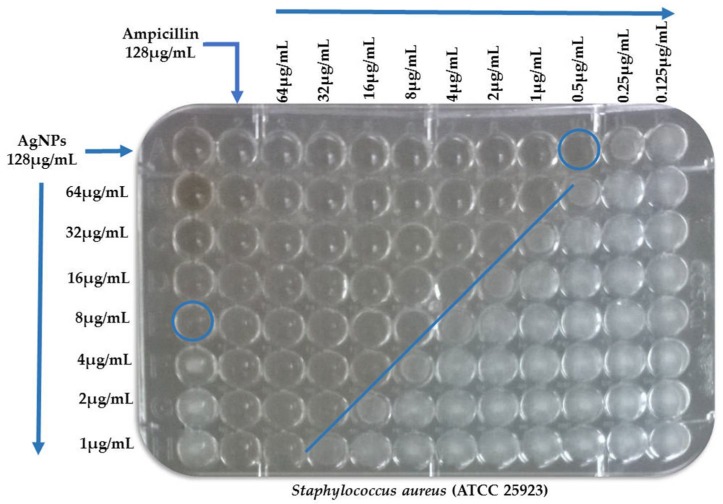
The increase in the prevalence of bacterial resistance to antibiotics has become one of the main health problems worldwide, thus threatening the era of antibiotics most frequently used in the treatment of infections. The need to develop new therapeutic strategies against multidrug resistant microorganisms, such as the combination of selected antimicrobials, can be considered as a suitable alternative. The in vitro activities of two groups of conventional antimicrobial agents alone and in combination with silver nanoparticles (AgNPs) were investigated against a set of ten multidrug resistant clinical isolate and two references strains by MIC assays and checkerboard testing, as well as their cytotoxicity, which was evaluated on human fibroblasts by MTT assay at the same concentration of the antimicrobial agents alone and in combination. Interesting results were achieved when the AgNPs and their combinations were characterized by Dynamic Light Scattering (DLS), Zeta Potential, Transmission Electron Microscopy (TEM), UV⁻visible spectroscopy and Fourier Transforms Infrared (FTIR) spectroscopy. The in vitro activities of ampicillin, in combination with AgNPs, against the 12 microorganisms showed one Synergy, seven Partial Synergy and four Additive effects, while the results with amikacin and AgNPs showed three Synergy, eight Partial Synergy and one Additive effects. The cytotoxic effect at these concentrations presented a statistically significant decrease of their cytotoxicity ( < 0.05). These results indicate that infections caused by multidrug resistant microorganisms could be treated using a synergistic combination of antimicrobial drugs and AgNPs. Further studies are necessary to evaluate the specific mechanisms of action, which could help predict undesirable off-target interactions, suggest ways of regulating a drug’s activity, and identify novel therapeutic agents in this health problem.
细菌对抗生素耐药性的增加已成为全球主要的健康问题之一,从而威胁到感染治疗中最常用的抗生素时代。开发针对多重耐药微生物的新治疗策略的需求,例如选择抗菌药物的联合使用,可以被视为一种合适的替代方案。通过微量肉汤稀释法(MIC)和棋盘法试验,研究了两组传统抗菌剂单独使用以及与银纳米颗粒(AgNPs)联合使用时对一组十种多重耐药临床分离株和两种参考菌株的体外活性,以及它们的细胞毒性,细胞毒性是在相同浓度的抗菌剂单独使用和联合使用时通过MTT法在人成纤维细胞上进行评估的。当通过动态光散射(DLS)、zeta电位、透射电子显微镜(TEM)、紫外可见光谱和傅里叶变换红外(FTIR)光谱对AgNPs及其组合进行表征时,取得了有趣的结果。氨苄西林与AgNPs联合使用对12种微生物的体外活性显示出1种协同作用、7种部分协同作用和4种相加作用,而阿米卡星与AgNPs联合使用的结果显示出3种协同作用、8种部分协同作用和1种相加作用。在这些浓度下的细胞毒性表现出其细胞毒性有统计学意义的降低(<0.05)。这些结果表明,多重耐药微生物引起的感染可以使用抗菌药物和AgNPs的协同组合进行治疗。有必要进一步研究以评估具体的作用机制,这有助于预测不良的脱靶相互作用、提出调节药物活性的方法,并在这个健康问题中识别新型治疗剂。