Centro de Nanociencias y Nanotecnología, Universidad Nacional Autónoma de México, Ensenada, Baja California, México.
Centro de Investigación Científica y de Educación Superior de Ensenada, Ensenada, Baja California, México.
PLoS One. 2019 Nov 8;14(11):e0224904. doi: 10.1371/journal.pone.0224904. eCollection 2019.
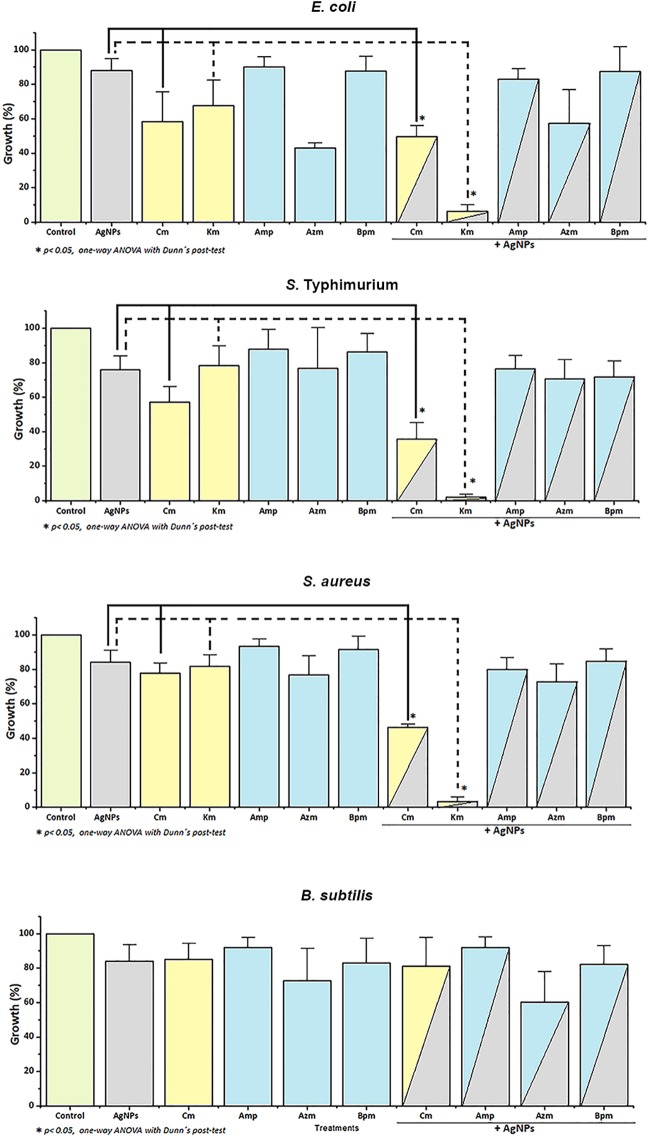
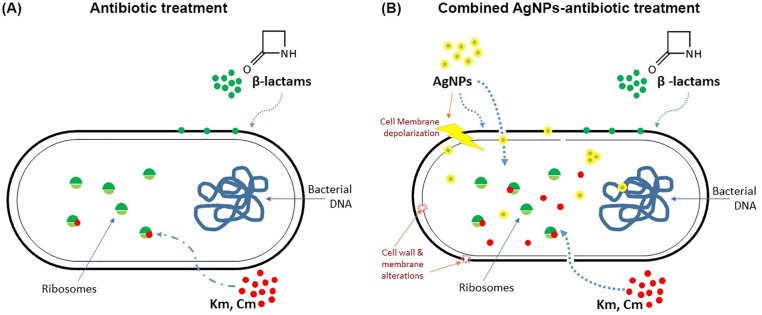
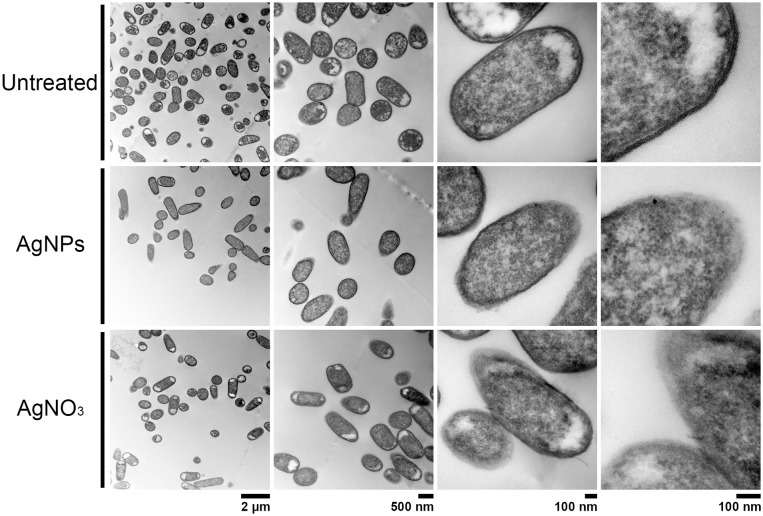
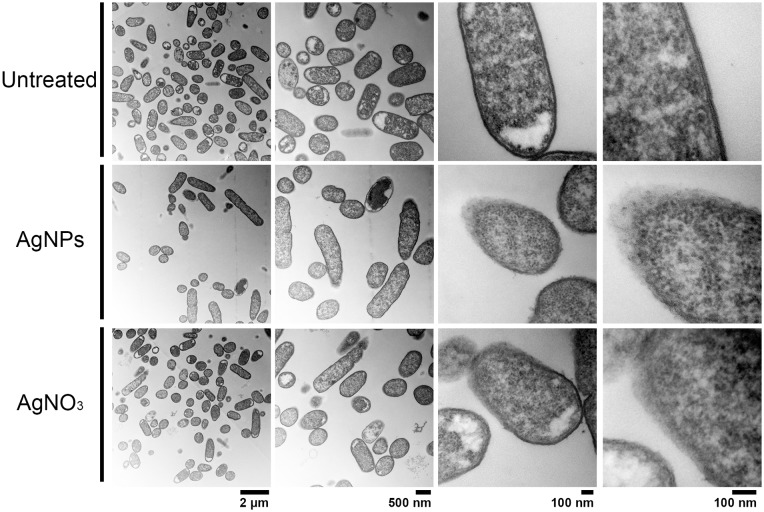
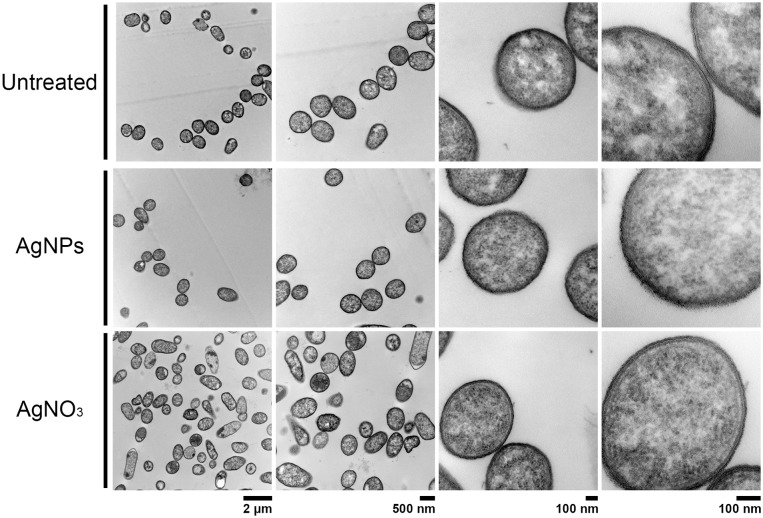
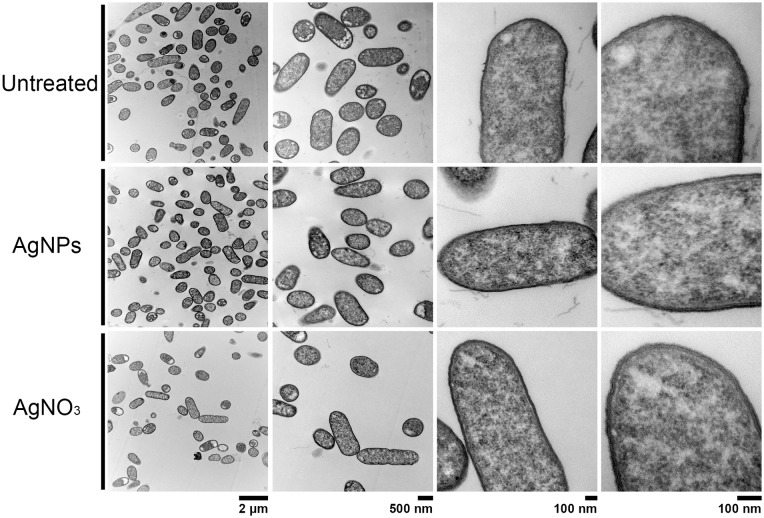
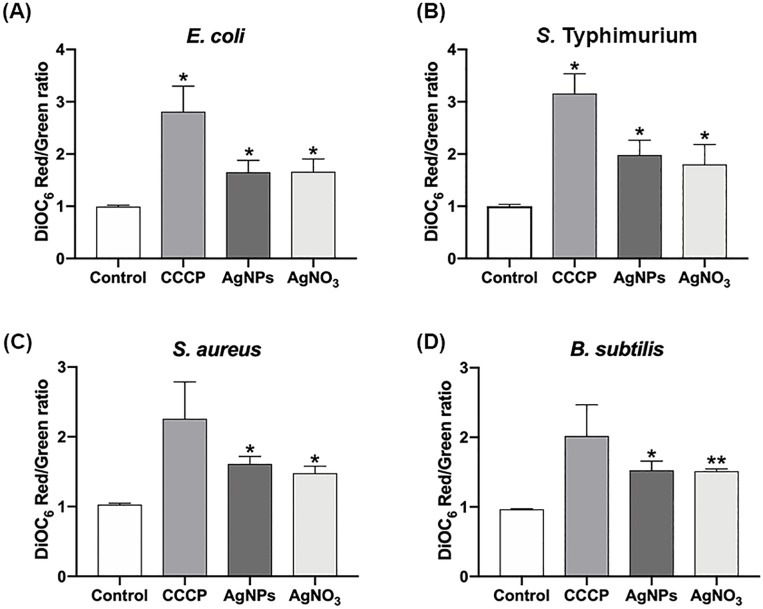
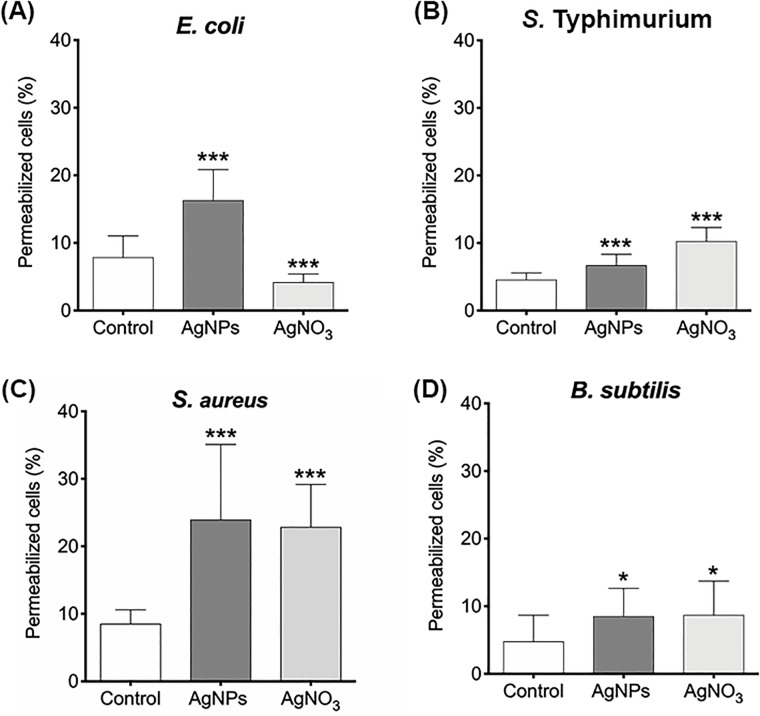
The ability of microorganisms to generate resistance outcompetes with the generation of new and efficient antibiotics; therefore, it is critical to develop novel antibiotic agents and treatments to control bacterial infections. An alternative to this worldwide problem is the use of nanomaterials with antimicrobial properties. Silver nanoparticles (AgNPs) have been extensively studied due to their antimicrobial effect in different organisms. In this work, the synergistic antimicrobial effect of AgNPs and conventional antibiotics was assessed in Gram-positive and Gram-negative bacteria. AgNPs minimal inhibitory concentration was 10-12 μg mL-1 in all bacterial strains tested, regardless of their different susceptibility against antibiotics. Interestingly, a synergistic antimicrobial effect was observed when combining AgNPs and kanamycin according to the fractional inhibitory concentration index, FICI: <0.5), an additive effect by combining AgNPs and chloramphenicol (FICI: 0.5 to 1), whereas no effect was found with AgNPs and β-lactam antibiotics combinations. Flow cytometry and TEM analysis showed that sublethal concentrations of AgNPs (6-7 μg mL-1) altered the bacterial membrane potential and caused ultrastructural damage, increasing the cell membrane permeability. No chemical interactions between AgNPs and antibiotics were detected. We propose an experimental supported mechanism of action by which combinatorial effect of antimicrobials drives synergy depending on their specific target, facilitated by membrane alterations generated by AgNPs. Our results provide a deeper understanding about the synergistic mechanism of AgNPs and antibiotics, aiming to combat antimicrobial infections efficiently, especially those by multi-drug resistant microorganisms, in order to mitigate the current crisis due to antibiotic resistance.
微生物产生耐药性的能力超过了新的和有效的抗生素的产生;因此,开发新型抗生素药物和治疗方法来控制细菌感染至关重要。解决这个全球性问题的一种替代方法是使用具有抗菌特性的纳米材料。由于银纳米粒子 (AgNPs) 在不同生物体中具有抗菌作用,因此它们被广泛研究。在这项工作中,评估了 AgNPs 和常规抗生素在革兰氏阳性和革兰氏阴性细菌中的协同抗菌作用。AgNPs 的最小抑菌浓度在所有测试的细菌菌株中均为 10-12 μg mL-1,无论它们对抗生素的不同敏感性如何。有趣的是,根据部分抑菌浓度指数 (FICI),当 AgNPs 与卡那霉素联合使用时观察到协同抗菌作用:<0.5),当 AgNPs 与氯霉素联合使用时观察到相加作用 (FICI:0.5 至 1),而当 AgNPs 与β-内酰胺类抗生素联合使用时则没有效果。流式细胞术和 TEM 分析表明,亚致死浓度的 AgNPs(6-7 μg mL-1)改变了细菌膜电位并导致超微结构损伤,增加了细胞膜通透性。未检测到 AgNPs 和抗生素之间的化学相互作用。我们提出了一种实验支持的作用机制,其中抗菌药物的组合作用根据其特定的靶标产生协同作用,AgNPs 引起的膜改变促进了这种协同作用。我们的结果提供了对 AgNPs 和抗生素协同作用机制的更深入了解,旨在有效地对抗抗菌感染,特别是针对多药耐药微生物的感染,以减轻当前由于抗生素耐药性而导致的危机。