Helma Christoph, Vorgrimmler David, Gebele Denis, Gütlein Martin, Engeli Barbara, Zarn Jürg, Schilter Benoit, Lo Piparo Elena
In Silico Toxicology Gmbh, Basel, Switzerland.
Data Mining Department, Institute of Computer Science, Johannes Gutenberg Universität Mainz, Mainz, Germany.
Front Pharmacol. 2018 Apr 25;9:413. doi: 10.3389/fphar.2018.00413. eCollection 2018.
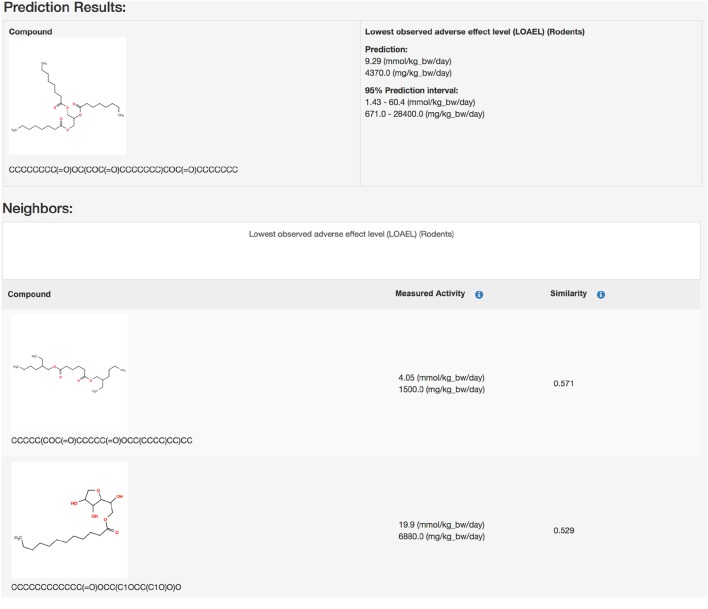
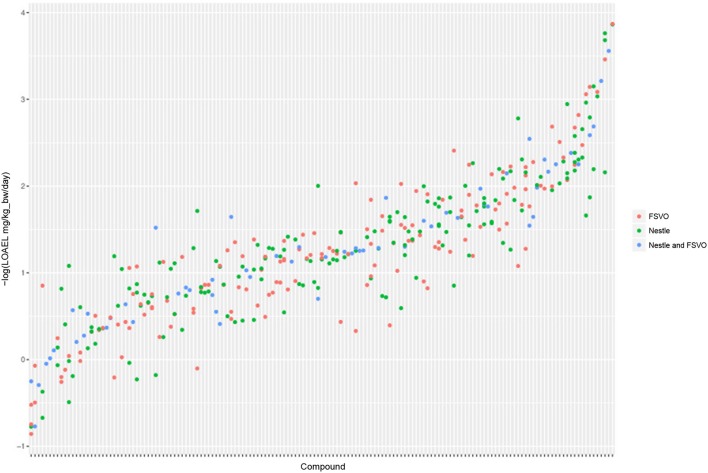
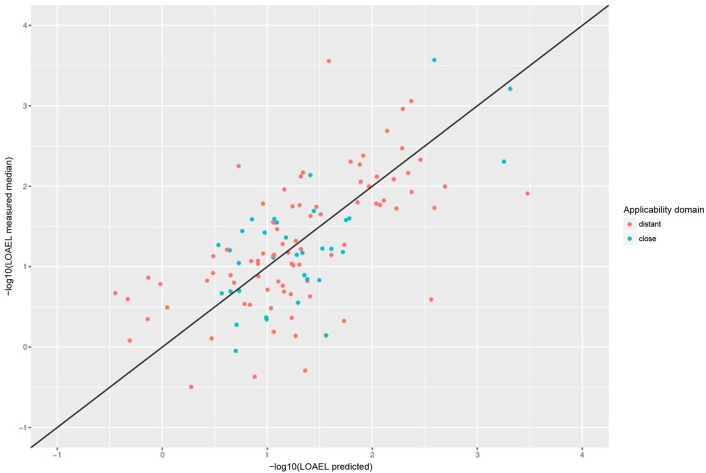
This study compares the accuracy of (Q)SAR/read-across predictions with the experimental variability of chronic lowest-observed-adverse-effect levels (LOAELs) from experiments. We could demonstrate that predictions of the lazy structure-activity relationships (lazar) algorithm within the applicability domain of the training data have the same variability as the experimental training data. Predictions with a lower similarity threshold (i.e., a larger distance from the applicability domain) are also significantly better than random guessing, but the errors to be expected are higher and a manual inspection of prediction results is highly recommended.
本研究将(定量)构效关系/类推预测的准确性与实验中慢性最低观察到的有害作用水平(LOAELs)的实验变异性进行了比较。我们能够证明,在训练数据适用范围内的惰性构效关系(lazar)算法预测与实验训练数据具有相同的变异性。相似度阈值较低(即与适用范围的距离较大)的预测也明显优于随机猜测,但预期误差较高,强烈建议对预测结果进行人工检查。