Mash Deborah C, Duque Linda, Page Bryan, Allen-Ferdinand Kathleen
Department of Neurology, Leonard M. Miller School of Medicine, Miami, FL, United States.
Department of Molecular and Cellular Pharmacology, Leonard M. Miller School of Medicine, Miami, FL, United States.
Front Pharmacol. 2018 Jun 5;9:529. doi: 10.3389/fphar.2018.00529. eCollection 2018.
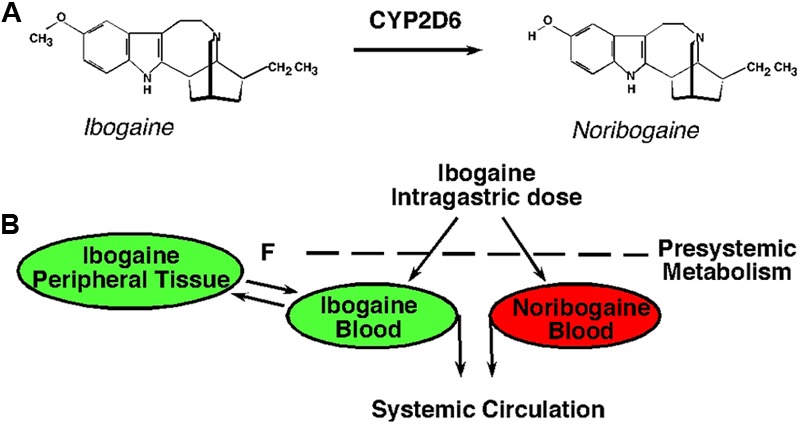
Ibogaine may be effective for transitioning opioid and cocaine dependent individuals to sobriety. American and European self-help groups provided public testimonials that ibogaine alleviated drug craving and opioid withdrawal symptoms after only a single dose administration. Preclinical studies in animal models of addiction have provided proof-of-concept evidence in support of these claims. However, the purported therapeutic benefits of ibogaine are based on anecdotal reports from a small series of case reports that used retrospective recruitment procedures. We reviewed clinical results from an open label case series ( = 191) of human volunteers seeking to detoxify from opioids or cocaine with medical monitoring during inpatient treatment. Whole blood was assayed to obtain pharmacokinetic measures to determine the metabolism and clearance of ibogaine. Clinical safety data and adverse events (AEs) were studied in male and female subjects. There were no significant adverse events following administration of ibogaine in a dose range that was shown to be effective for blocking opioid withdrawal symptoms in this study. We used multi-dimensional craving questionnaires during inpatient detoxification to test if ibogaine was effective in diminishing heroin and cocaine cravings. Participants also completed standardized questionnaires about their health and mood before and after ibogaine treatment, and at program discharge. One-month follow-up data were reviewed where available to determine if ibogaine's effects on drug craving would persist outside of an inpatient setting. We report here that ibogaine therapy administered in a safe dose range diminishes opioid withdrawal symptoms and reduces drug cravings. Pharmacological treatments for opioid dependence include detoxification, narcotic antagonists and long-term opioid maintenance therapy. Our results support product development of single oral dose administration of ibogaine for the treatment of opioid withdrawal during medically supervised detoxification to transition drug dependent individuals to abstinence.
伊博格碱可能对帮助阿片类药物和可卡因依赖者戒断有效。美国和欧洲的自助团体提供了公开证词,称伊博格碱仅单次给药后就能减轻药物渴望和阿片类药物戒断症状。在成瘾动物模型中的临床前研究提供了概念验证证据来支持这些说法。然而,伊博格碱所谓的治疗益处是基于一小系列病例报告的轶事性报道,这些报告采用的是回顾性招募程序。我们回顾了一个开放标签病例系列(n = 191)的临床结果,该系列中的人类志愿者在住院治疗期间接受医学监测,试图从阿片类药物或可卡因中戒毒。检测全血以获得药代动力学指标,以确定伊博格碱的代谢和清除情况。在男性和女性受试者中研究了临床安全性数据和不良事件(AE)。在本研究中,在显示对阻断阿片类药物戒断症状有效的剂量范围内给予伊博格碱后,未出现显著不良事件。我们在住院戒毒期间使用多维渴望问卷来测试伊博格碱是否能有效减轻海洛因和可卡因渴望。参与者还在伊博格碱治疗前后以及项目出院时完成了关于他们健康和情绪的标准化问卷。在可得的情况下,审查了1个月的随访数据,以确定伊博格碱对药物渴望的影响在住院环境之外是否会持续。我们在此报告,在安全剂量范围内给予伊博格碱治疗可减轻阿片类药物戒断症状并减少药物渴望。阿片类药物依赖的药物治疗包括戒毒、麻醉拮抗剂和长期阿片类药物维持治疗。我们的结果支持开发单次口服伊博格碱用于在医学监督的戒毒过程中治疗阿片类药物戒断,以帮助药物依赖者戒断。