Department of Psychology, University of Kansas, Lawrence, KS, United States of America.
PLoS One. 2018 Jun 20;13(6):e0199041. doi: 10.1371/journal.pone.0199041. eCollection 2018.
Probiotics have generated intensive research interest in recent years as a novel mode of treatment for physical and mental illness. Nevertheless, the anxiolytic potential of probiotics remains unclear. The present systematic review and meta-analysis aimed to evaluate the clinical and preclinical (animal model) evidence regarding the effect of probiotic administration on anxiety.
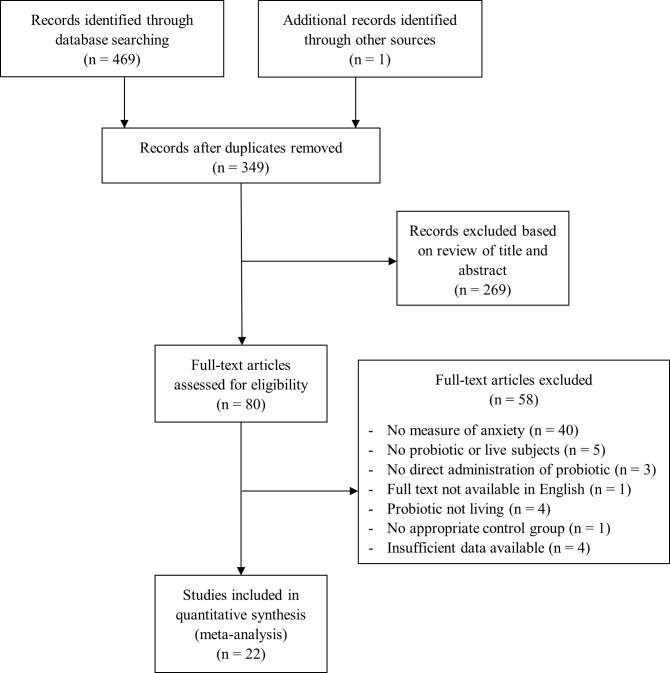
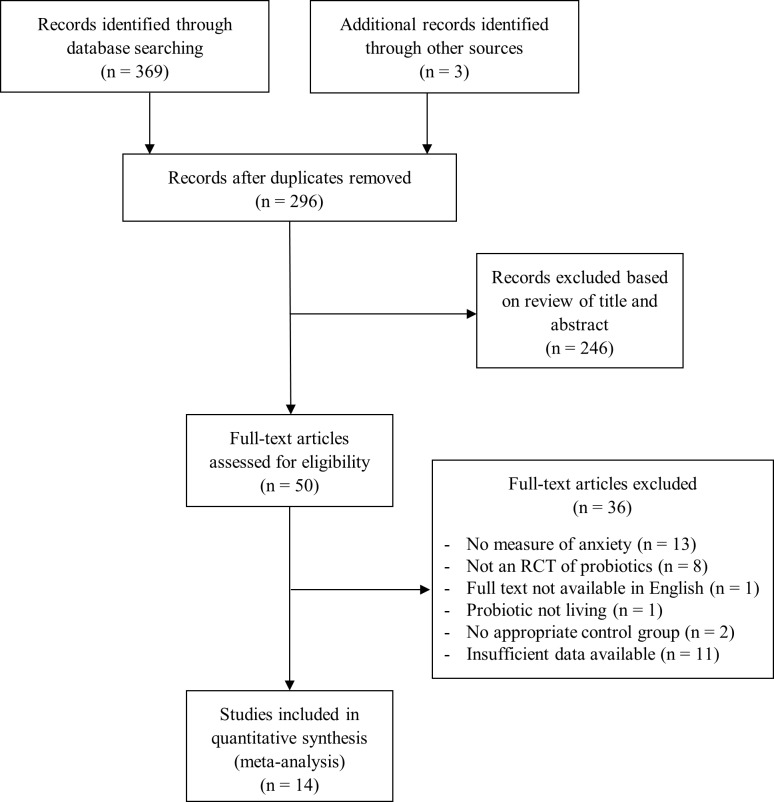
The PubMed, PsycINFO, and Web of Science databases were reviewed for preclinical and clinical studies that met the defined inclusion and exclusion criteria. The effects of probiotics on anxiety-like behavior and symptoms of anxiety were analyzed by meta-analyses. Separate subgroup analyses were conducted on diseased versus healthy animals, specific preclinical probiotic species, and clinical versus healthy human samples.
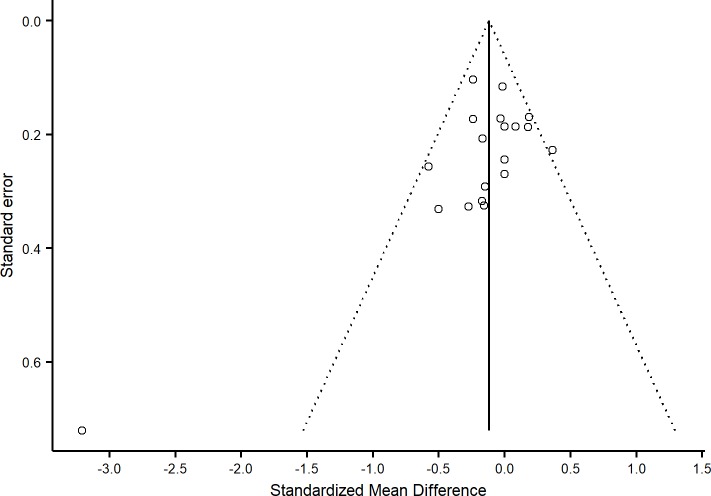
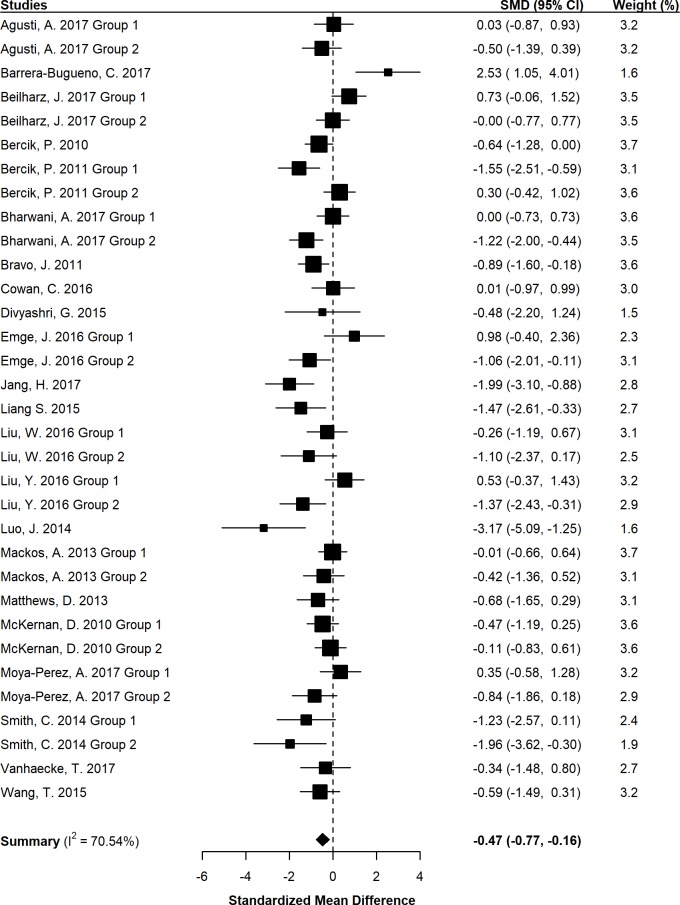
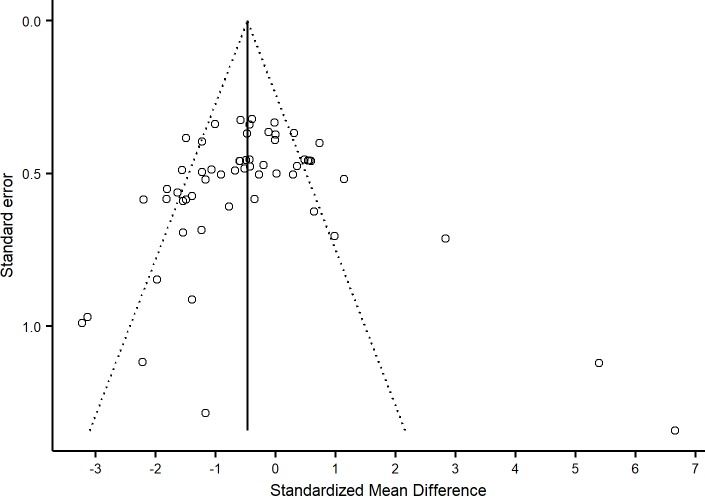
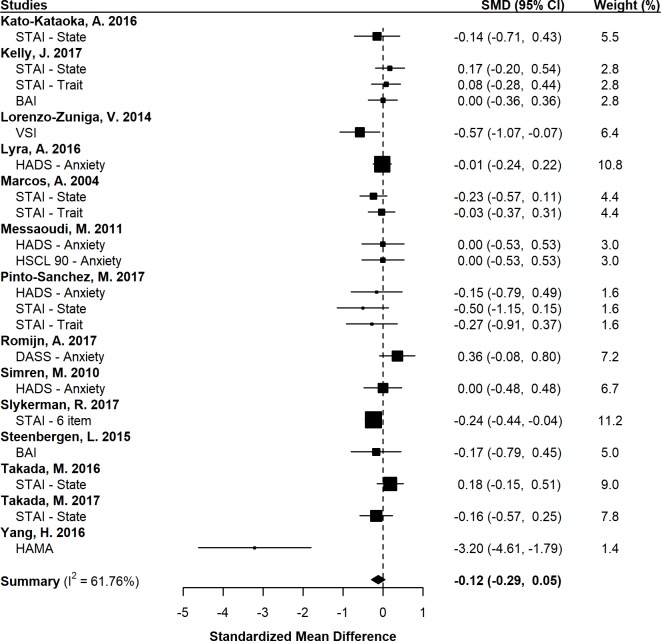
Data were extracted from 22 preclinical studies (743 animals) and 14 clinical studies (1527 individuals). Overall, probiotics reduced anxiety-like behavior in animals (Hedges' g = -0.47, 95% CI -0.77 --0.16, p = 0.004). Subgroup analyses revealed a significant reduction only among diseased animals. Probiotic species-level analyses identified only Lactobacillus (L.) rhamnosus as an anxiolytic species, but these analyses were broadly under-powered. Probiotics did not significantly reduce symptoms of anxiety in humans (Hedges' g = -0.12, 95% CI -0.29-0.05, p = 0.151), and did not differentially affect clinical and healthy human samples.
While preclinical (animal) studies suggest that probiotics may help reduce anxiety, such findings have not yet translated to clinical research in humans, perhaps due to the dearth of extant research with clinically anxious populations. Further investigation of probiotic treatment for clinically relevant anxiety is warranted, particularly with respect to the probiotic species L. rhamnosus.
近年来,益生菌作为一种治疗身心疾病的新方法引起了人们的浓厚兴趣。然而,益生菌的抗焦虑潜力尚不清楚。本系统评价和荟萃分析旨在评估益生菌给药对焦虑的临床和临床前(动物模型)证据。
对符合定义的纳入和排除标准的临床前和临床研究,检索了 PubMed、PsycINFO 和 Web of Science 数据库。通过荟萃分析分析益生菌对焦虑样行为和焦虑症状的影响。对患病动物与健康动物、特定临床前益生菌物种以及临床与健康人类样本分别进行亚组分析。
从 22 项临床前研究(743 只动物)和 14 项临床研究(1527 人)中提取数据。总体而言,益生菌可减少动物的焦虑样行为(Hedges' g = -0.47,95%CI -0.77--0.16,p = 0.004)。亚组分析显示,仅在患病动物中存在显著减少。益生菌物种水平分析仅发现鼠李糖乳杆菌(Lactobacillus rhamnosus)是一种抗焦虑物种,但这些分析的效力普遍不足。益生菌并未显著减轻人类的焦虑症状(Hedges' g = -0.12,95%CI -0.29-0.05,p = 0.151),并且对临床和健康人类样本没有差异影响。
虽然临床前(动物)研究表明益生菌可能有助于减轻焦虑,但这些发现尚未转化为人类的临床研究,这可能是由于针对临床焦虑人群的研究相对较少。需要进一步研究益生菌治疗临床相关焦虑症,特别是针对鼠李糖乳杆菌(Lactobacillus rhamnosus)。