Institute of Chinese Materia Medica, China Academy of Chinese Medical Sciences, Beijing, China.
Beijing University of Chinese Medicine, Beijing, China.
Sci Rep. 2018 Jun 20;8(1):9379. doi: 10.1038/s41598-018-27359-4.
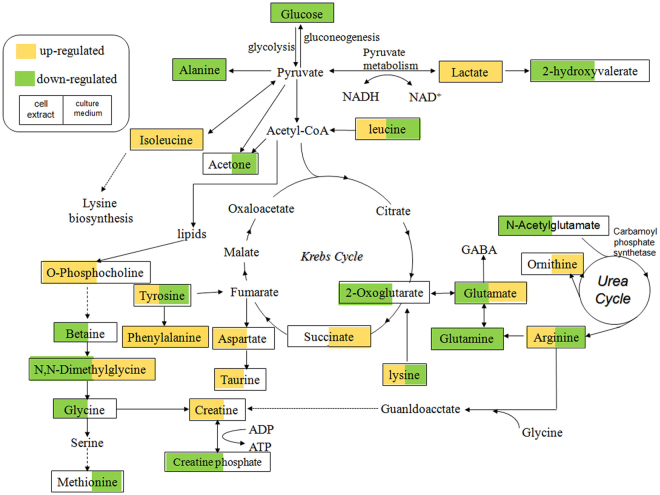
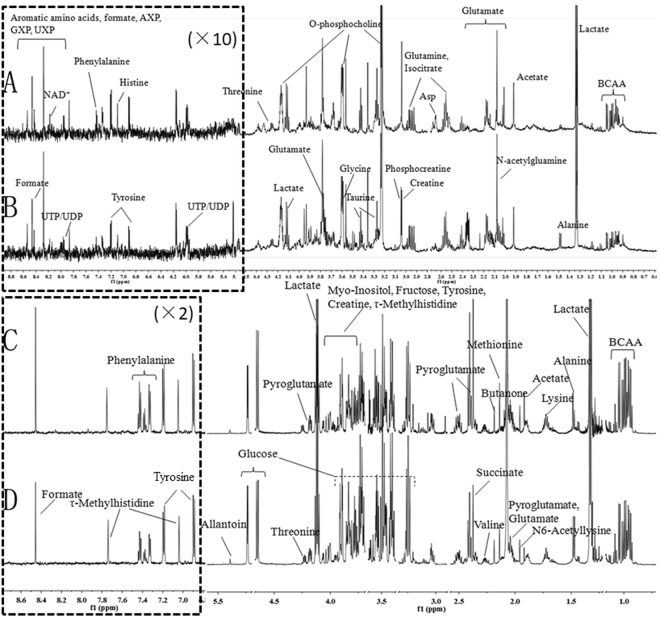
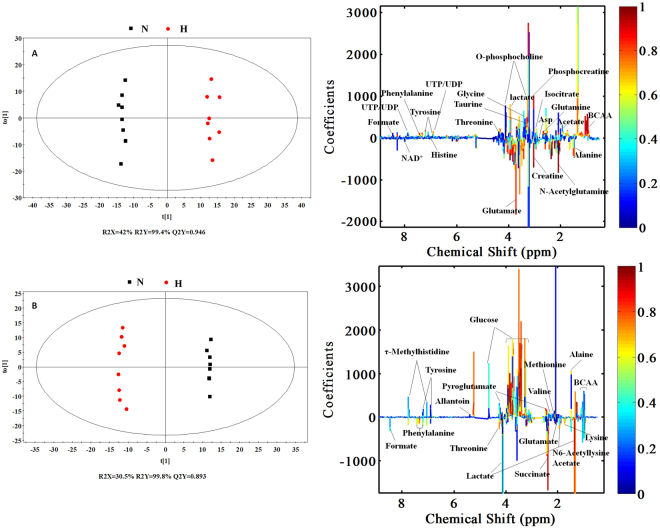
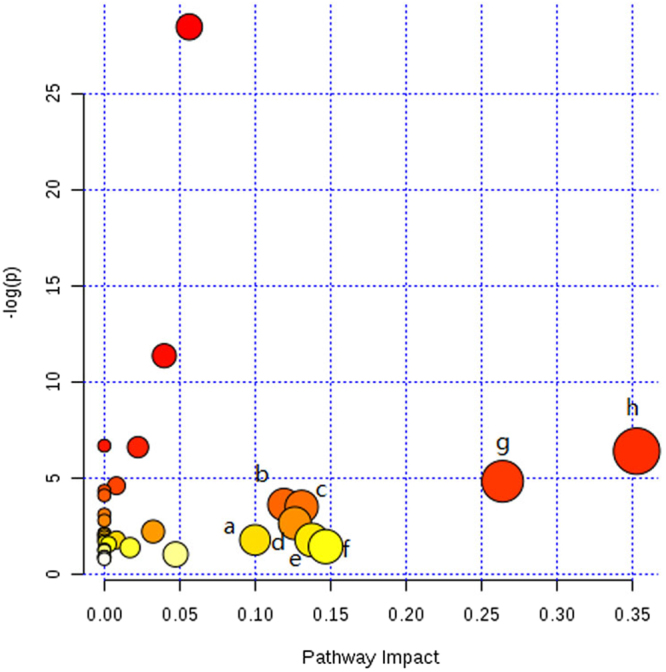
Emodin is a natural anthraquinone derivative that is present in various herbal preparations. The pharmacological effects of emodin include anticancer, hepatoprotective, anti-inflammatory, antioxidant and even antimicrobial activities. However, emodin also has been reported to induce hepatotoxicity, nephrotoxicity, genotoxicity and reproductive toxicity. The mechanism of emodin's adverse effects is complicated and currently not well understood. This study aimed to establish a cell metabonomic method to investigate the toxicity of emodin and explore its potential mechanism and relevant targets. In the present study, metabonomic profiles of cell extracts and cell culture media obtained using the H NMR technique were used to assess emodin toxicity in HepG2 cells. Multivariate statistical analyses such as partial least squares-discriminant analysis (PLS-DA) and orthogonal partial least squares-discriminant analysis (OPLS-DA) were used to characterize the metabolites that differed between the control and emodin groups. The results indicated that emodin resulted in differences in 33 metabolites, including acetate, arginine, aspartate, creatine, isoleucine, leucine and histidine in the cell extract samples and 23 metabolites, including alanine, formate, glutamate, succinate and isoleucine, in the cell culture media samples. Approximately 8 pathways associated with these metabolites were disrupted in the emodin groups. These results demonstrated the potential for using cell metabonomics approaches to clarify the toxicological effects of emodin, the underlying mechanisms and potential biomarkers. Our findings may help with the development of novel strategies to discover targets for drug toxicity, elucidate the changes in regulatory signal networks and explore its potential mechanism of action.
大黄素是一种天然蒽醌衍生物,存在于各种草药制剂中。大黄素的药理作用包括抗癌、保肝、抗炎、抗氧化,甚至抗菌活性。然而,大黄素也被报道会引起肝毒性、肾毒性、遗传毒性和生殖毒性。大黄素不良反应的机制很复杂,目前还不完全清楚。本研究旨在建立一种细胞代谢组学方法来研究大黄素的毒性,并探讨其潜在机制和相关靶点。在本研究中,采用核磁共振技术(H NMR)获得细胞提取物和细胞培养液的代谢组学图谱,以评估大黄素对 HepG2 细胞的毒性。采用偏最小二乘判别分析(PLS-DA)和正交偏最小二乘判别分析(OPLS-DA)等多变量统计分析方法来描述对照组和大黄素组之间代谢物的差异。结果表明,大黄素导致细胞提取物样本中 33 种代谢物(包括乙酸盐、精氨酸、天冬氨酸、肌酸、异亮氨酸、亮氨酸和组氨酸)和细胞培养液样本中 23 种代谢物(包括丙氨酸、甲酸盐、谷氨酸、琥珀酸盐和异亮氨酸)的差异。与这些代谢物相关的约 8 条途径在大黄素组中被破坏。这些结果表明,使用细胞代谢组学方法来阐明大黄素的毒性作用、潜在机制和潜在生物标志物具有潜力。我们的发现可能有助于开发新的策略来发现药物毒性的靶点,阐明调节信号网络的变化,并探索其潜在的作用机制。