Thanissery Rajani, Zeng Daina, Doyle Raul G, Theriot Casey M
Department of Population Health and Pathobiology, College of Veterinary Medicine, North Carolina State University, Raleigh, NC, United States.
Agile Sciences, Inc., Raleigh, NC, United States.
Front Microbiol. 2018 Jun 6;9:1206. doi: 10.3389/fmicb.2018.01206. eCollection 2018.
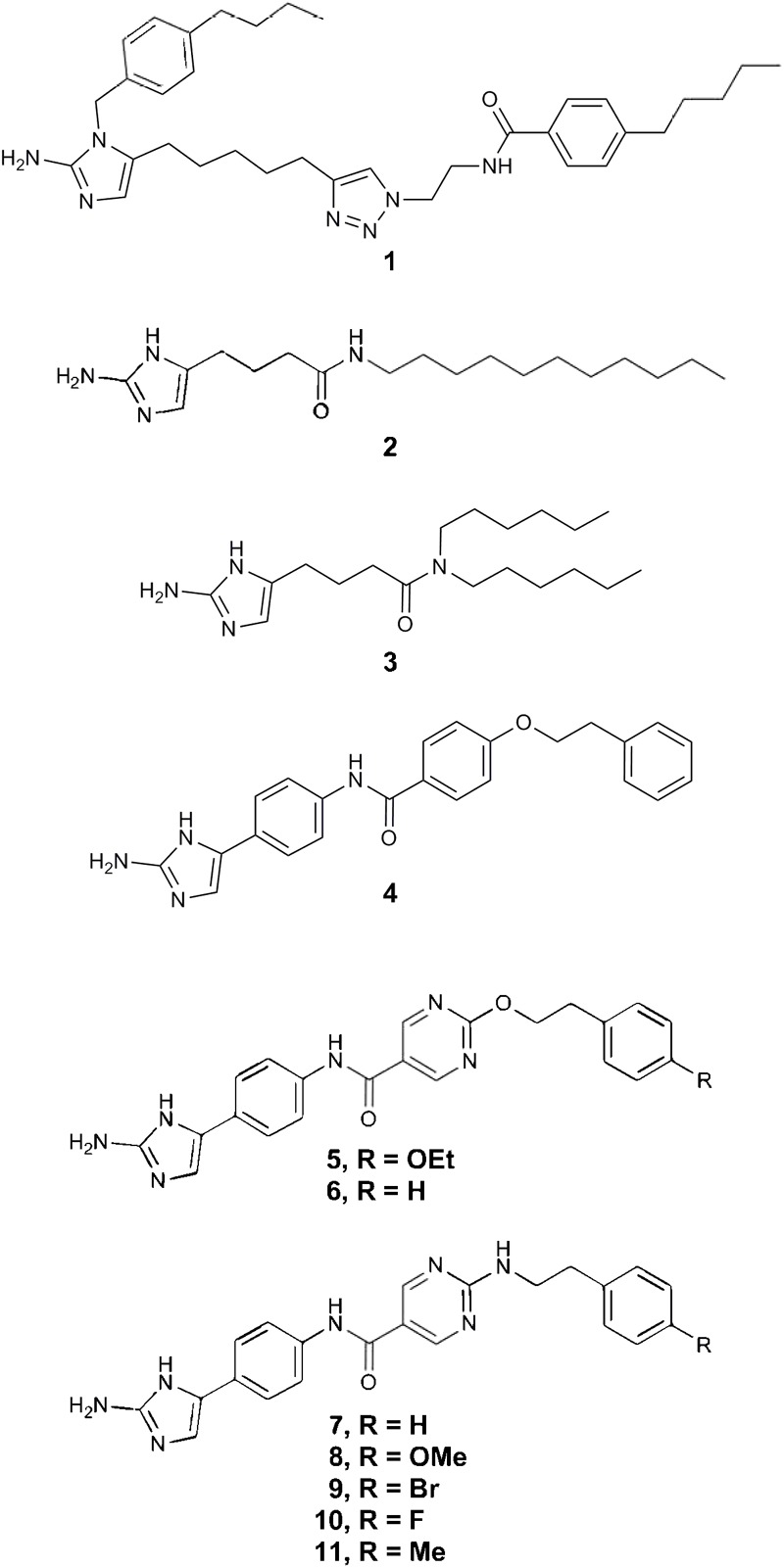
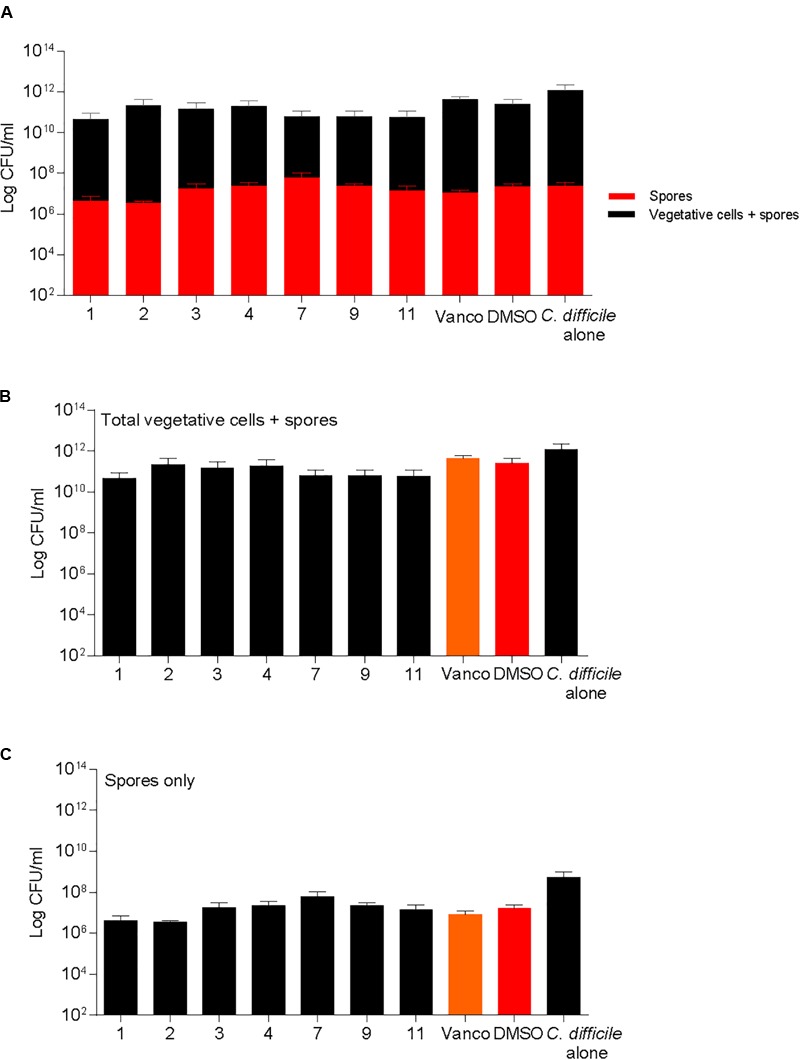
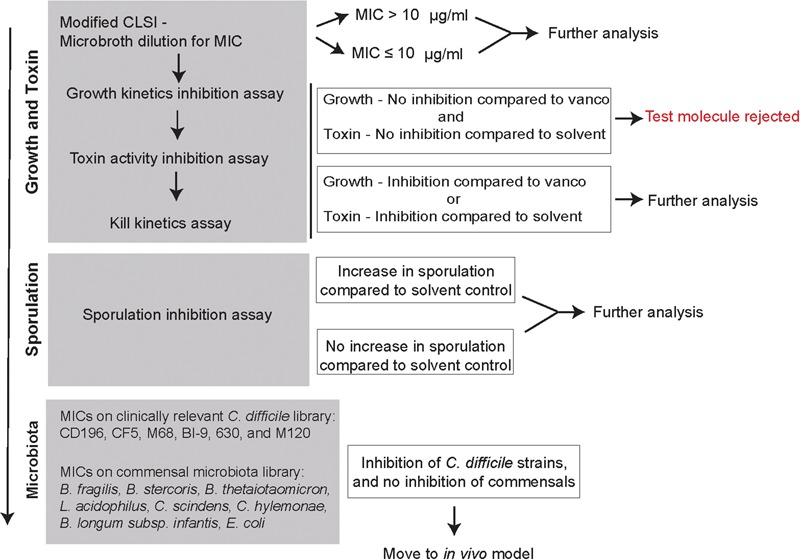
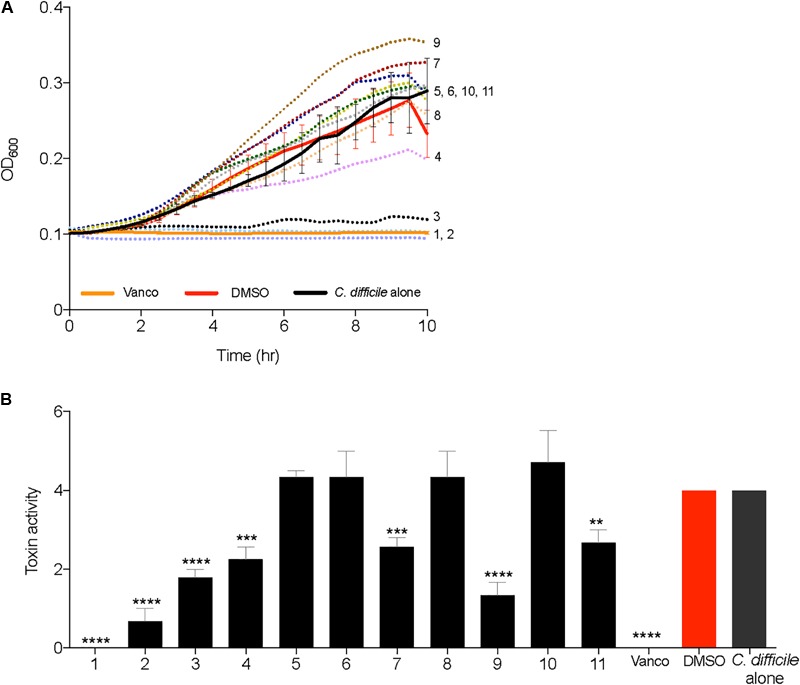
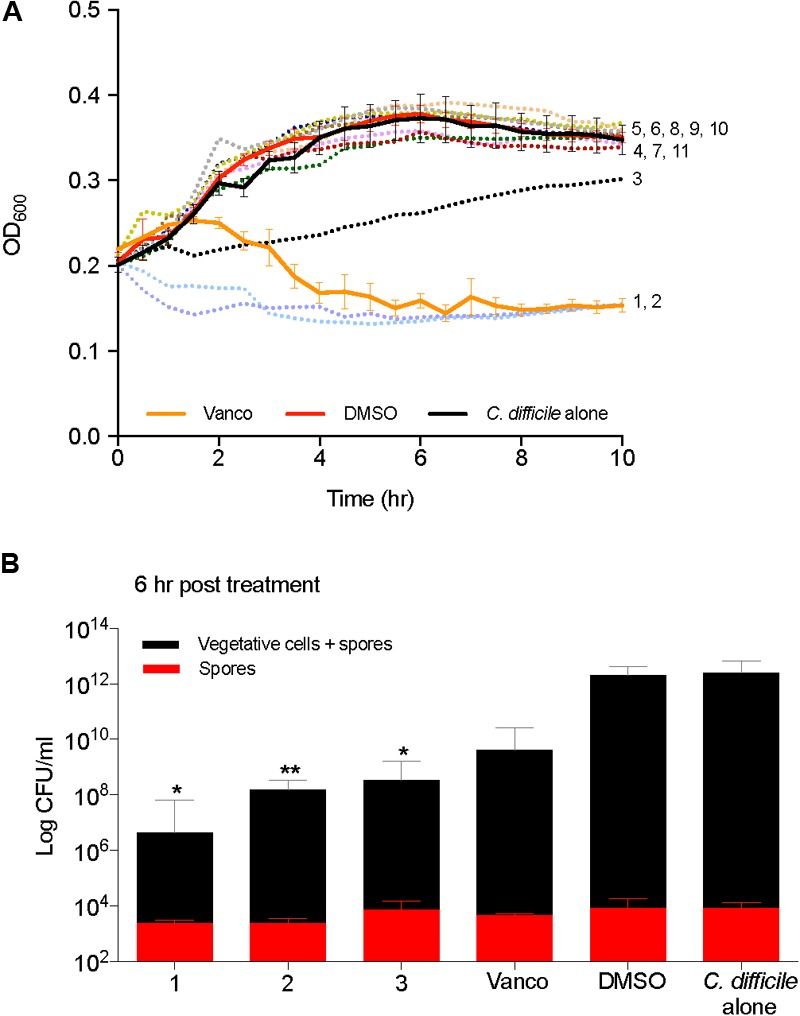
Antibiotics are considered to be the first line of treatment for mild to moderately severe infection (CDI) in humans. However, antibiotics are also risk factors for CDI as they decrease colonization resistance against by altering the gut microbiota and metabolome. Finding compounds that selectively inhibit different stages of the life cycle, while sparing the indigenous gut microbiota is important for the development of alternatives to standard antibiotic treatment. 2-aminoimidazole (2-AI) molecules are known to disrupt bacterial protection mechanisms in antibiotic resistant bacteria such as , and , but are yet to be evaluated against . A comprehensive small molecule-screening pipeline was developed to investigate how novel small molecules affect different stages of the life cycle (growth, toxin, and sporulation) , and a library of commensal bacteria that are associated with colonization resistance against . The initial screening tested the efficacy of eleven 2-AI molecules (compound 1 through 11) against R20291 compared to a vancomycin (2 μg/ml) control. Molecules were selected for their ability to inhibit growth, toxin activity, and sporulation. Further testing included growth inhibition of other strains (CD196, M68, CF5, 630, BI9, M120) belonging to distinct PCR ribotypes, and a commensal panel ( subsp. ). Three molecules compound 1 and 2, and 3 were microbicidal, whereas compounds 4, 7, 9, and 11 inhibited toxin activity without affecting the growth of strains and the commensal microbiota. The antimicrobial and anti-toxin effects of 2-AI molecules need to be further characterized for mode of action and validated in a mouse model of CDI.
抗生素被认为是治疗人类轻度至中度严重感染(艰难梭菌感染,CDI)的一线药物。然而,抗生素也是CDI的风险因素,因为它们会通过改变肠道微生物群和代谢组来降低对[艰难梭菌]的定植抗性。找到能选择性抑制[艰难梭菌]生命周期不同阶段,同时保留本土肠道微生物群的化合物,对于开发标准抗生素治疗的替代方案很重要。已知2-氨基咪唑(2-AI)分子会破坏抗生素耐药菌(如[艰难梭菌])的细菌保护机制,但尚未针对[艰难梭菌]进行评估。我们开发了一个全面的小分子筛选流程,以研究新型小分子如何影响[艰难梭菌]生命周期的不同阶段(生长、毒素和孢子形成),以及一个与对[艰难梭菌]的定植抗性相关的共生细菌库。初始筛选测试了11种2-AI分子(化合物1至11)对[艰难梭菌]R20291的功效,与万古霉素(2μg/ml)对照进行比较。根据分子抑制[艰难梭菌]生长、毒素活性和孢子形成的能力进行选择。进一步测试包括对属于不同PCR核糖型的其他[艰难梭菌]菌株(CD196、M68、CF5、630、BI9、M120)以及一个共生菌组([迟缓埃格特菌亚种])的生长抑制。三种分子(化合物1、2和3)具有杀菌作用,而化合物4、7、9和11抑制毒素活性,且不影响[艰难梭菌]菌株和共生微生物群的生长。2-AI分子的抗菌和抗毒素作用需要进一步表征其作用方式,并在CDI小鼠模型中进行验证。