United States Department of Agriculture (USDA), Agricultural Research Service (ARS), Agroecosystem Management Research Unit, 251 Filley Hall, UNL East Campus Lincoln, Lincoln, NE 68583, USA.
Rice Research and Extension Center, University of Arkansas, Stuttgart, AR 72160, USA.
Int J Environ Res Public Health. 2018 Jun 21;15(7):1295. doi: 10.3390/ijerph15071295.
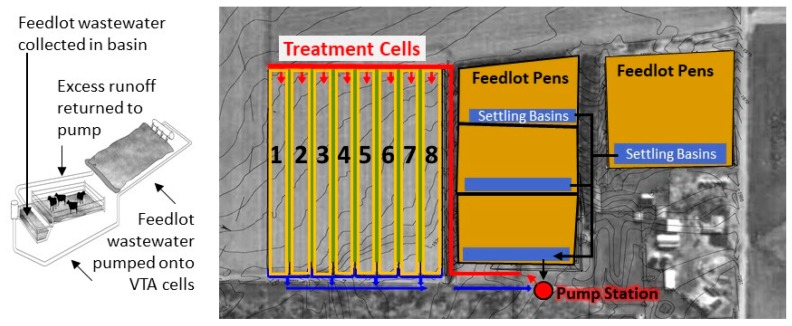
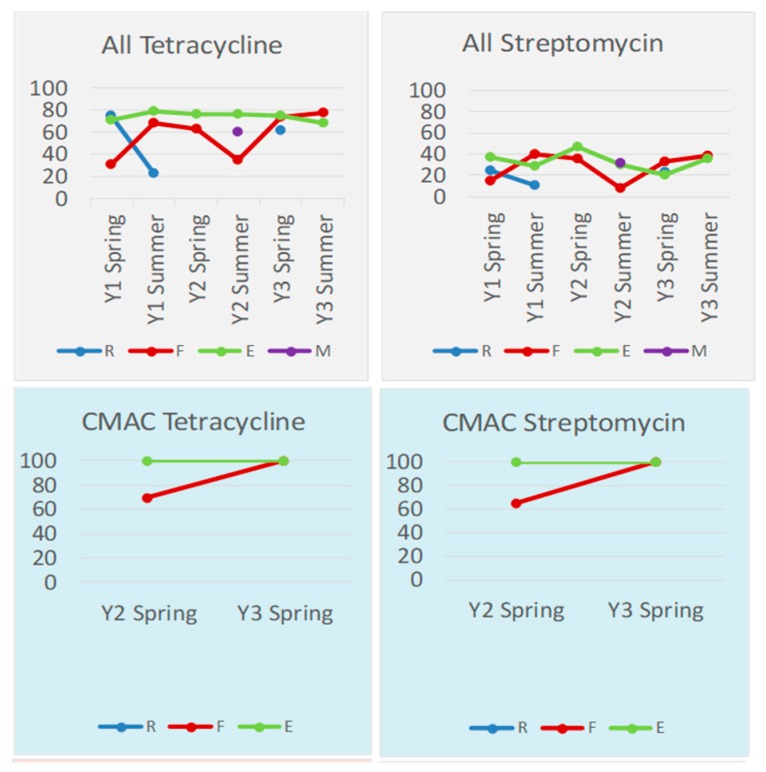
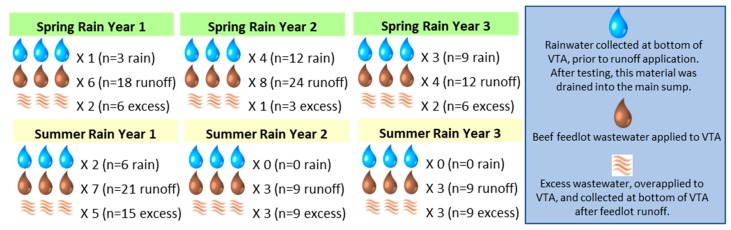
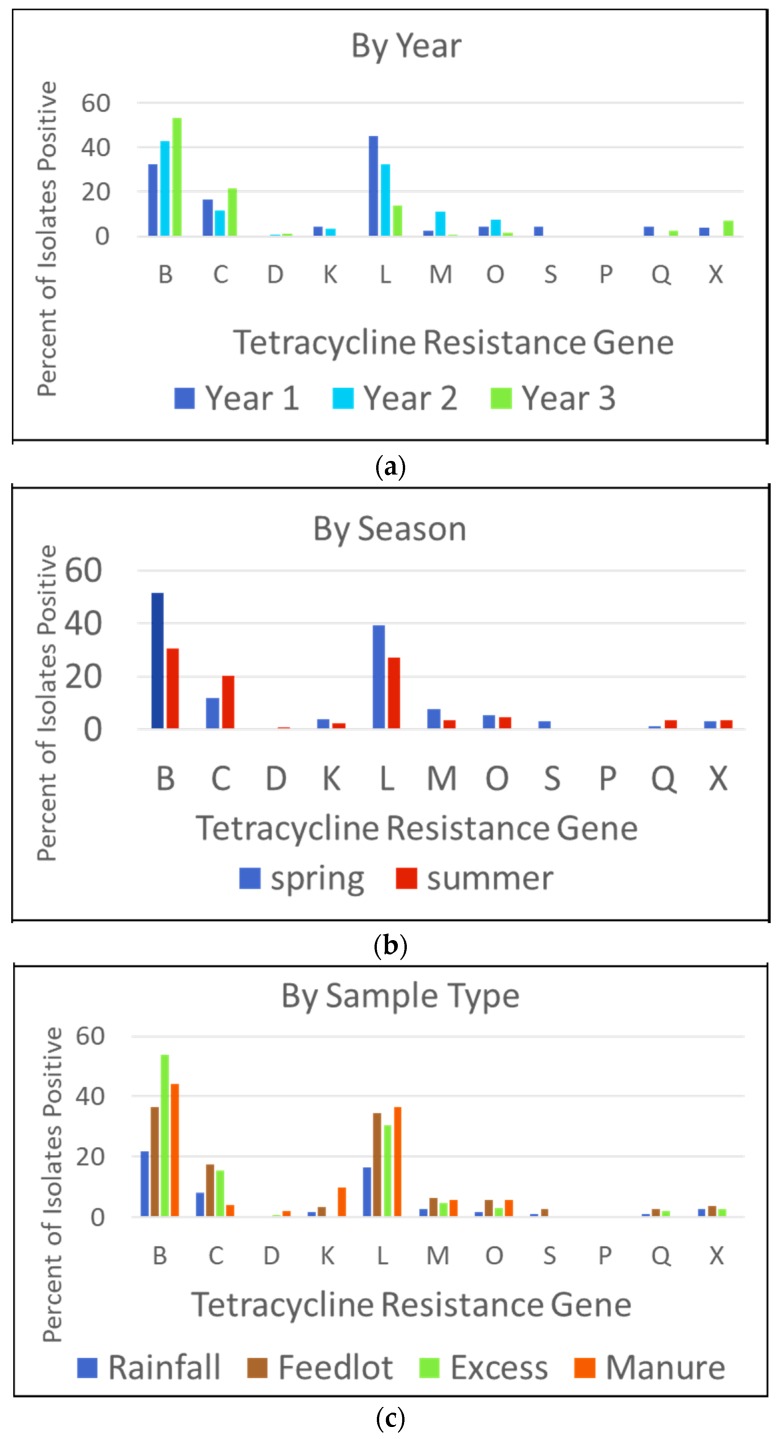
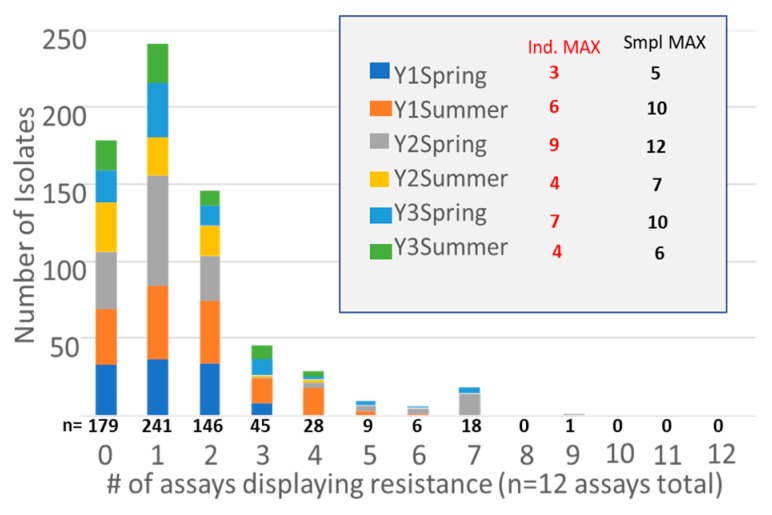
Wastewater is an important vector of antibiotic resistant bacteria and antibiotic resistance genes (ARB/G). While there is broad agreement that ARB/G from agricultural (ag) wastewaters can be transported through the environment and may contribute to untreatable infectious disease in humans and animals, there remain large knowledge gaps surrounding applied details on the types and amounts of ARB/G associated with different agricultural wastewater treatment options and different ag production systems. This study evaluates a vegetative treatment system (VTS) built to treat the wastewater from a beef cattle feedlot. Samples were collected for three years, and plated on multiple media types to enumerate tetracycline and cefotaxime-resistant bacteria. Enterobacteriaceae isolates ( = 822) were characterized for carriage of tetracycline resistance genes, and isolates ( = 673) were phenotyped to determine multi-drug resistance (MDR) profiles. Tetracycline resistance in feedlot runoff wastewater was 2-to-3 orders of magnitude higher compared to rainfall runoff from the VTS fields, indicating efficacy of the VTA for reducing ARB over time following wastewater application. Clear differences in MDR profiles were observed based on the specific media on which a sample was plated. This result highlights the importance of method, especially in the context of isolate-based surveillance and monitoring of ARB in agricultural wastewaters.
污水是抗生素耐药细菌和抗生素耐药基因(ARB/G)的重要载体。尽管人们普遍认为来自农业(ag)废水的 ARB/G 可以通过环境传播,并可能导致人类和动物的无法治愈的传染病,但仍存在大量知识空白,涉及与不同农业废水处理方案和不同农业生产系统相关的 ARB/G 的类型和数量的应用细节。本研究评估了一种用于处理肉牛饲养场废水的植物处理系统(VTS)。收集了三年的样本,并在多种培养基上进行平板培养以计数四环素和头孢噻肟耐药细菌。对肠杆菌科分离株(=822)进行了携带四环素耐药基因的特征描述,并且对 分离株(=673)进行了表型分析以确定多药耐药(MDR)图谱。与 VTS 田间的雨水径流水相比,饲养场径流废水中的四环素耐药性高出 2-3 个数量级,这表明 VTA 在废水应用后随着时间的推移,对 ARB 的去除效果逐渐增强。根据样本接种的特定培养基,观察到 MDR 图谱存在明显差异。这一结果强调了方法的重要性,特别是在基于分离株的农业废水中 ARB 监测和监测方面。