Department of Immunology and Infectious Biology, Institute of Microbiology, Biotechnology and Immunology, Faculty of Biology and Environmental Protection, University of Lodz, Banacha 12/16, 91-237 Lodz, Poland.
Department of Biochemistry, Institute of Soil Science and Plant Cultivation, State Research Institute, Czartoryskich 8, 24-100 Puławy, Poland.
Molecules. 2018 Jun 21;23(7):1498. doi: 10.3390/molecules23071498.
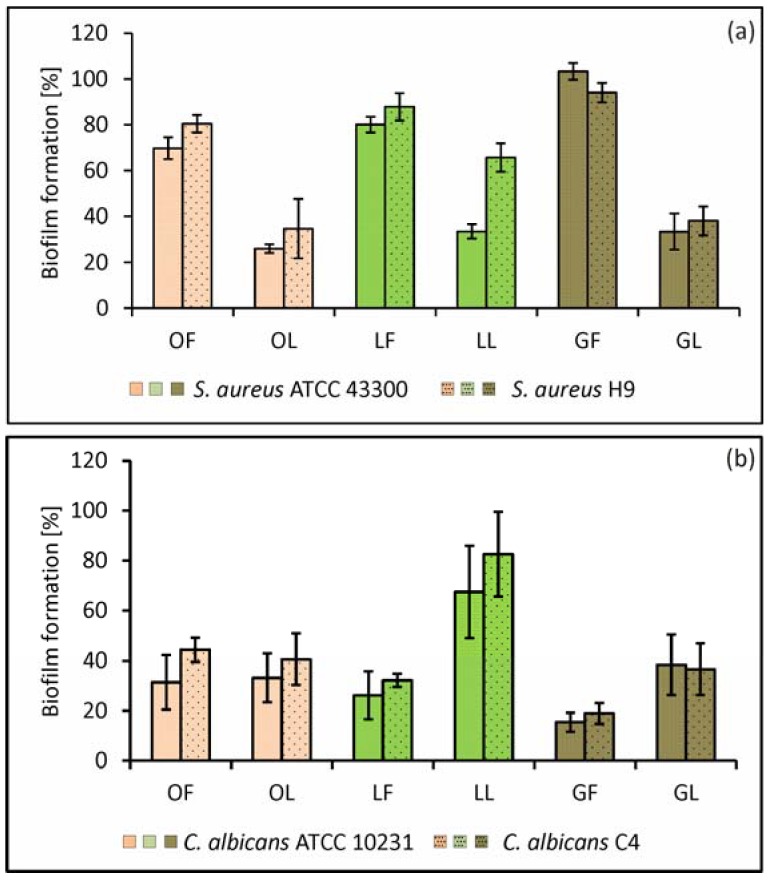
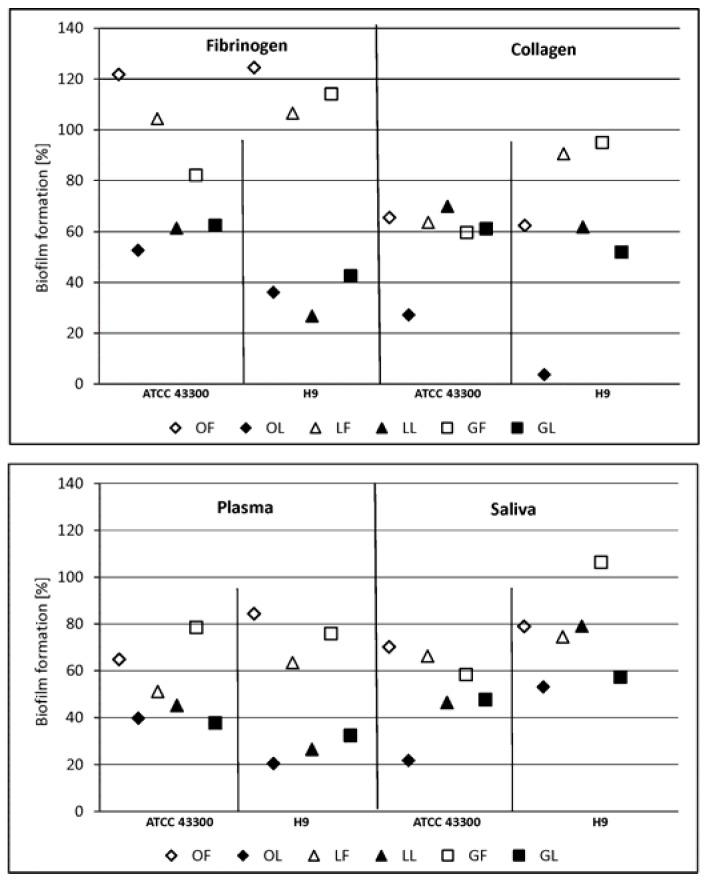
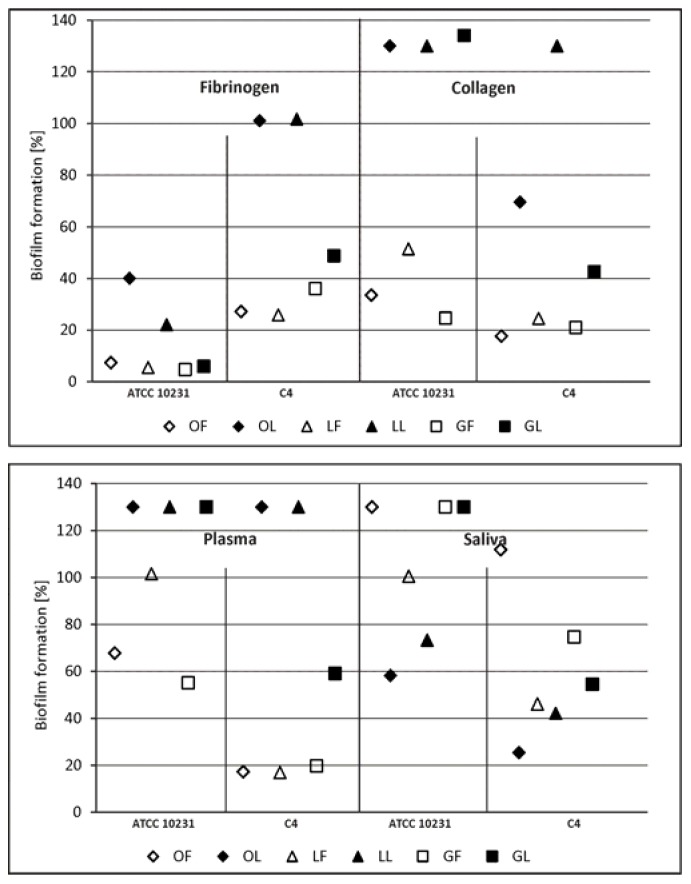
Butanol extracts from leaves, twigs, and fruits of (L.) A. Nelson (sea buckthorn, SBT) were fractionated into phenolic and nonpolar lipid components, the chemical composition of which was analyzed. Assuming that an effect on natural microbiota and host epithelial cells needs to be assessed, regardless of the purpose of using SBT formulations in vivo, the minimal inhibitory/biocidal/fungicidal concentrations (MICs/MBCs/MFCs) of the fractions and reference phytocompounds were screened, involving 17 species of Gram-positive and Gram-negative bacteria and species. The MICs of SBT extracts were in the range of 0.25⁻2.0 mg∙mL. Since direct antimicrobial activity of the extracts was quite low and variable, the impact of subMIC on the important in vivo persistence properties of model microorganisms and C. was evaluated. Tests for adhesion and biofilm formation on an abiotic surface and on surfaces conditioned with fibrinogen, collagen, plasma, or artificial saliva showed the inhibitory activity of the fractions. The effects on fluorescein isothiocyanate (FITC)-labeled staphylococci adhesion to fibroblasts (HFF-1) and epithelial cells (Caco-2), and on fungal morphogenesis, indicated that SBT extracts have high antivirulence potential. Cytotoxicity tests (MTT reduction) on the standard fibroblast cell line showed variable biological safety of the fractions depending on their composition and concentration. The new information afforded by this study, additional to that already known, is of potential practical value in the application of SBT-derived preparations as antivirulence agents.
(沙棘,SBT)的叶、枝和果实的丁醇提取物被分为酚类和非极性脂质成分,对其化学组成进行了分析。假设需要评估其对天然微生物群和宿主上皮细胞的影响,而不论在体内使用 SBT 制剂的目的如何,都需要筛选这些部分和参考植物化合物的最小抑菌/杀菌/杀真菌浓度(MIC/MBC/MFC),涉及 17 种革兰氏阳性和革兰氏阴性细菌和 种真菌。SBT 提取物的 MIC 值在 0.25-2.0 mg·mL 之间。由于提取物的直接抗菌活性相当低且变化较大,因此评估了亚 MIC 对模型微生物和 的重要体内持久性特性的影响。在非生物表面和用纤维蛋白原、胶原蛋白、血浆或人工唾液调理的表面上进行粘附和生物膜形成的测试表明,这些部分具有抑制活性。对荧光素异硫氰酸酯(FITC)标记的葡萄球菌与成纤维细胞(HFF-1)和上皮细胞(Caco-2)的粘附以及真菌形态发生的影响表明,SBT 提取物具有很高的抗毒力潜力。对标准成纤维细胞系进行的细胞毒性试验(MTT 减少)表明,部分的组成和浓度会导致其具有不同的生物安全性。除了已经知道的信息外,本研究提供的新信息对于将 SBT 衍生制剂作为抗毒力剂的应用具有潜在的实际价值。