Shi Gaofeng, Li Hu, Gao Fengshan, Tan Qian
Drum Tower Clinical Medical College of Nanjing Medical University, Nanjing, People's Republic of China.
Department of Plastic Surgery, the Affiliated Wuxi No 4 People's Hospital of Jiangnan University, Wuxi, People's Republic of China.
Onco Targets Ther. 2018 Jun 20;11:3583-3595. doi: 10.2147/OTT.S160143. eCollection 2018.
Melanoma is a deadly malignancy and the poor prognosis of patients with advanced disease is relatively poor. Recent studies indicate that long non-coding RNAs are involved in the pathogenesis of malignant melanoma. This study aims to investigate the role of the long non-coding RNA H19 in melanoma and to explore the underlying molecular mechanisms.
The expression levels of H19 in clinical samples and melanoma cells were determined by quantitative real-time PCR. The cell growth and cell metastasis were assessed by Cell Counting Kit 8, cell invasion and wound healing assays. Cell apoptosis and cell cycle were determined by flow cytometry. Protein levels were determined by Western blotting assay.
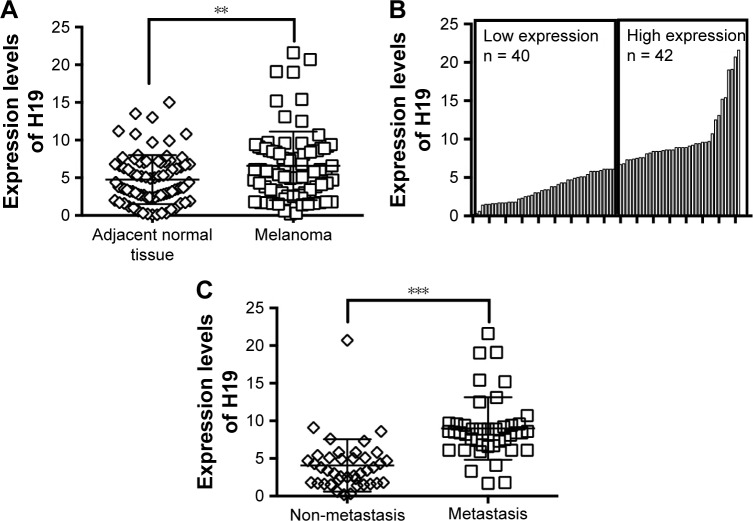
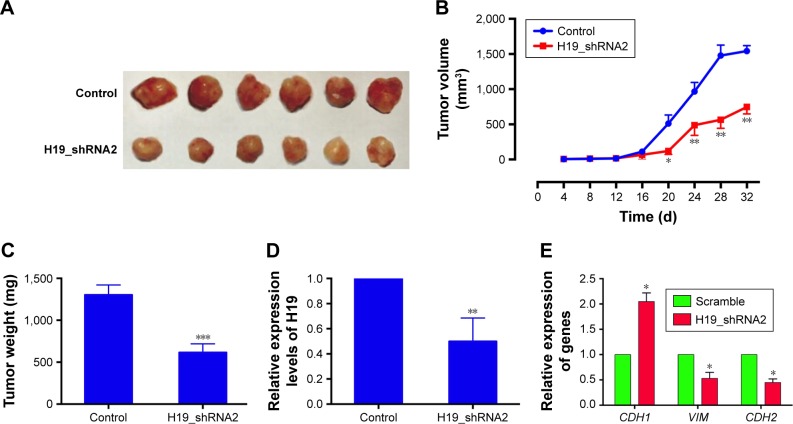
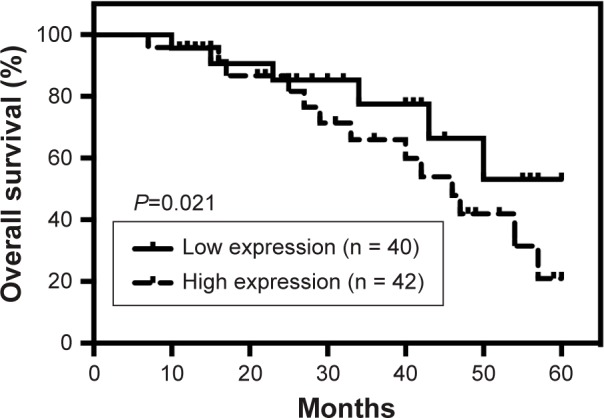
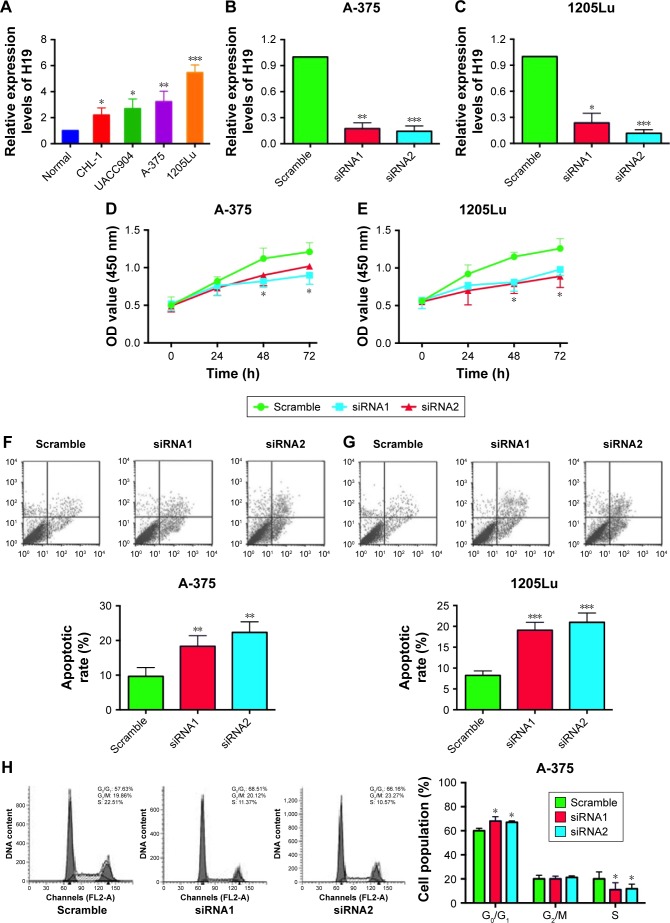
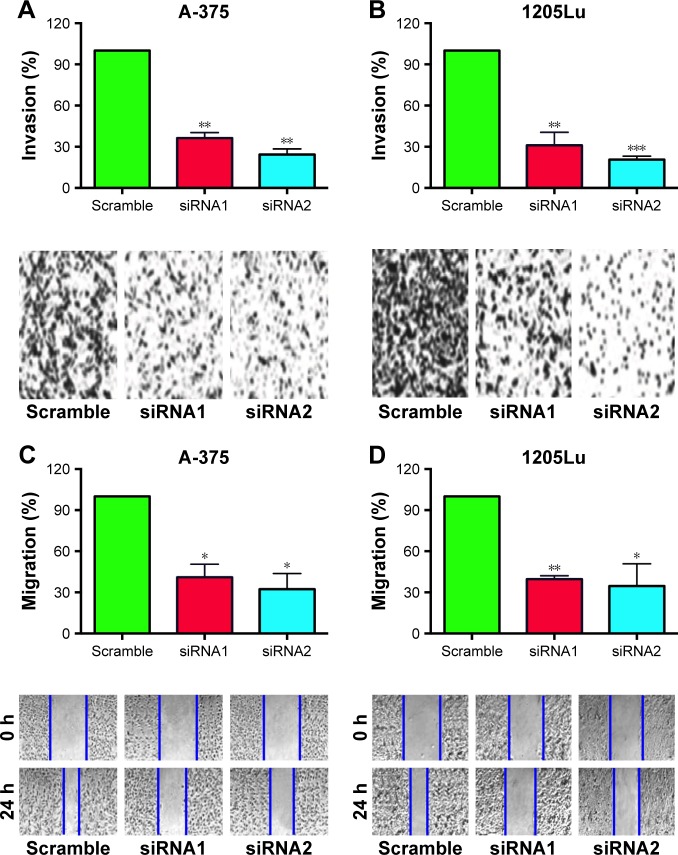
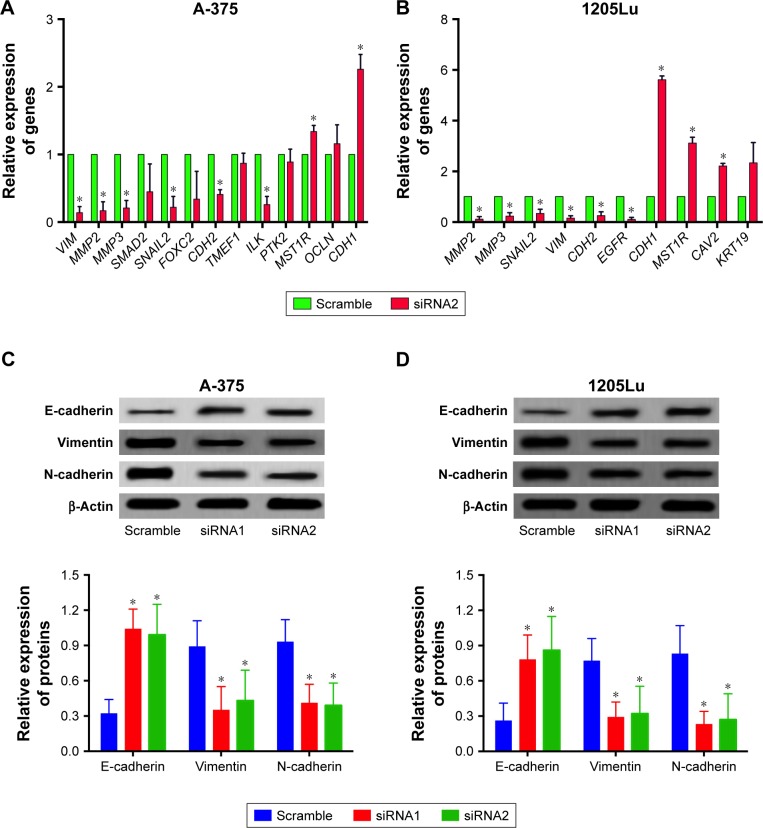
H19 was highly expressed in melanoma tissues compared to normal adjacent skin tissues, and the tissue expression level of H19 from melanoma patients with metastasis was significantly higher than that from patients without distant metastasis. In addition, the high expression of H19 in melanoma tissues was associated with advanced tumor invasion and TNM stage, distal metastasis, lymph node metastasis and shorter overall survival in patients with melanoma. The in vitro functional assays showed that knockdown of H19 inhibited cell growth, invasion and migration and also induced cell apoptosis as well as G/G arrest in melanoma cells. Further quantitative real-time PCR and Western blot experiments showed that knockdown of H19 differentially regulated the epithelial-mesenchymal transition (EMT)-related gene expressions and reversed EMT in melanoma cell lines. Knockdown of H19 suppressed in vivo tumor growth and modulated the expressions of EMT-related genes in nude mice.
The results from this study suggest that upregulation of H19 contributes to melanoma development and progression.
黑色素瘤是一种致命的恶性肿瘤,晚期患者的预后相对较差。最近的研究表明,长链非编码RNA参与了恶性黑色素瘤的发病机制。本研究旨在探讨长链非编码RNA H19在黑色素瘤中的作用,并探索其潜在的分子机制。
通过定量实时PCR测定临床样本和黑色素瘤细胞中H19的表达水平。采用细胞计数试剂盒8、细胞侵袭和伤口愈合试验评估细胞生长和细胞转移情况。通过流式细胞术测定细胞凋亡和细胞周期。采用蛋白质印迹法测定蛋白质水平。
与相邻正常皮肤组织相比,H19在黑色素瘤组织中高表达,且发生转移的黑色素瘤患者组织中H19的表达水平显著高于无远处转移的患者。此外,黑色素瘤组织中H19的高表达与肿瘤侵袭程度高、TNM分期、远处转移、淋巴结转移以及黑色素瘤患者总生存期较短相关。体外功能试验表明,敲低H19可抑制黑色素瘤细胞的生长、侵袭和迁移,并诱导细胞凋亡以及G/G期阻滞。进一步的定量实时PCR和蛋白质印迹实验表明,敲低H19可差异调节上皮-间质转化(EMT)相关基因的表达,并逆转黑色素瘤细胞系中的EMT。敲低H19可抑制裸鼠体内肿瘤生长,并调节EMT相关基因的表达。
本研究结果表明,H19的上调促进了黑色素瘤的发生和发展。