Zinke Laura A, Reese Brandi Kiel, McManus James, Wheat Charles G, Orcutt Beth N, Amend Jan P
Marine and Environmental Biology Section, University of Southern California, Los Angeles, CA, United States.
Department of Life Sciences, Texas A&M University - Corpus Christi, Corpus Christi, TX, United States.
Front Microbiol. 2018 Jun 13;9:1249. doi: 10.3389/fmicb.2018.01249. eCollection 2018.
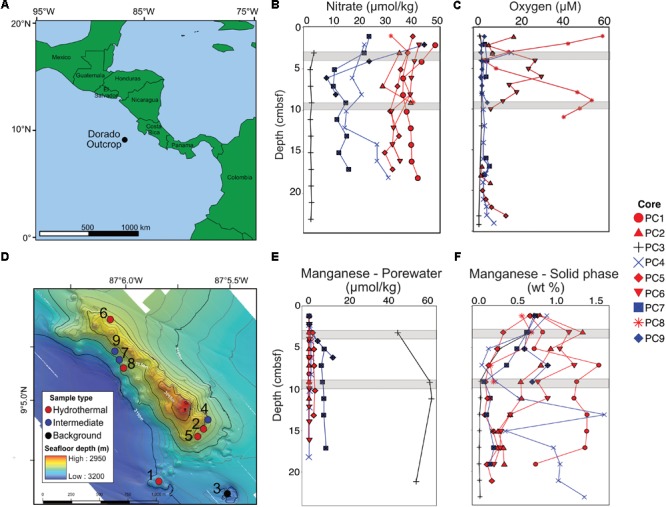
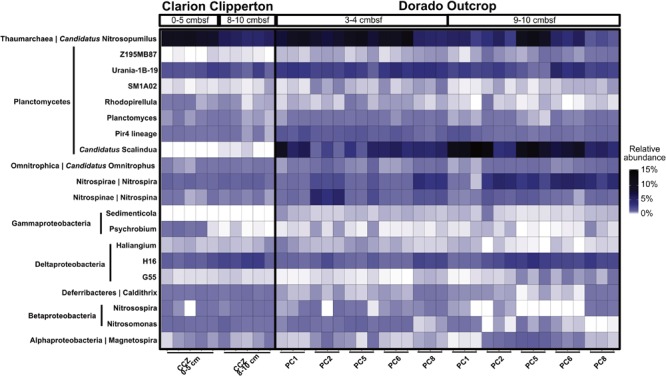
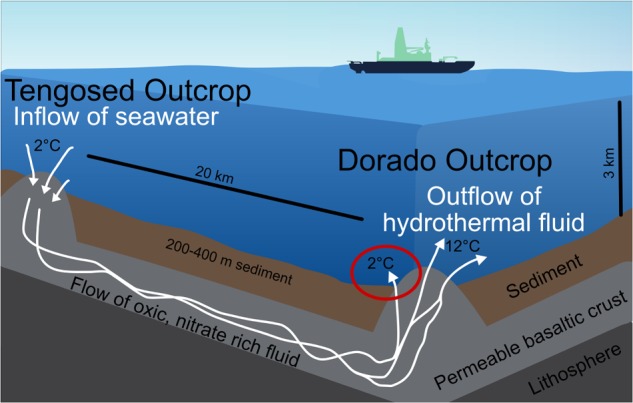
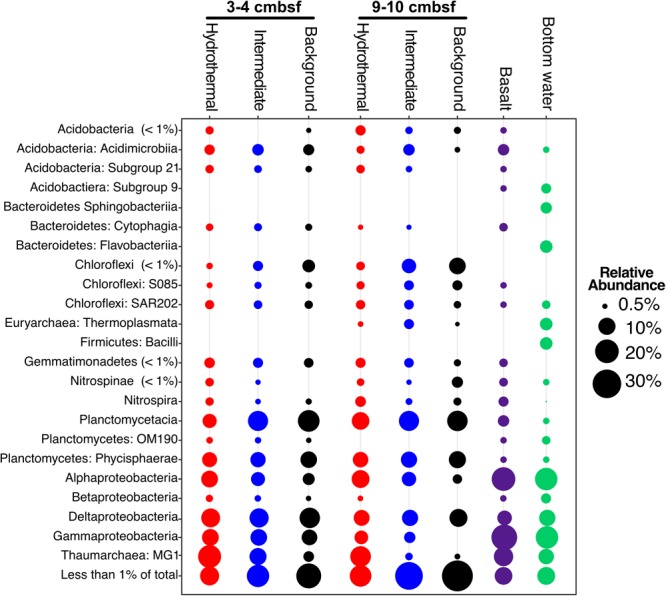
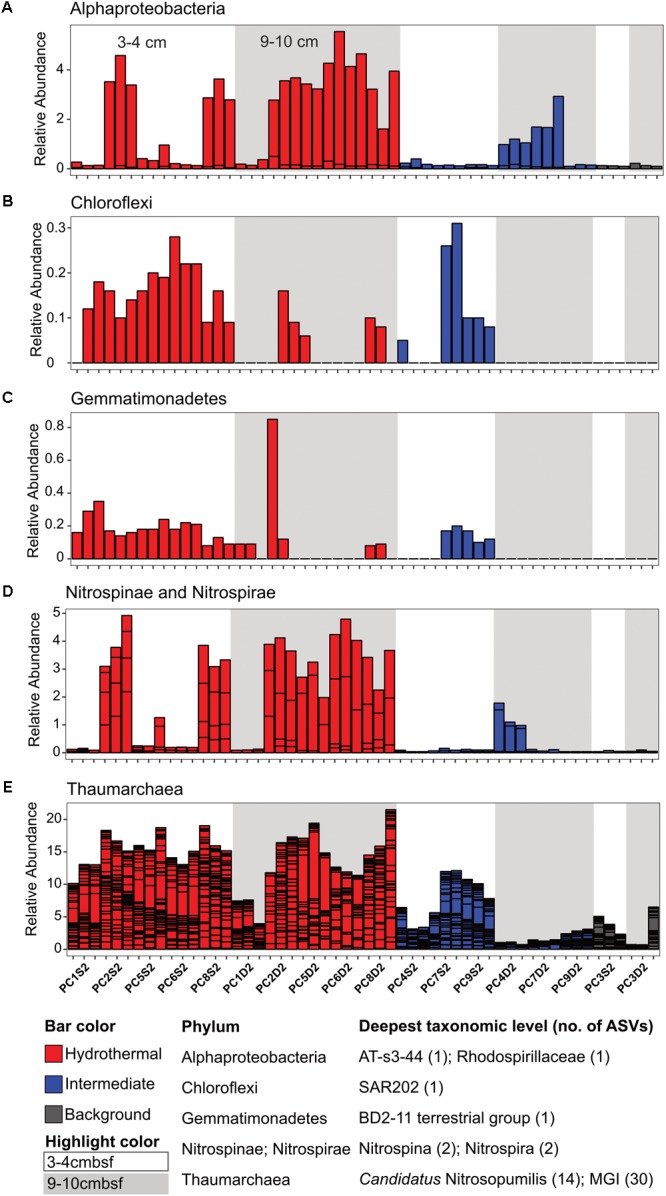
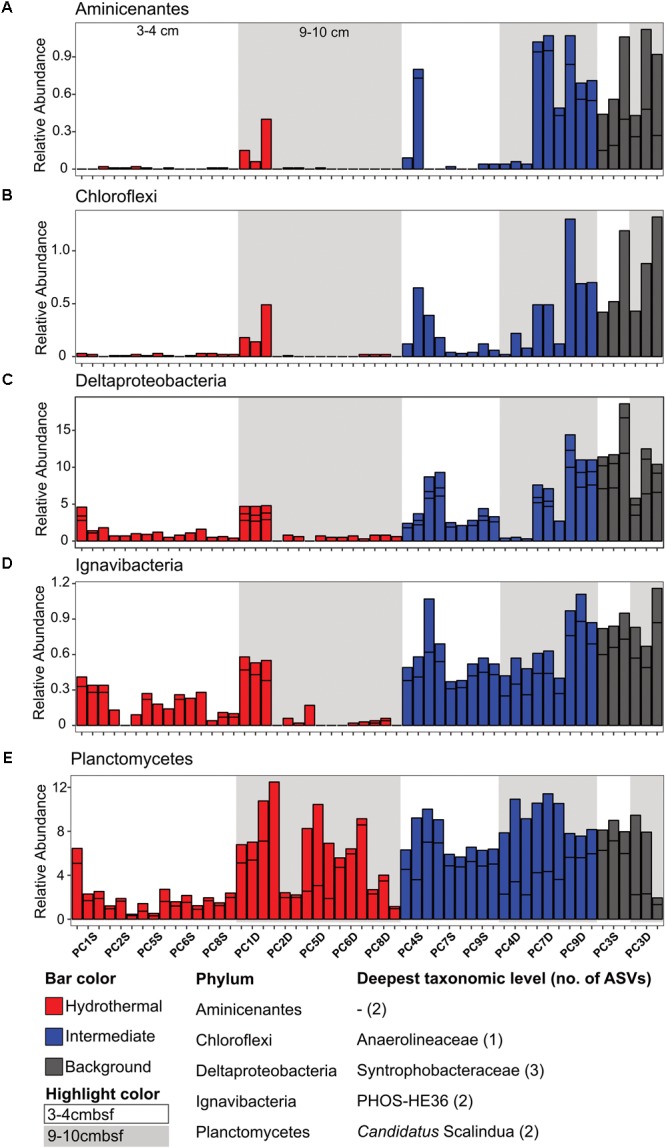
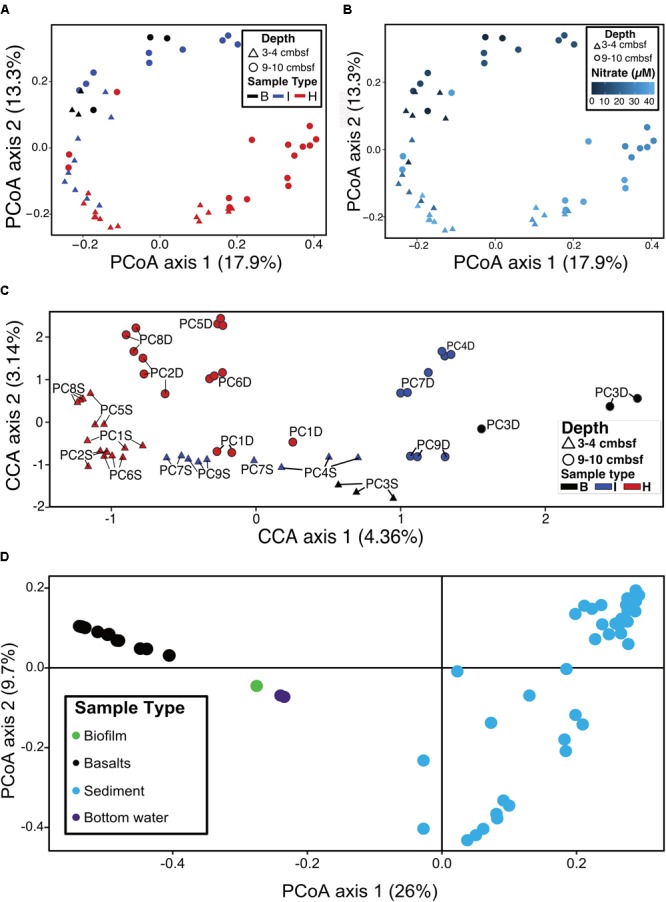
Cool hydrothermal systems (CHSs) are prevalent across the seafloor and discharge fluid volumes that rival oceanic input from rivers, yet the microbial ecology of these systems are poorly constrained. The Dorado Outcrop on the ridge flank of the Cocos Plate in the northeastern tropical Pacific Ocean is the first confirmed CHS, discharging minimally altered <15°C fluid from the shallow lithosphere through diffuse venting and seepage. In this paper, we characterize the resident sediment microbial communities influenced by cool hydrothermal advection, which is evident from nitrate and oxygen concentrations. 16S rRNA gene sequencing revealed that Thaumarchaea, Proteobacteria, and Planctomycetes were the most abundant phyla in all sediments across the system regardless of influence from seepage. Members of the Thaumarchaeota (Marine Group I), Alphaproteobacteria (Rhodospirillales), Nitrospirae, Nitrospina, Acidobacteria, and Gemmatimonadetes were enriched in the sediments influenced by CHS advection. Of the various geochemical parameters investigated, nitrate concentrations correlated best with microbial community structure, indicating structuring based on seepage of nitrate-rich fluids. A comparison of microbial communities from hydrothermal sediments, seafloor basalts, and local seawater at Dorado Outcrop showed differences that highlight the distinct niche space in CHS. Sediment microbial communities from Dorado Outcrop differ from those at previously characterized, warmer CHS sediment, but are similar to deep-sea sediment habitats with surficial ferromanganese nodules, such as the Clarion Clipperton Zone. We conclude that cool hydrothermal venting at seafloor outcrops can alter the local sedimentary oxidation-reduction pathways, which in turn influences the microbial communities within the fluid discharge affected sediment.
冷液热液系统(CHSs)遍布海底,其排出的流体量可与河流注入海洋的水量相媲美,但这些系统的微生物生态学却知之甚少。位于东北热带太平洋科科斯板块洋脊侧翼的多拉多露头是首个得到确认的CHS,通过扩散式排放口和渗漏,从浅部岩石圈排出温度低于15°C且几乎未发生变化的流体。在本文中,我们描述了受冷液热液平流影响的沉积物中微生物群落的特征,这从硝酸盐和氧气浓度上可以明显看出。16S rRNA基因测序表明,无论是否受到渗漏影响,泉古菌门、变形菌门和浮霉菌门都是整个系统所有沉积物中最丰富的门类。奇古菌门(海洋第一类群)、α-变形菌纲(红螺菌目)、硝化螺旋菌门、硝化刺菌属、酸杆菌门和芽单胞菌门的成员在受CHS平流影响的沉积物中富集。在所研究的各种地球化学参数中,硝酸盐浓度与微生物群落结构的相关性最佳,表明是基于富含硝酸盐流体的渗漏而形成的结构。对多拉多露头热液沉积物、海底玄武岩和当地海水的微生物群落进行比较,结果显示出的差异突出了CHS中独特的生态位空间。多拉多露头的沉积物微生物群落与之前描述的较温暖的CHS沉积物中的群落不同,但与有表层铁锰结核的深海沉积物栖息地相似,如克拉里昂-克利珀顿区。我们得出结论,海底露头处的冷液热液排放可改变当地的沉积氧化还原途径,进而影响流体排放所影响的沉积物中的微生物群落。