Yang Chao, Li Lihua, Yang Ligang, Lǚ Hui, Wang Shaokang, Sun Guiju
1Key Laboratory of Environmental Medicine and Engineering of Ministry of Education, and Department of Nutrition and Food Hygiene, School of Public Health, Southeast University, No. 87 Ding Jia Qiao Road, Nanjing, 210009 China.
2Second Clinical Medical College, Nanjing University of Traditional Chinese Medicine, Nanjing, 210046 China.
Nutr Metab (Lond). 2018 Jun 20;15:43. doi: 10.1186/s12986-018-0275-x. eCollection 2018.
Until now, little research concerning the lipid-lowering and anti-obesity functions of garlic oil and onion oil has been performed. The objective of this study was to explore the effects of garlic oil and onion oil on serum lipid levels in hyperlipidemia model rats, to provide a scientific basis for the prevention of hyperlipidemia through a dietary approach, and to explore the potential health benefits of garlic and onion.
Ninety-six male Sprague-Dawley rats were randomly allocated into eight groups based on their body weight and serum levels of triglycerides (TG) and total cholesterol (TC). The rats received repeated oral administration of volatile oils extracted from garlic and onion for 60 days. Serum lipids and parameters of obesity were examined.
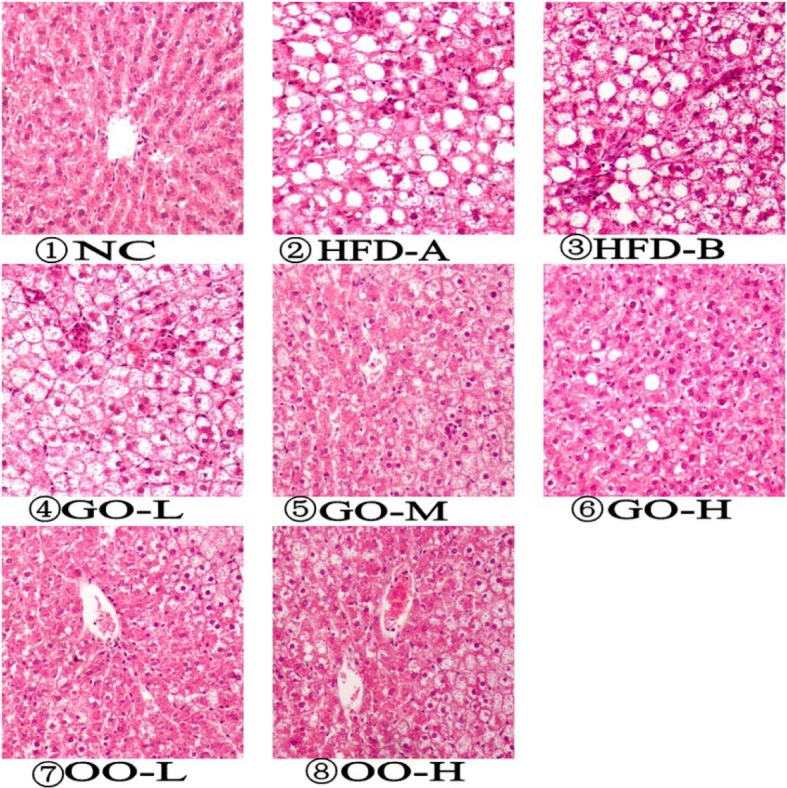
The volatile oils suppressed the HFD-induced body weight gain and tended to decrease adipose tissue weight. The oils decreased the levels of TG, TC and LDL-C and increased the serum level of HDL-C compared with the rats in the hyperlipidemia model groups ( < 0.05). The oils were also effective at improving the lipid profile and alleviating hepatic steatosis.
Our results implied that garlic oil and onion oil have anti-obesity properties that can counteract the effects of an HFD on body weight, adipose tissue weight, and serum lipid profiles.
迄今为止,关于大蒜油和洋葱油的降脂及抗肥胖功能的研究甚少。本研究的目的是探讨大蒜油和洋葱油对高脂血症模型大鼠血脂水平的影响,为通过饮食方法预防高脂血症提供科学依据,并探索大蒜和洋葱潜在的健康益处。
96只雄性斯普拉格-道利大鼠根据体重以及甘油三酯(TG)和总胆固醇(TC)的血清水平随机分为八组。大鼠连续60天重复口服从大蒜和洋葱中提取的挥发油。检测血脂和肥胖参数。
与高脂血症模型组大鼠相比,挥发油抑制了高脂饮食诱导的体重增加,并倾向于降低脂肪组织重量。挥发油降低了TG、TC和低密度脂蛋白胆固醇(LDL-C)水平,并提高了血清高密度脂蛋白胆固醇(HDL-C)水平(<0.05)。挥发油还能有效改善血脂谱并减轻肝脏脂肪变性。
我们的结果表明,大蒜油和洋葱油具有抗肥胖特性,可抵消高脂饮食对体重、脂肪组织重量和血脂谱的影响。