Department of Experimental Medical Science, Medicon Village 406, SE-22381, Lund, Sweden.
Oncology Clinic, Department of Clinical Sciences, University Hospital Lund, SE-221 85, Lund, Sweden.
Cell Commun Signal. 2018 Jul 2;16(1):36. doi: 10.1186/s12964-018-0249-7.
Chemotherapeutic efficacy can be improved by targeting the structure and function of the extracellular matrix (ECM) in the carcinomal stroma. This can be accomplished by e.g. inhibiting TGF-β1 and -β3 or treating with Imatinib, which results in scarcer collagen fibril structure in xenografted human KAT-4/HT29 (KAT-4) colon adenocarcinoma.
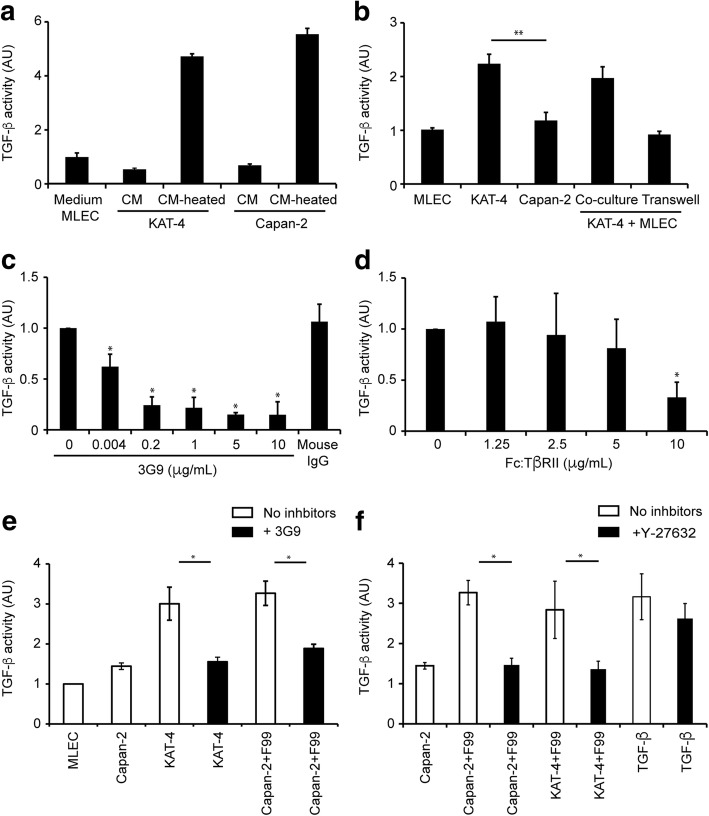
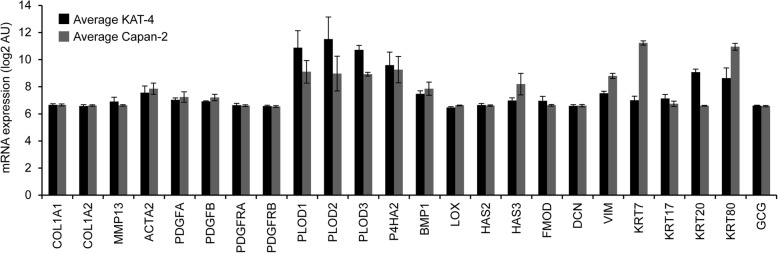
The potential role of αβ integrin-mediated activation of latent TGF-β was studied in cultured KAT-4 and Capan-2 human ductal pancreatic carcinoma cells as well as in xenograft carcinoma generated by these cells. The monoclonal αβ integrin-specific monoclonal antibody 3G9 was used to inhibit the αβ integrin activity.
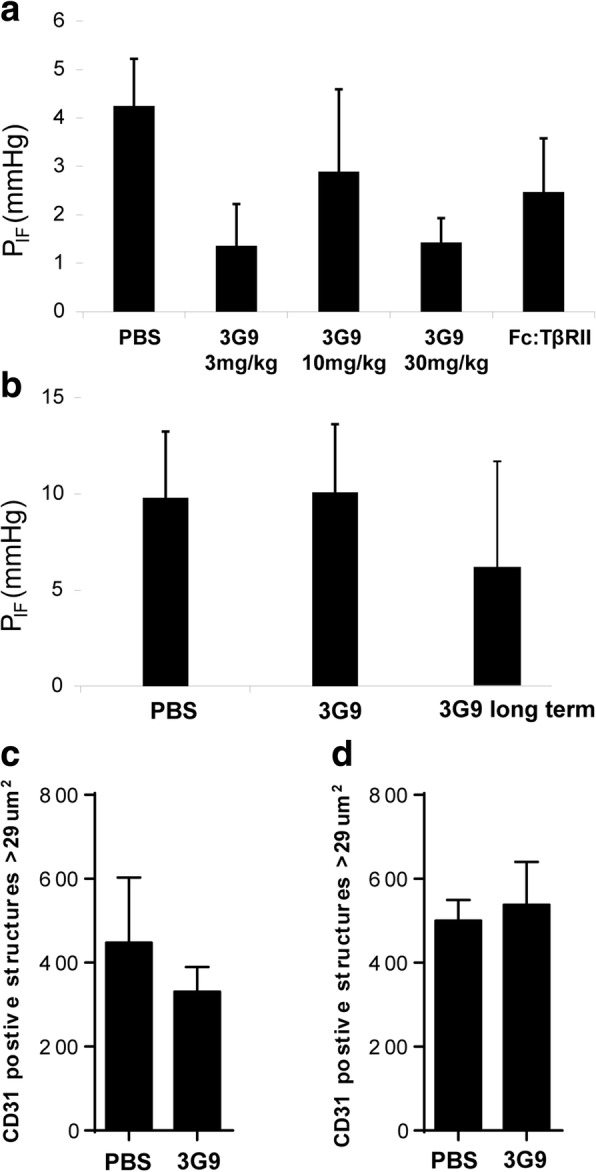
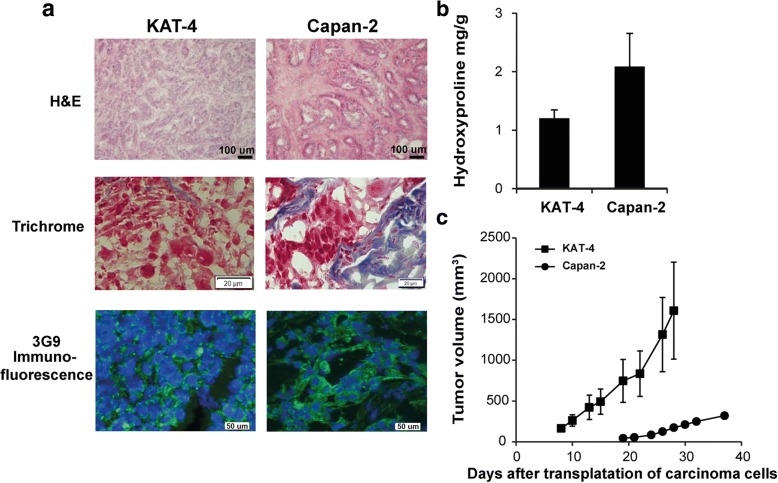
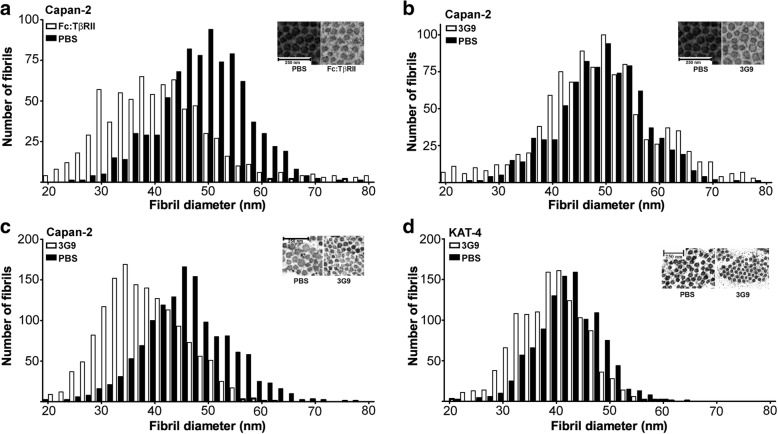
Both KAT-4 and Capan-2 cells expressed the αβ integrin but only KAT-4 cells could utilize this integrin to activate latent TGF-β in vitro. Only when Capan-2 cells were co-cultured with human F99 fibroblasts was the integrin activation mechanism triggered, suggesting a more complex, fibroblast-dependent, activation pathway. In nude mice, a 10-day treatment with 3G9 reduced collagen fibril thickness and interstitial fluid pressure in KAT-4 but not in the more desmoplastic Capan-2 tumors that, to achieve a similar effect, required a prolonged 3G9 treatment. In contrast, a 10-day direct inhibition of TGF-β1 and -β3 reduced collagen fibril thickness in both tumor models.
Our data demonstrate that the αβ-directed activation of latent TGF-β plays a pivotal role in modulating the stromal collagen network in carcinoma, but that the sensitivity to αβ inhibition depends on the simultaneous presence of alternative paths for latent TGF-β activation and the extent of desmoplasia.
通过靶向癌基质中细胞外基质(ECM)的结构和功能,可以提高化学治疗的疗效。例如,通过抑制 TGF-β1 和 -β3 或用伊马替尼治疗可以实现这一点,这导致异种移植的人 KAT-4/HT29(KAT-4)结肠腺癌中的胶原纤维结构更加稀少。
研究了αβ整联蛋白介导的潜伏 TGF-β的激活在培养的 KAT-4 和 Capan-2 人导管腺癌细胞以及由这些细胞产生的异种移植癌中的潜在作用。使用单克隆αβ整联蛋白特异性单克隆抗体 3G9 抑制αβ整联蛋白活性。
KAT-4 和 Capan-2 细胞均表达αβ整联蛋白,但只有 KAT-4 细胞可以利用该整联蛋白在体外激活潜伏 TGF-β。只有当 Capan-2 细胞与人 F99 成纤维细胞共培养时,才触发整合素激活机制,这表明存在更复杂的、依赖成纤维细胞的激活途径。在裸鼠中,用 3G9 治疗 10 天可减少 KAT-4 中的胶原纤维厚度和间质液压力,但对更纤维化的 Capan-2 肿瘤则无效,需要延长 3G9 治疗才能达到类似效果。相比之下,用 3G9 直接抑制 TGF-β1 和 -β3 可减少两种肿瘤模型中的胶原纤维厚度。
我们的数据表明,αβ 定向激活潜伏 TGF-β在调节癌基质中的胶原网络中起着关键作用,但对 αβ 抑制的敏感性取决于潜伏 TGF-β激活的替代途径的同时存在以及纤维化的程度。