Department of Materials Science and Engineering, Pohang University of Science and Technology (POSTECH), Pohang, 37673, Republic of Korea.
Institute of Physics of Advanced Materials, Ufa State Aviation Technical University, Ufa, 450008, Russia.
Sci Rep. 2018 Jul 2;8(1):9907. doi: 10.1038/s41598-018-28367-0.
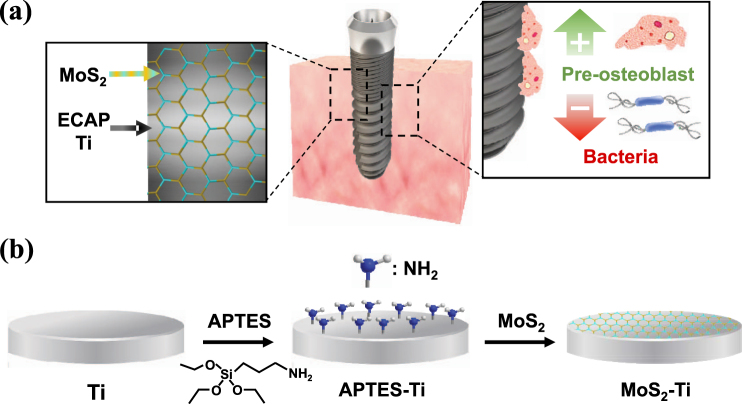
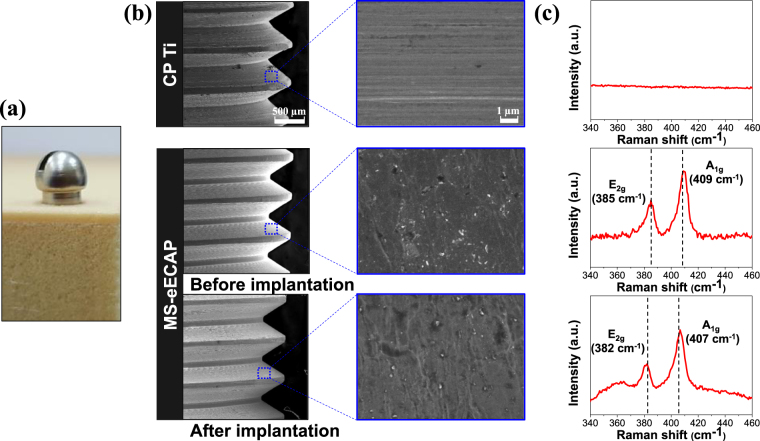
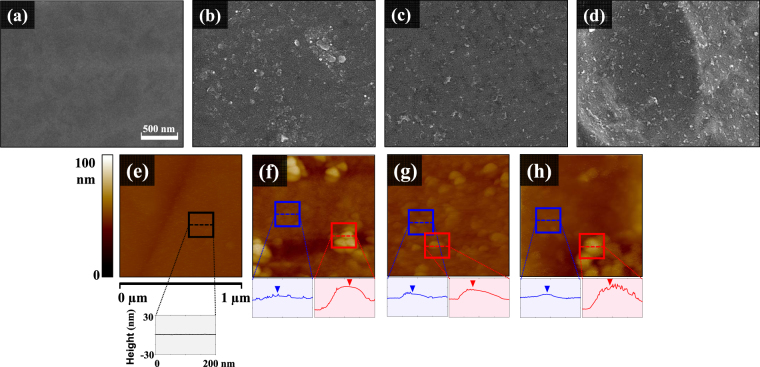
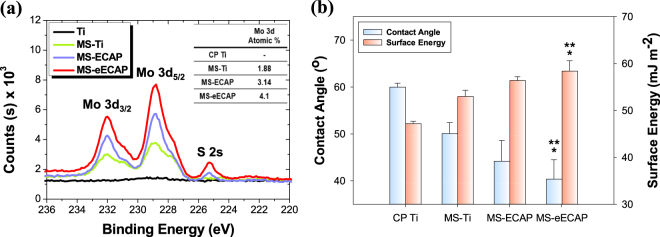
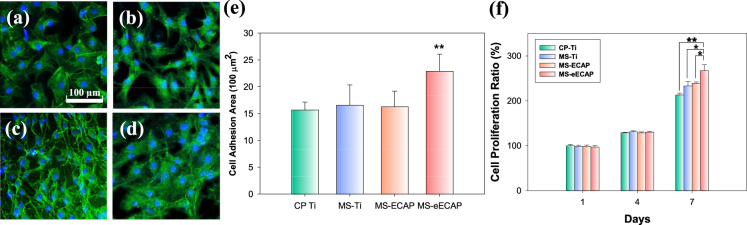
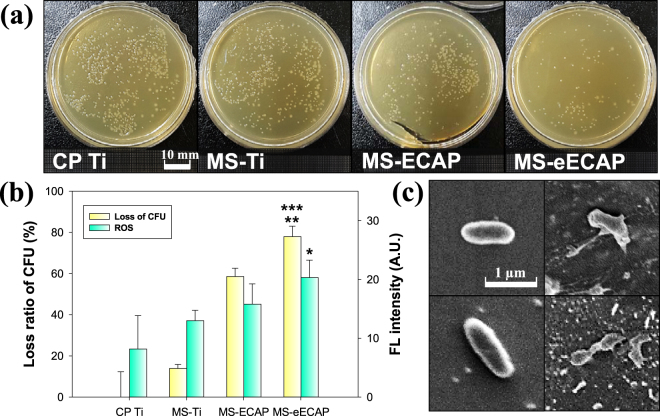
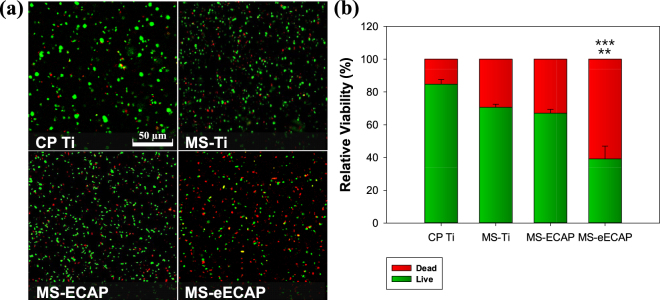
The commercially pure Ti (CP Ti) and equal-channel angular pressing (ECAP) processed Ti can contribute to the downsizing of medical devices with their superior mechanical properties and negligible toxicity. However, the ECAP-processed pure Ti has the risk of bacterial infection. Here, the coarse- and ultrafine-grained Ti substrates were surface-modified with molybdenum disulfide (MoS) to improve the cell proliferation and growth with antibacterial effect for further dental applications. According to in vitro tests using the pre-osteoblast of MC3T3-E1 cell and a bacterial model of Escherichia coli (E. coli), MoS nanoflakes coated and ECAP-processed Ti substrates showed a significant increase in surface energy and singlet oxygen generation resulting in improved cell attachment and antibacterial effect. In addition, we confirmed the stability of the surface modified Ti substrates in a physiological solution and an artificial bone. Taken together, MoS modified and ECAP-processed Ti substrates might be successfully harnessed for various dental applications.
商用纯钛(CP Ti)和等径角挤压(ECAP)处理的 Ti 由于具有优异的机械性能和可忽略的毒性,可用于缩小医疗设备的尺寸。然而,ECAP 处理的纯钛有细菌感染的风险。在这里,粗晶和超细晶 Ti 基体通过二硫化钼(MoS)进行表面改性,以提高细胞增殖和生长能力,并具有抗菌作用,从而进一步应用于牙科。根据使用 MC3T3-E1 前成骨细胞和大肠杆菌(E. coli)细菌模型的体外试验,MoS 纳米薄片涂层和 ECAP 处理的 Ti 基体的表面能显著增加,单线态氧生成增加,从而改善细胞附着和抗菌效果。此外,我们还在生理溶液和人工骨中确认了表面改性 Ti 基体的稳定性。综上所述,MoS 改性和 ECAP 处理的 Ti 基体可能成功地应用于各种牙科应用。