Violán Concepción, Roso-Llorach Albert, Foguet-Boreu Quintí, Guisado-Clavero Marina, Pons-Vigués Mariona, Pujol-Ribera Enriqueta, Valderas Jose M
Institut Universitari d'Investigació en Atenció Primària Jordi Gol (IDIAP Jordi Gol), Gran Via Corts Catalanes, 587 àtic, 08007, Barcelona, Spain.
Universitat Autònoma de Barcelona, Bellaterra, Cerdanyola del Vallès, Spain.
BMC Fam Pract. 2018 Jul 3;19(1):108. doi: 10.1186/s12875-018-0790-x.
The purpose of this study was to ascertain multimorbidity patterns using a non-hierarchical cluster analysis in adult primary patients with multimorbidity attended in primary care centers in Catalonia.
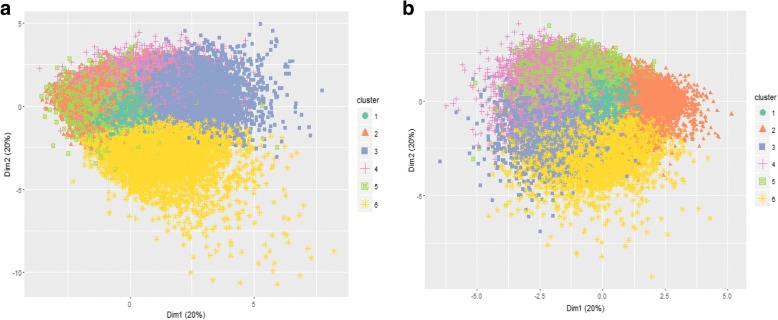
Cross-sectional study using electronic health records from 523,656 patients, aged 45-64 years in 274 primary health care teams in 2010 in Catalonia, Spain. Data were provided by the Information System for the Development of Research in Primary Care (SIDIAP), a population database. Diagnoses were extracted using 241 blocks of diseases (International Classification of Diseases, version 10). Multimorbidity patterns were identified using two steps: 1) multiple correspondence analysis and 2) k-means clustering. Analysis was stratified by sex.
The 408,994 patients who met multimorbidity criteria were included in the analysis (mean age, 54.2 years [Standard deviation, SD: 5.8], 53.3% women). Six multimorbidity patterns were obtained for each sex; the three most prevalent included 68% of the women and 66% of the men, respectively. The top cluster included coincident diseases in both men and women: Metabolic disorders, Hypertensive diseases, Mental and behavioural disorders due to psychoactive substance use, Other dorsopathies, and Other soft tissue disorders.
Non-hierarchical cluster analysis identified multimorbidity patterns consistent with clinical practice, identifying phenotypic subgroups of patients.
本研究旨在通过非层次聚类分析确定加泰罗尼亚初级保健中心成年多重疾病患者的多重疾病模式。
采用横断面研究,使用来自西班牙加泰罗尼亚2010年274个初级卫生保健团队中523656名45 - 64岁患者的电子健康记录。数据由初级保健研究发展信息系统(SIDIAP)提供,这是一个人口数据库。使用241个疾病模块(国际疾病分类第10版)提取诊断信息。通过两个步骤确定多重疾病模式:1)多重对应分析和2)k均值聚类。分析按性别分层。
408994名符合多重疾病标准的患者纳入分析(平均年龄54.2岁[标准差,SD:5.8],53.3%为女性)。每种性别均获得六种多重疾病模式;三种最常见的模式分别包括68%的女性和66%的男性。最主要的聚类包括男性和女性共有的疾病:代谢紊乱、高血压疾病、精神活性物质所致精神和行为障碍、其他背痛、以及其他软组织疾病。
非层次聚类分析确定了与临床实践一致的多重疾病模式,识别出患者的表型亚组。