Department of Gastrointestinal and Hepatology, The Second Affiliated Hospital, Harbin Medical University, Heilongjiang, Harbin, China.
Cell Death Dis. 2018 Jul 3;9(7):738. doi: 10.1038/s41419-018-0753-0.
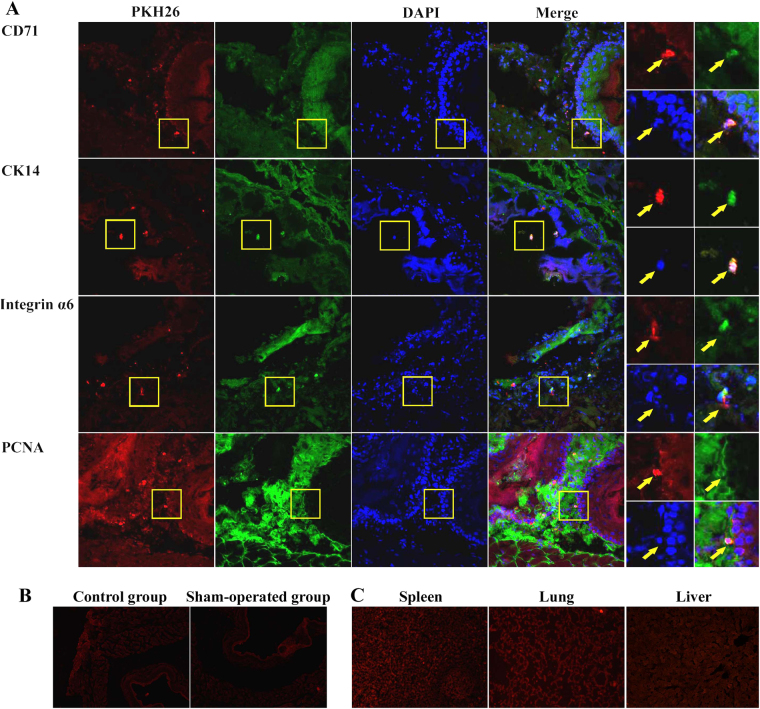
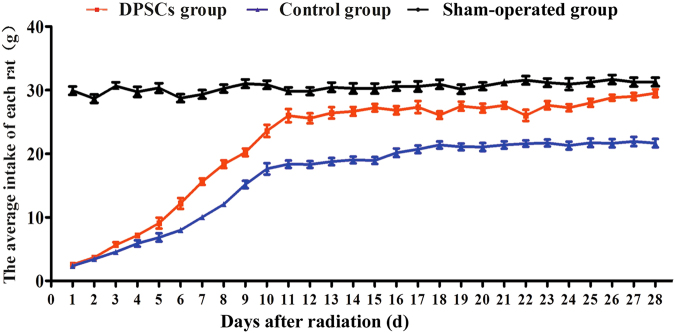
Dental pulp stem cell (DPSC) transplantation has been demonstrated to promote the regeneration and repair of tissues and organs and is a potentially effective treatment for radioactive esophageal injury. In this study, to explore the therapeutic effects of DPSCs on acute radiation-induced esophageal injury, DPSCs were cultured and transplanted into rats with acute radioactive esophageal injuries induced by radioactive I seeds in vivo. In the injured esophagus, PKH26-labeled DPSCs co-localized with PCNA, CK14, CD71, and integrin α6, and the expression levels of these four makers of esophageal stem cells were significantly increased. After DPSC transplantation, the injured esophagus exhibited a greater thickness. In addition, the esophageal function and inflammation recovered faster. The results demonstrated that transplanted DPSCs, which trans-differentiated into esophageal stem cells in vivo, could repair the damaged esophageal tissue.
牙髓干细胞(DPSC)移植已被证明能促进组织和器官的再生和修复,是治疗放射性食管损伤的一种潜在有效方法。本研究通过放射性碘 125 粒子体内照射诱导大鼠急性放射性食管损伤,探讨 DPSC 对急性放射性食管损伤的治疗作用。将培养的 DPSC 移植到急性放射性食管损伤大鼠体内,PKH26 标记的 DPSC 与 PCNA、CK14、CD71 和整合素α6 共定位,食管干细胞的这四个标志物的表达水平明显增加。DPSC 移植后,损伤的食管厚度增加,食管功能和炎症恢复更快。结果表明,移植的 DPSC 在体内转分化为食管干细胞,可修复受损的食管组织。