Shaheiwola Nuerjiayi, Zhang Bin, Jia Jie, Zhang Dingguo
State Key Laboratory of Mechanical System and Vibration, Robotics Institute, Shanghai Jiao Tong University, Shanghai, China.
Department of Rehabilitation, Huashan Hospital, Fudan University, Shanghai, China.
Front Hum Neurosci. 2018 Jun 19;12:233. doi: 10.3389/fnhum.2018.00233. eCollection 2018.
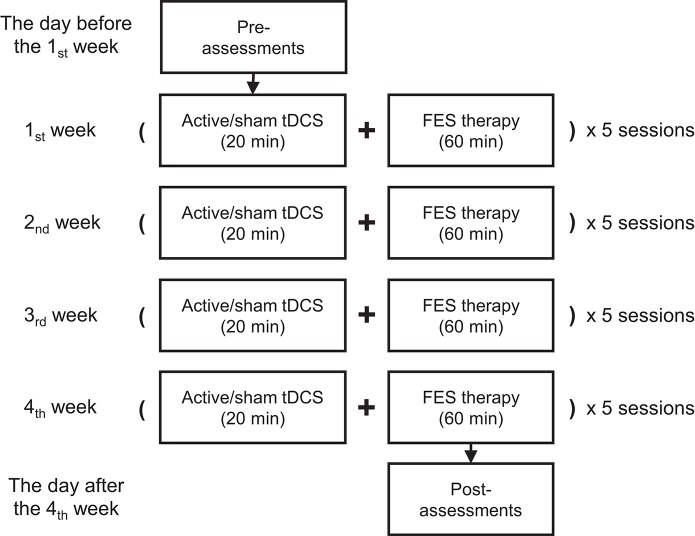
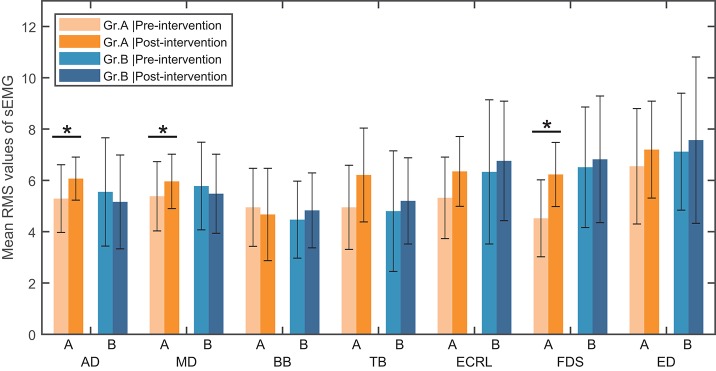
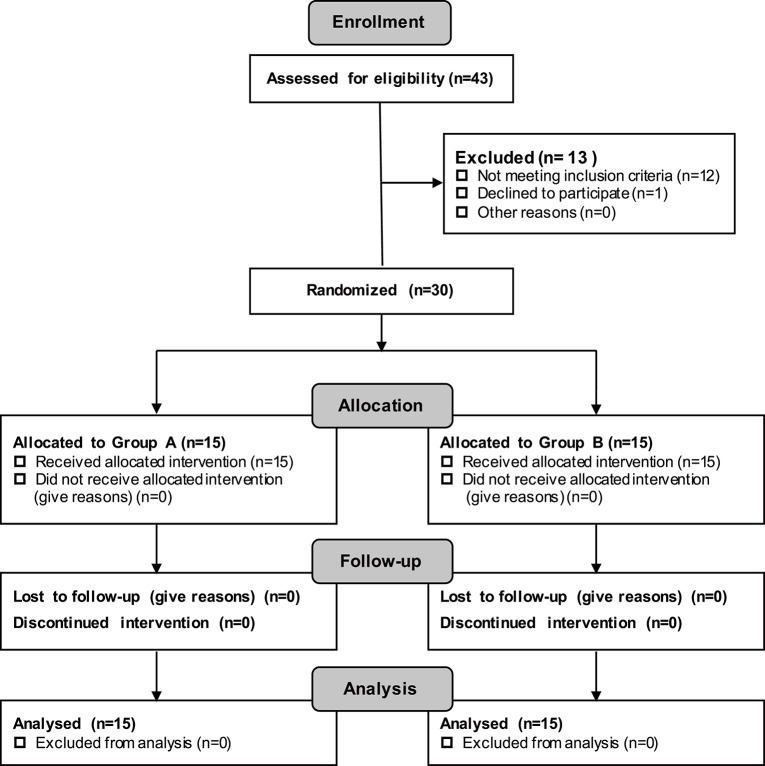
Upper limb function recovery is of vital importance for stroke patients. However, it is difficult to get ideal recovery, especially for patients with severe chronic stroke. As the first randomized controlled long-term trial combining bilateral transcranial direct current stimulation (tDCS) and functional electrical stimulation (FES) therapy, this study examined the efficacy of a novel protocol that included applying tDCS as an add-on treatment prior to FES therapy over the course of a 4-week program. Thirty subjects with severe chronic stroke were randomized to either Group A (active tDCS+FES) ( = 15) or Group B (sham tDCS+FES) ( = 15). Five assessments including 3 behavioral outcome measurement scales [the Fugl-Meyer scale (cFMA), the Wolf motor function test (WMFT) and the modified Ashworth scale (MAS)], the surface electromyography (sEMG) evaluation and the transcranial magnetic stimulation (TMS) assessment were performed to evaluate subjects before and after the overall therapy. In Group A, the combined protocol was well tolerated by all patients and induced significant improvements in upper extremity motor abilities in terms of the assessments of cFMA [ = -5.658, < 0.05], WMFT [ = -3.746, < 0.05], MAS [ = 5.236, < 0.05], sEMG and TMS. The results of between-group comparisons showed there was a significant difference between Group A and Group B in terms of the assessments of cFMA [ = 2.223, < 0.05], WMFT [ = -2.152, < 0.05] and sEMG [ = 0.918, < 0.05]. The proposed protocol can facilitate improvements in upper extremity motor abilities in severe chronic stroke patients and is more beneficial than the protocol with FES therapy alone. Our results showed efficacy of the new paradigm with combined intervention in both the central nervous system and the peripheral nervous system.
ChiCTR-ICR-15006108.
上肢功能恢复对中风患者至关重要。然而,很难获得理想的恢复效果,尤其是对于重度慢性中风患者。作为首个将双侧经颅直流电刺激(tDCS)与功能性电刺激(FES)疗法相结合的随机对照长期试验,本研究考察了一种新方案的疗效,该方案包括在为期4周的疗程中,在FES治疗前加用tDCS作为附加治疗。30例重度慢性中风患者被随机分为A组(主动tDCS+FES)(n = 15)或B组(假tDCS+FES)(n = 15)。在整个治疗前后进行了五项评估,包括3种行为结果测量量表[Fugl-Meyer量表(cFMA)、Wolf运动功能测试(WMFT)和改良Ashworth量表(MAS)]、表面肌电图(sEMG)评估和经颅磁刺激(TMS)评估。在A组中,所有患者对联合方案耐受性良好,并且在cFMA[Δ = -5.658,P < 0.05]、WMFT[Δ = -3.746,P < 0.05]、MAS[Δ = 5.236,P < 0.05]、sEMG和TMS评估方面,上肢运动能力有显著改善。组间比较结果显示,在cFMA[Δ = 2.223,P < 0.05]、WMFT[Δ = -2.152,P < 0.05]和sEMG[Δ = 0.918,P < 0.05]评估方面,A组和B组之间存在显著差异。所提出的方案可促进重度慢性中风患者上肢运动能力的改善,并且比单纯FES治疗方案更有益。我们的结果显示了中枢神经系统和外周神经系统联合干预新范式的疗效。
ChiCTR-ICR-15006108。