Department of Plant Pathology, Universidade Federal de Lavras, 37200-000, Lavras, Minas Gerais, Brazil.
Universidad de San Carlos, Avenida 11, Guatemala, 01012, Guatemala.
Sci Rep. 2018 Jul 5;8(1):10199. doi: 10.1038/s41598-018-28086-6.
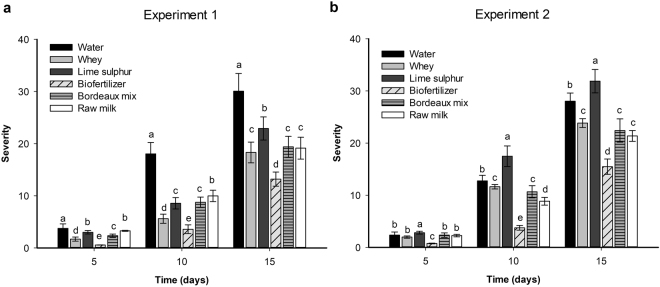
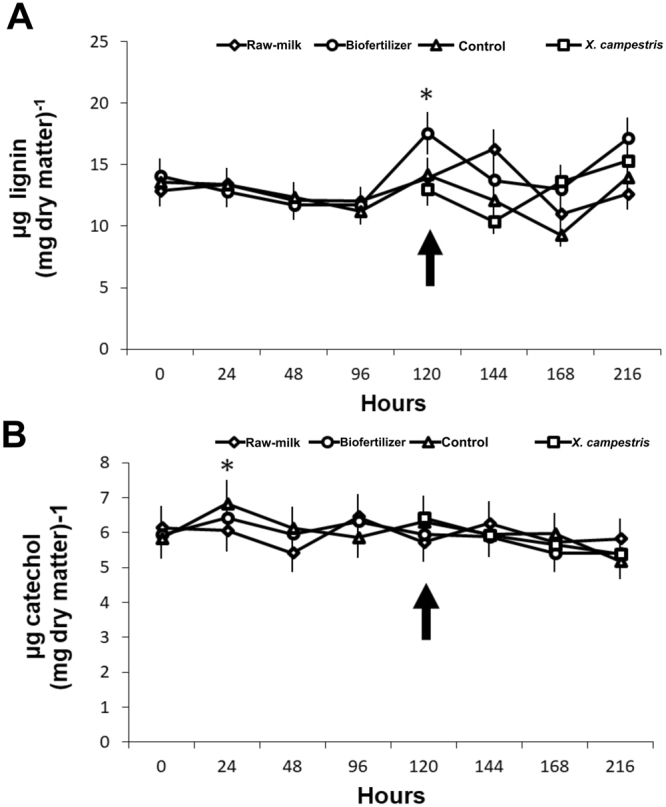
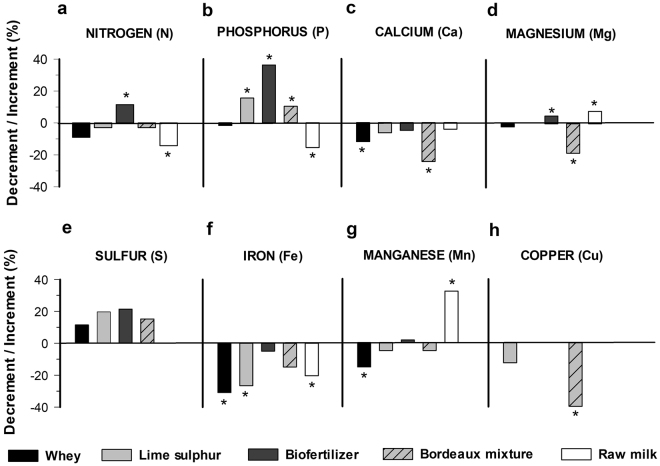
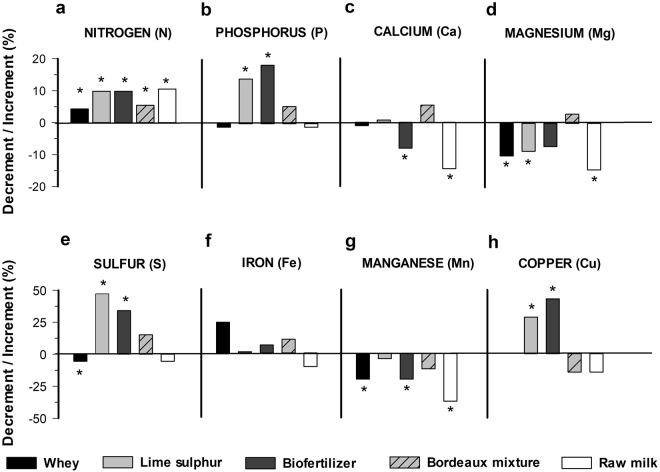
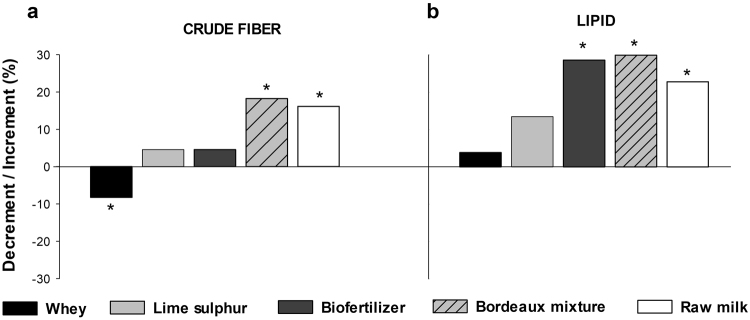
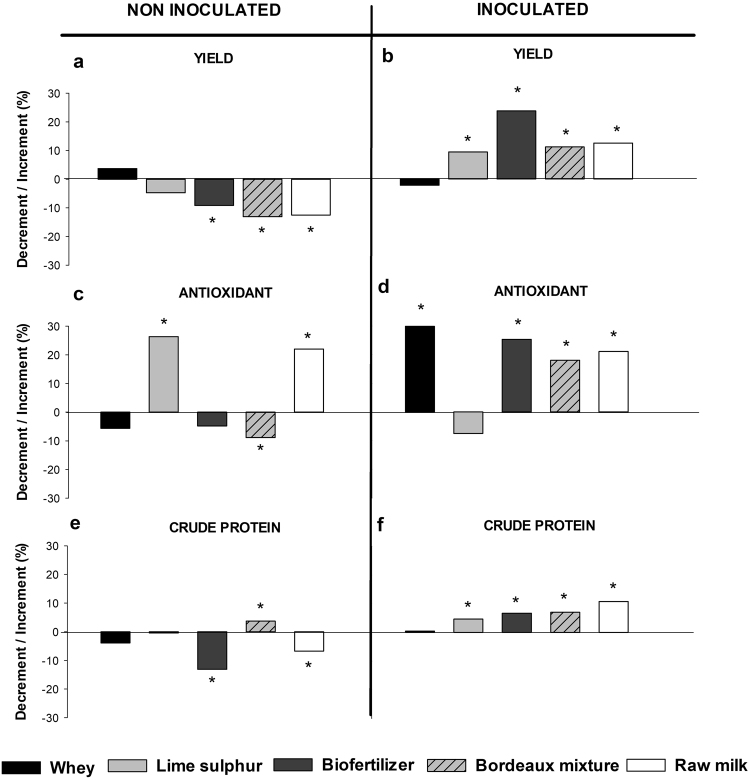
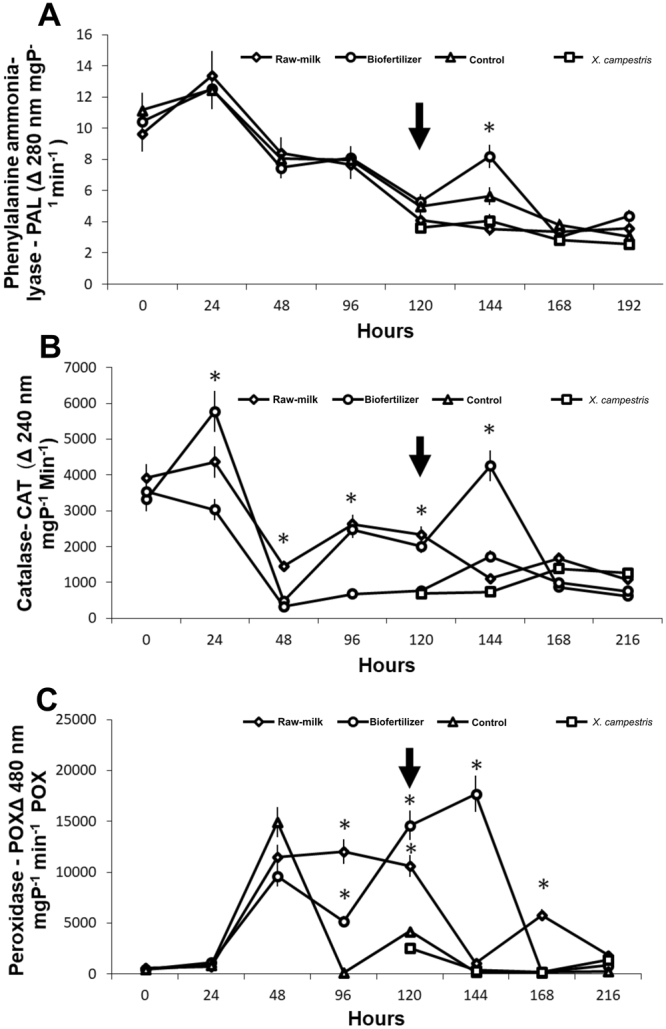
Black rot of crucifers, (Xanthomonas campestris pv. campestris) is the principal yield-limiting and destructive pathogen of cruciferous crop worldwide. In order to validate a bio-based control alternative for this disease, whey, lime sulfur, biofertilizer, Bordeaux mixture or raw milk were applied to kale (Brassica oleracea var. acephala) plants. The disease control was achieved by most of the tested products. Milk-based products (raw milk and whey) and biofertilizer reduced the severity by 44 and 56% in the field. Antioxidants, crude fibber, crude protein and lipid contents and kale yield were verified in the five treatments on the leaves with and without X. campestris pv. campestris inoculation. In the absence of the pathogen (non-inoculated), lime sulfur and Bordeaux mixture improved plant nutritional value compared to organic treatments, nevertheless milk-based products and biofertilizer improved the evaluated variables more than the control. However, on leaves inoculated with X. campestris pv. campestris raw milk increased antioxidant activity, crude protein and fiber contents, whereas biofertilizer increased kale yield, lipid and antioxidant contents. Milk-based products and biofertilizer were further evaluated in greenhouse trials to determinate the activity of defense-related enzymes and lignin content. Biofertilizer treatment resulted in increased phenylalanine ammonia lyase, catalase, peroxidase activities and lignin content. Hence, the application of milk-based products and biofertilizer are promising to control black rot of crucifers and also improves food quality by boosting nutritional values and antioxidant activity.
十字花科黑腐病(Xanthomonas campestris pv. campestris)是全球十字花科作物的主要限产和破坏性病原体。为了验证针对该病害的生物防治替代方法,乳清、石灰硫磺合剂、生物肥料、波尔多混合物或生奶被应用于羽衣甘蓝(Brassica oleracea var. acephala)植株。大多数测试产品都实现了病害控制。牛奶基产品(生奶和乳清)和生物肥料在田间将严重度降低了 44%和 56%。在有和没有 X. campestris pv. campestris 接种的叶片上,对这五种处理进行了抗氧化剂、粗纤维、粗蛋白和脂质含量以及羽衣甘蓝产量的验证。在没有病原体(未接种)的情况下,与有机处理相比,石灰硫磺合剂和波尔多混合物提高了植物的营养价值,但与对照相比,牛奶基产品和生物肥料更能改善评估变量。然而,在接种了 X. campestris pv. campestris 的叶片上,生奶增加了抗氧化活性、粗蛋白和纤维含量,而生物肥料则增加了羽衣甘蓝的产量、脂质和抗氧化剂含量。牛奶基产品和生物肥料在温室试验中进一步进行了评估,以确定防御相关酶和木质素含量的活性。生物肥料处理导致苯丙氨酸解氨酶、过氧化氢酶、过氧化物酶活性和木质素含量增加。因此,应用牛奶基产品和生物肥料有望控制十字花科黑腐病,并通过提高营养价值和抗氧化活性来改善食品质量。