College of Education, University of Oregon, Eugene, OR, 97403, USA.
Annenberg Public Policy Center, University of Pennsylvania, Philadelphia, PA, 19104, USA.
J Youth Adolesc. 2018 Sep;47(9):1992-2005. doi: 10.1007/s10964-018-0891-9. Epub 2018 Jul 6.
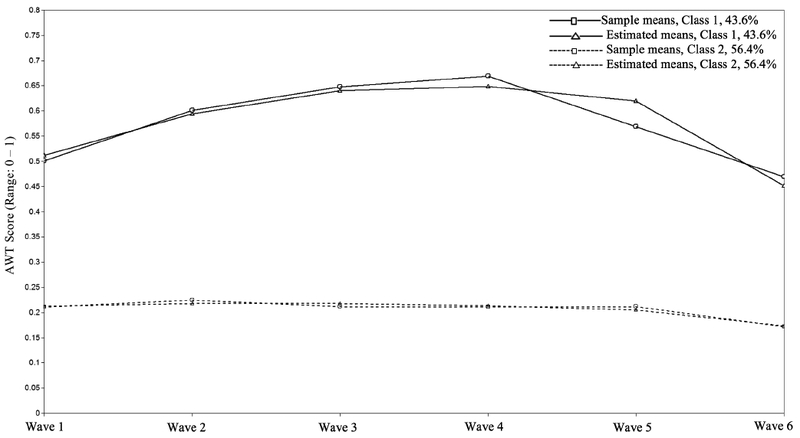
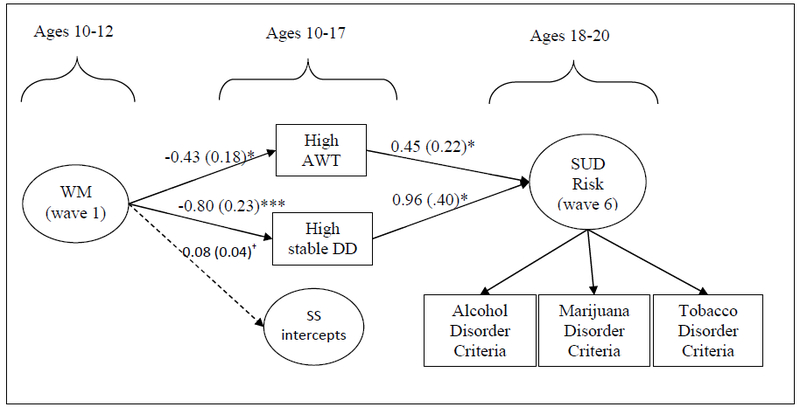
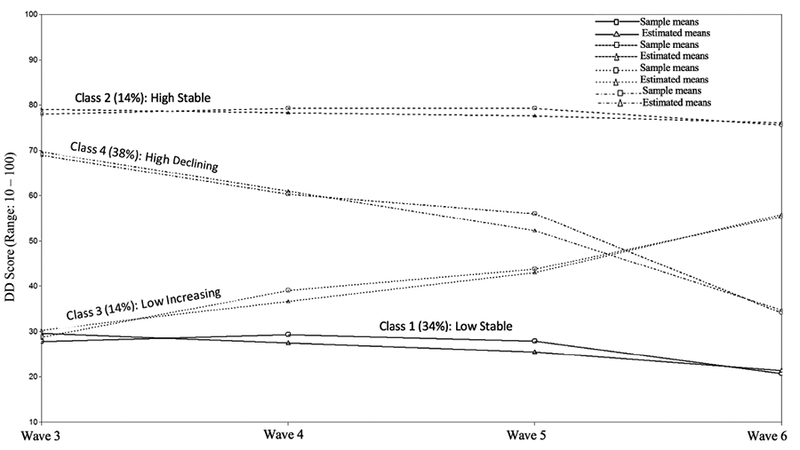
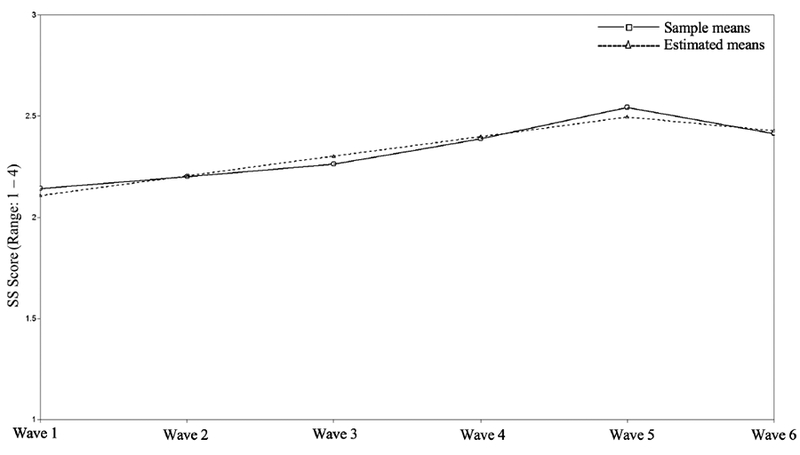
Developmental imbalance models attribute the rise in risk-taking during adolescence to a universal imbalance between rising reward sensitivity and lagging cognitive control. This study tested predictions of an alternate Lifespan Wisdom Model that distinguishes between exploratory/adaptive (e.g., sensation seeking) and maladaptive (e.g., acting-without-thinking, delay discounting) risk-taking propensities and attributes the latter to a sub-set of youth with weak cognitive control. Latent trajectory modeling of six waves of data from 387 adolescents (52% females; spanning average ages of 11-18 years) revealed distinct sub-groups with heterogeneous trajectory patterns for acting-without-thinking and delay-discounting. Only those trajectory groups with weak cognitive control, characterized as "high-increasing" acting-without thinking and "high-stable" delay discounting were predictive of a maladaptive risk-taking outcome, namely substance use disorder. Sensation seeking demonstrated a universal peak, but high levels of sensation seeking were not associated with weakness in cognitive control and were unrelated to substance use disorder, controlling for impulsivity. The findings suggest that maladaptive risk-taking characterized by weak cognitive control over reward-driven impulses is a phenomenon limited to only a sub-set of youth.
发展不平衡模型将青少年时期冒险行为的增加归因于奖励敏感性上升和认知控制滞后之间普遍存在的不平衡。本研究测试了生命周期智慧模型的预测,该模型区分了探索性/适应性(例如,寻求刺激)和适应不良性(例如,不假思索地行动、延迟折扣)的冒险倾向,并将后者归因于认知控制较弱的一部分年轻人。对 387 名青少年(女性占 52%;平均年龄在 11-18 岁之间)的六波数据进行潜在轨迹建模,揭示了行动无思考和延迟折扣的异质轨迹模式的不同亚组。只有那些认知控制较弱的轨迹组,表现为“高增长”的行动无思考和“高稳定”的延迟折扣,才会预测出一种适应不良的风险行为结果,即物质使用障碍。寻求刺激表现出普遍的高峰,但高水平的寻求刺激与认知控制的弱点无关,并且与物质使用障碍无关,控制了冲动性。研究结果表明,以奖励驱动的冲动为特征的认知控制较弱的适应不良风险行为仅限于一部分年轻人。