Department of Psychology, The University of California, Berkeley, United States.
Department of Physics, The University of Texas, Austin, United States.
Elife. 2018 Jul 9;7:e33503. doi: 10.7554/eLife.33503.
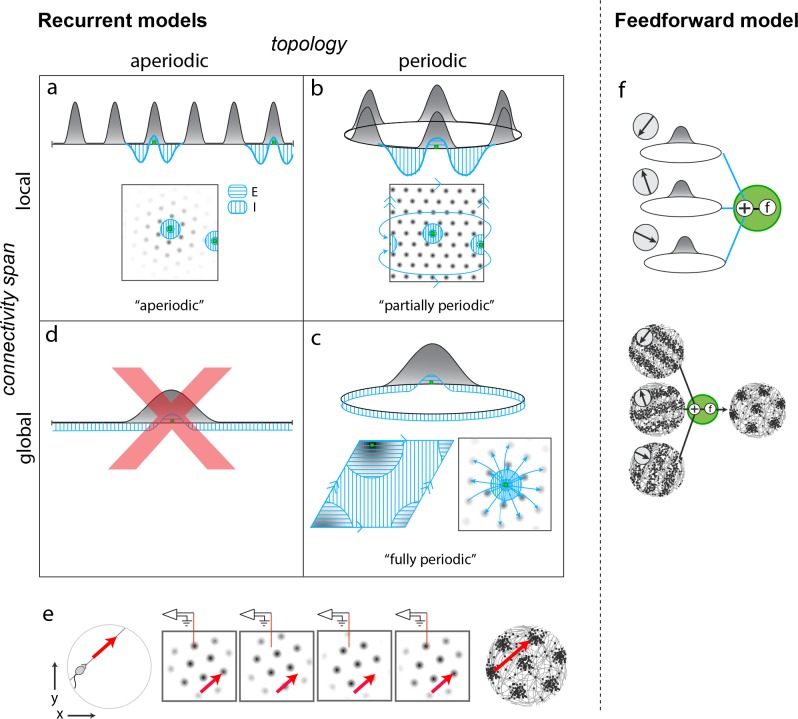
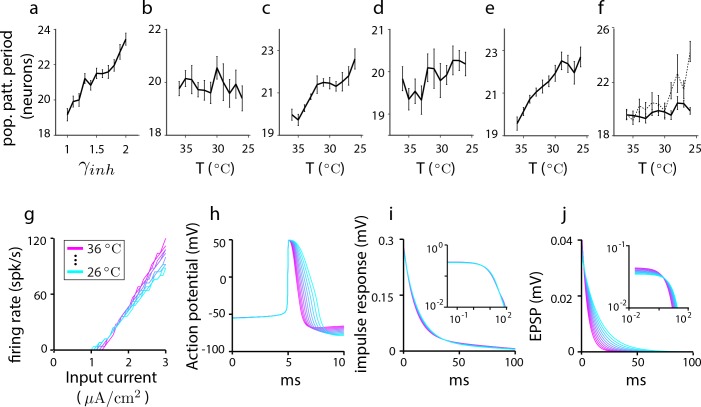
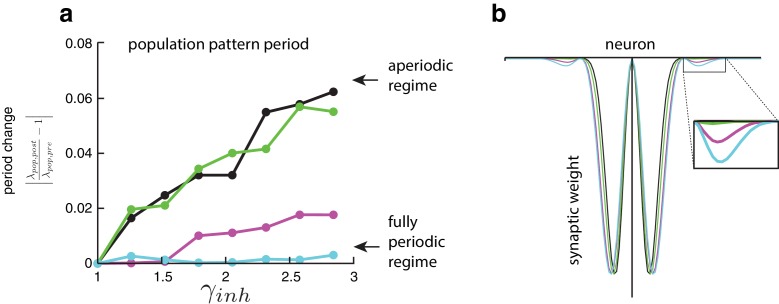
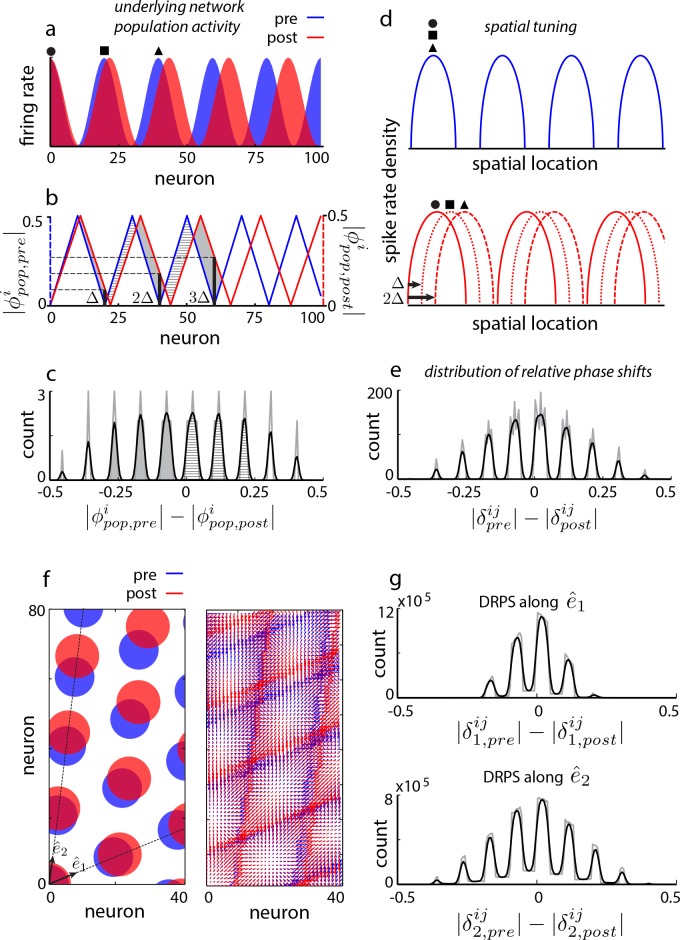
A goal of systems neuroscience is to discover the circuit mechanisms underlying brain function. Despite experimental advances that enable circuit-wide neural recording, the problem remains open in part because solving the 'inverse problem' of inferring circuity and mechanism by merely observing activity is hard. In the grid cell system, we show through modeling that a technique based on global circuit perturbation and examination of a novel theoretical object called the could reveal the mechanisms of a cortical circuit at unprecedented detail using extremely sparse neural recordings. We establish feasibility, showing that the method can discriminate between recurrent versus feedforward mechanisms and amongst various recurrent mechanisms using recordings from a handful of cells. The proposed strategy demonstrates that sparse recording coupled with simple perturbation can reveal more about circuit mechanism than can full knowledge of network activity or the synaptic connectivity matrix.
系统神经科学的目标之一是发现大脑功能的基本电路机制。尽管实验技术的进步使得全脑范围的神经记录成为可能,但这个问题仍然没有得到解决,部分原因是仅仅通过观察活动来推断电路和机制的“反问题”是很困难的。在网格细胞系统中,我们通过建模表明,一种基于全局电路干扰的技术,并研究一种新的理论对象,称为 ,可以使用极其稀疏的神经记录,以前所未有的细节揭示皮质电路的机制。我们建立了可行性,表明该方法可以使用少数细胞的记录来区分递归与前馈机制以及各种递归机制。所提出的策略表明,稀疏记录与简单的干扰相结合,可以揭示比完全了解网络活动或突触连接矩阵更多的电路机制。