Gugala Natalie, Lemire Joe, Chatfield-Reed Kate, Yan Ying, Chua Gordon, Turner Raymond J
Department of Biological Sciences, University of Calgary, 2500 University Dr. NW, Calgary, AB T2N 1N4, Canada.
Department of Mathematics and Statistics, University of Calgary, 2500 University Dr. NW, Calgary, AB T2N 1N4, Canada.
Genes (Basel). 2018 Jul 6;9(7):344. doi: 10.3390/genes9070344.
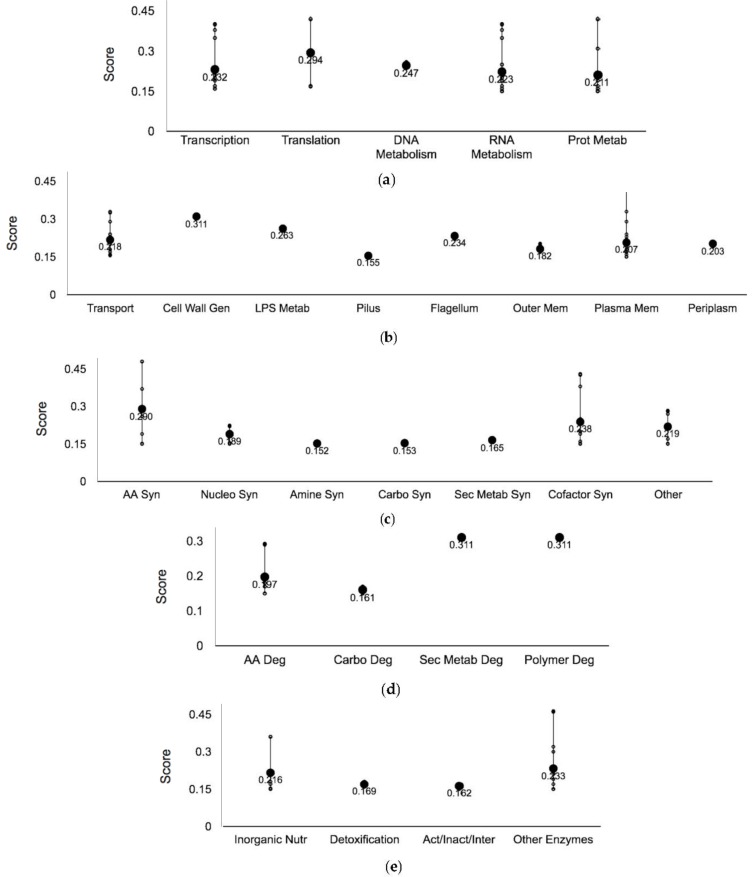
It is essential to understand the mechanisms by which a toxicant is capable of poisoning the bacterial cell. The mechanism of action of many biocides and toxins, including numerous ubiquitous compounds, is not fully understood. For example, despite the widespread clinical and commercial use of silver (Ag), the mechanisms describing how this metal poisons bacterial cells remains incomplete. To advance our understanding surrounding the antimicrobial action of Ag, we performed a chemical genetic screen of a mutant library of —the Keio collection, in order to identify Ag sensitive or resistant deletion strains. Indeed, our findings corroborate many previously established mechanisms that describe the antibacterial effects of Ag, such as the disruption of iron-sulfur clusters containing proteins and certain cellular redox enzymes. However, the data presented here demonstrates that the activity of Ag within the bacterial cell is more extensive, encompassing genes involved in cell wall maintenance, quinone metabolism and sulfur assimilation. Altogether, this study provides further insight into the antimicrobial mechanism of Ag and the physiological adaption of . to this metal.
了解毒物能够毒害细菌细胞的机制至关重要。许多杀菌剂和毒素的作用机制,包括众多普遍存在的化合物,尚未完全明确。例如,尽管银(Ag)在临床和商业上广泛应用,但其毒害细菌细胞的机制仍不完整。为了深入了解银的抗菌作用,我们对——庆应文库的突变体库进行了化学遗传筛选,以鉴定对银敏感或耐药的缺失菌株。的确,我们的研究结果证实了许多先前已确立的描述银抗菌作用的机制,比如含有铁硫簇的蛋白质和某些细胞氧化还原酶的破坏。然而,此处呈现的数据表明银在细菌细胞内的活性更为广泛,涉及细胞壁维持、醌代谢和硫同化相关的基因。总之,本研究进一步深入了解了银的抗菌机制以及——对这种金属的生理适应性。