Mugasa Claire M, Villinger Jandouwe, Gitau Joseph, Ndungu Nelly, Masiga Daniel
International Centre of Insect Physiology and Ecology (icipe), Nairobi, Kenya.
School of Biosecurity Biotechnical Laboratory Sciences, College of Veterinary Medicine, Animal Resources and Biosecurity (COVAB), Makerere University Kampala, Uganda.
Zookeys. 2018 Jun 26(769):117-144. doi: 10.3897/zookeys.769.21144. eCollection 2018.
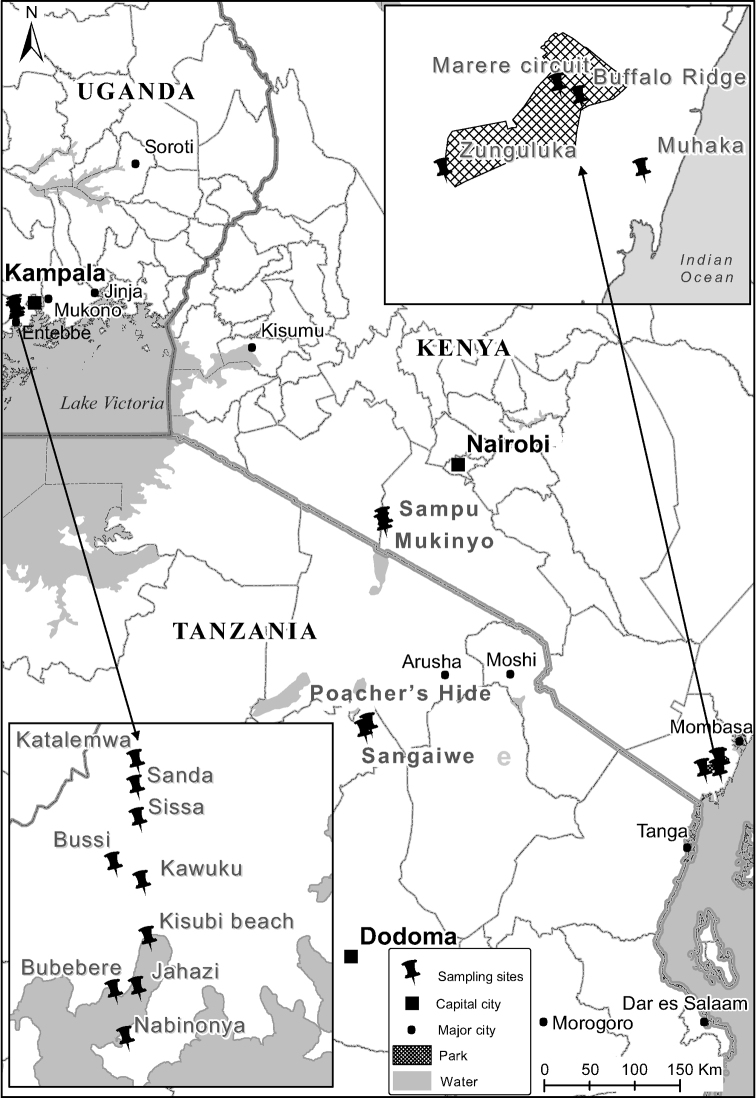
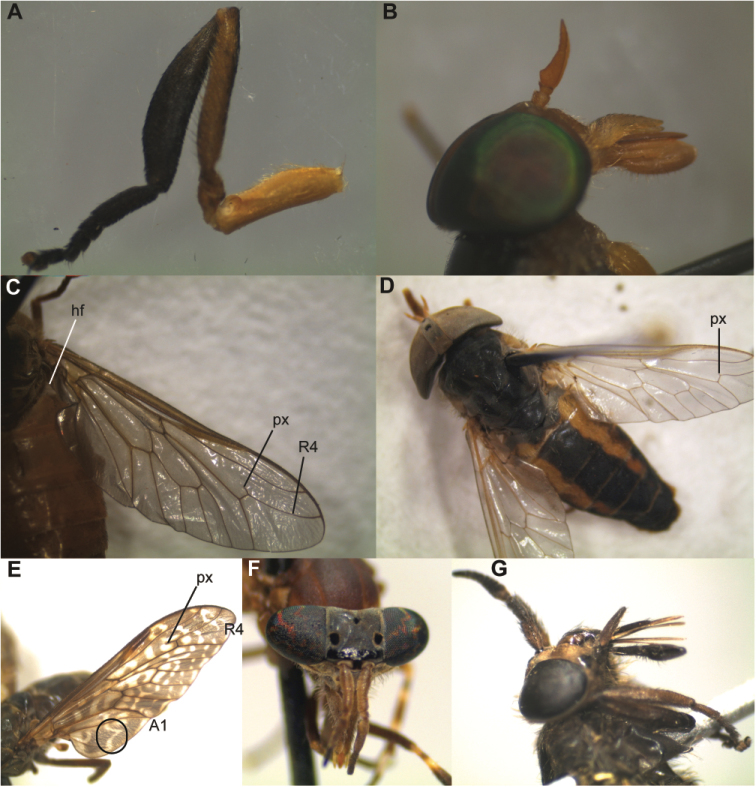
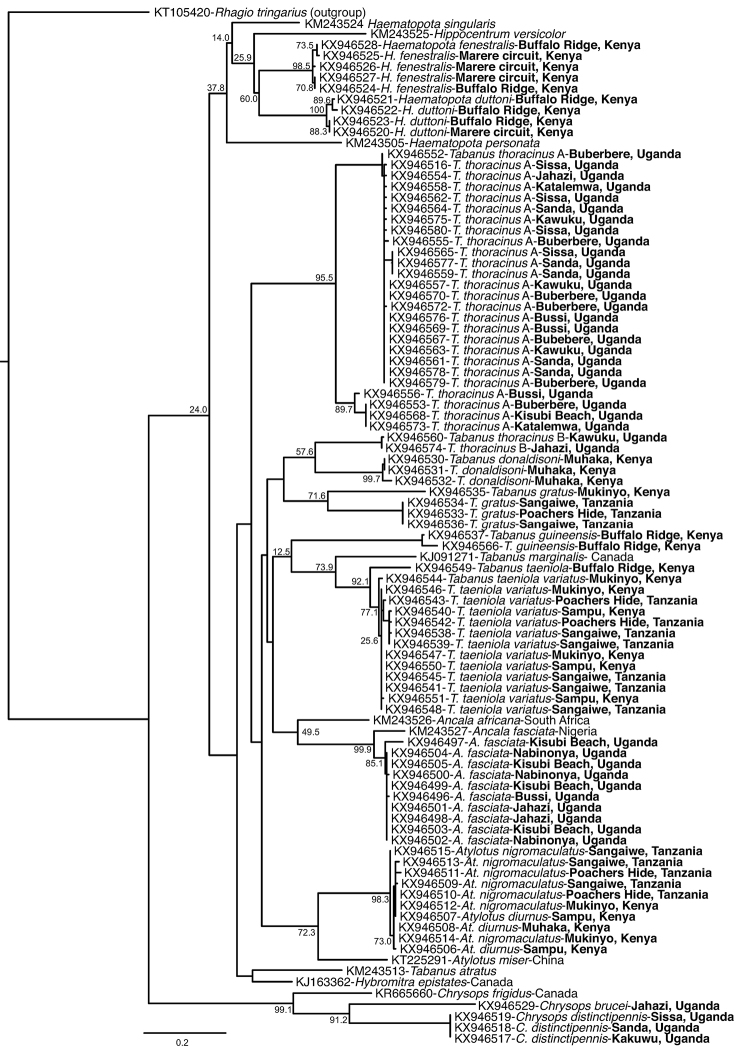
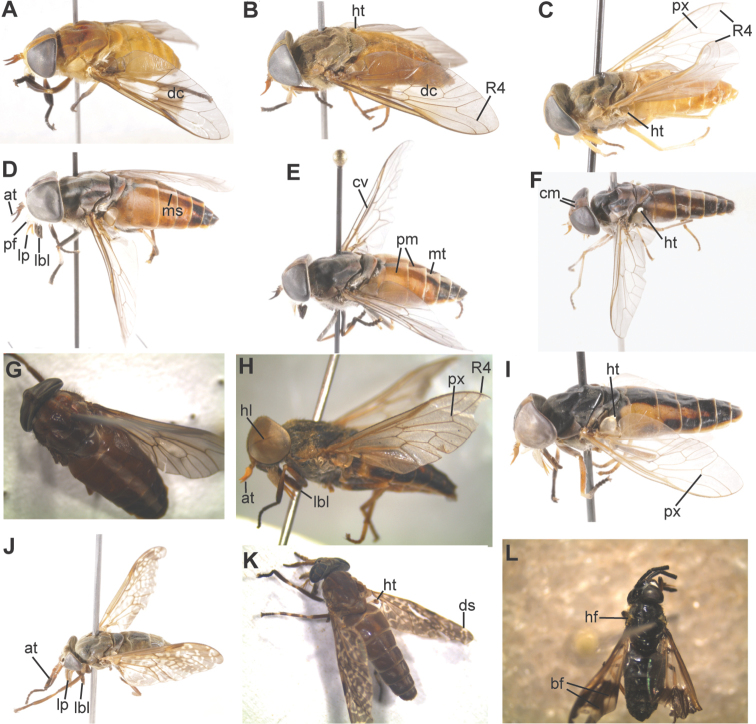
Biting flies of the family Tabanidae are important vectors of human and animal diseases across continents. However, records of Africa tabanids are fragmentary and mostly cursory. To improve identification, documentation and description of Tabanidae in East Africa, a baseline survey for the identification and description of Tabanidae in three eastern African countries was conducted. Tabanids from various locations in Uganda (Wakiso District), Tanzania (Tarangire National Park) and Kenya (Shimba Hills National Reserve, Muhaka, Nguruman) were collected. In Uganda, octenol baited F-traps were used to target tabanids, while NG2G traps baited with cow urine and acetone were employed in Kenya and Tanzania. The tabanids were identified using morphological and molecular methods. Morphologically, five genera ( and ) and fourteen species of the Tabanidae were identified. Among the 14 species identified, six belonged to the genus of which two ( and ) had not been described before in East Africa. The greatest diversity of tabanid species were collected from the Shimba Hills National Reserve, while collections from Uganda (around the shores of Lake Victoria) had the fewest number of species. However, the genus was found in Uganda, but not in Kenya or Tanzania. Maximum likelihood phylogenies of mitochondrial cytochrome c oxidase 1 () genes sequenced in this study show definite concordance with morphological species identifications, except for . This survey will be critical to building a complete checklist of Tabanidae prevalent in the region, expanding knowledge of these important vectors of human and animal diseases.
虻科的吸血蝇类是跨大陆的人类和动物疾病的重要传播媒介。然而,非洲虻类的记录不完整,大多是粗略的。为了改进东非虻科的鉴定、记录和描述,对东非三个国家的虻科进行了一次基线调查,以进行鉴定和描述。从乌干达(瓦基索区)、坦桑尼亚(塔兰吉雷国家公园)和肯尼亚(欣巴丘陵国家保护区、穆哈卡、恩古兰曼)的不同地点收集了虻类。在乌干达,使用诱捕烯醇的F型诱捕器来捕捉虻类,而在肯尼亚和坦桑尼亚则使用用牛尿和丙酮诱饵的NG2G诱捕器。使用形态学和分子方法对虻类进行鉴定。从形态学上看,鉴定出了虻科的五个属(和)和14个物种。在鉴定出的14个物种中,有6个属于属,其中有两个(和)在东非以前未曾描述过。虻类物种多样性最高的是从欣巴丘陵国家保护区收集到的,而从乌干达(维多利亚湖周边)收集到的物种数量最少。然而,属在乌干达被发现,但在肯尼亚或坦桑尼亚未被发现。本研究中测序的线粒体细胞色素c氧化酶1()基因的最大似然系统发育树显示,除了外,与形态学物种鉴定有明确的一致性。这项调查对于建立该地区普遍存在的虻科完整清单、扩大对这些人类和动物疾病重要传播媒介的认识至关重要。