Departments of Pharmacy Practice, Wayne State University, Detroit, MI, United States.
Departments of Pharmacy Practice, Wayne State University, Detroit, MI, United States.
Neuroimage Clin. 2018 Jun 27;20:24-34. doi: 10.1016/j.nicl.2018.06.026. eCollection 2018.
Most children who are exposed to threat-related adversity (e.g., violence, abuse, neglect) are resilient - that is, they show stable trajectories of healthy psychological development. Despite this, most research on neurodevelopmental changes following adversity has focused on the neural correlates of outcomes, such as psychopathology. The neural correlates of trait resilience in pediatric populations are unknown, and it is unclear whether they are distinct from those related to adversity exposure and the absence of negative outcomes (e.g., depressive symptomology).
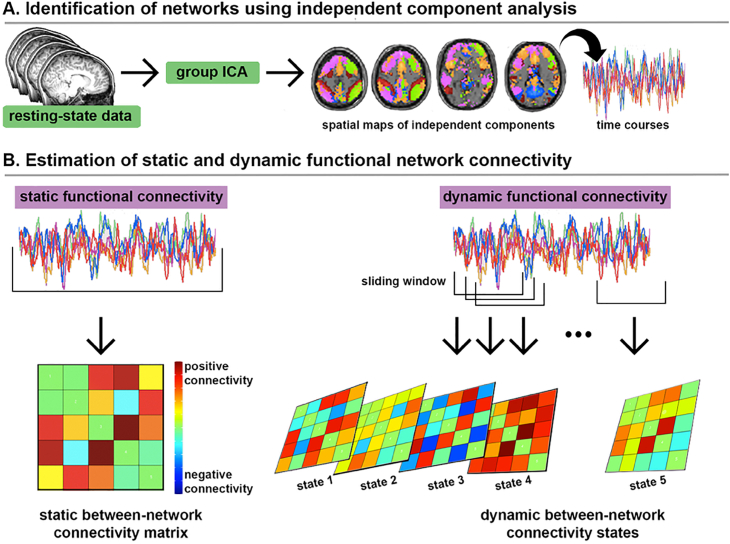
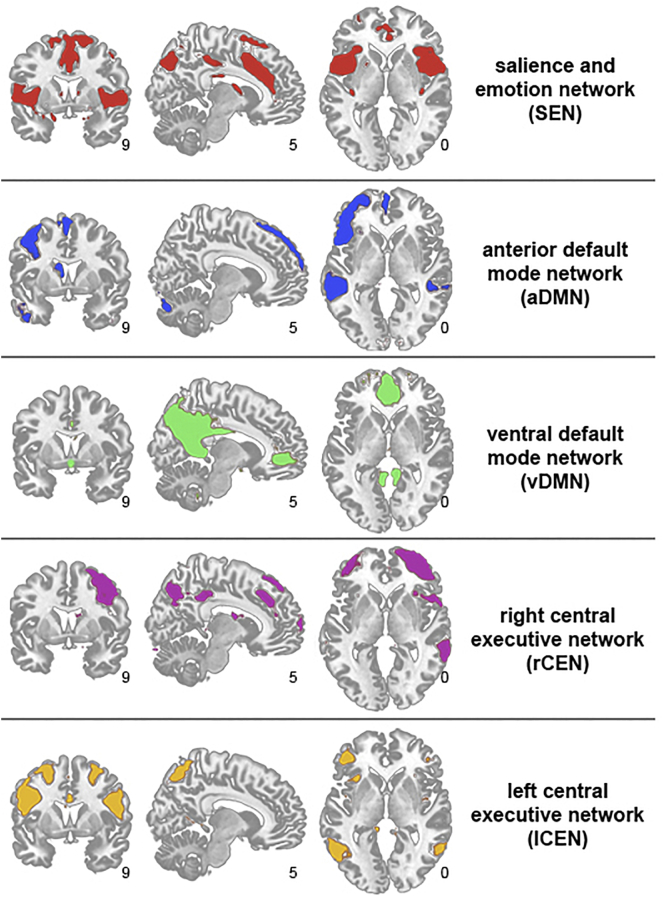
This functional magnetic resonance imaging (fMRI) study reports on a diverse sample of 55 children and adolescents (ages 6-17 years) recruited from a range of stressful environments (e.g., lower income, threat-related adversity exposure). Participants completed a multi-echo multi-band resting-state fMRI scan and self-report measures of trait resilience and emotion-related symptomology (e.g., depressive symptoms). Resting-state data were submitted to an independent component analysis (ICA) to identify core neurocognitive networks (salience and emotion network [SEN], default mode network [DMN], central executive network [CEN]). We tested for links among trait resilience and dynamic (i.e., time-varying) as well as conventional static (i.e., averaged across the entire session) resting-state functional connectivity (rsFC) of core neurocognitive networks.
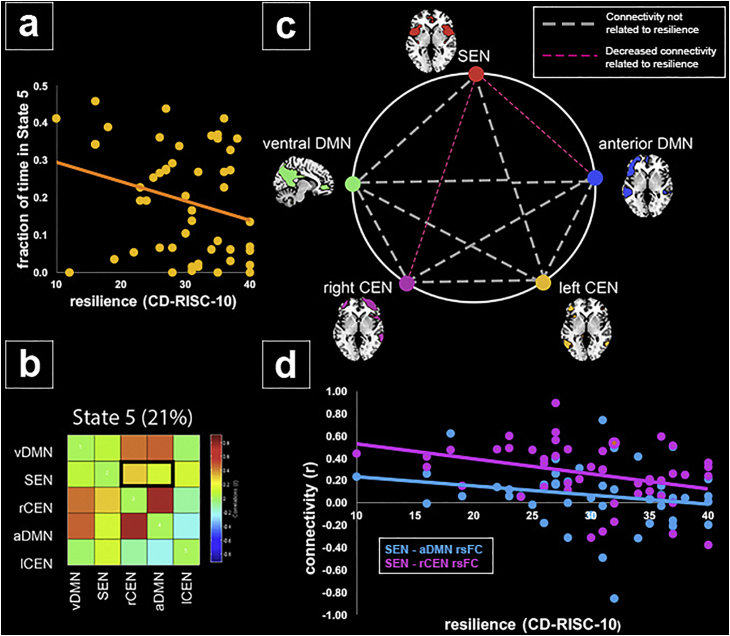
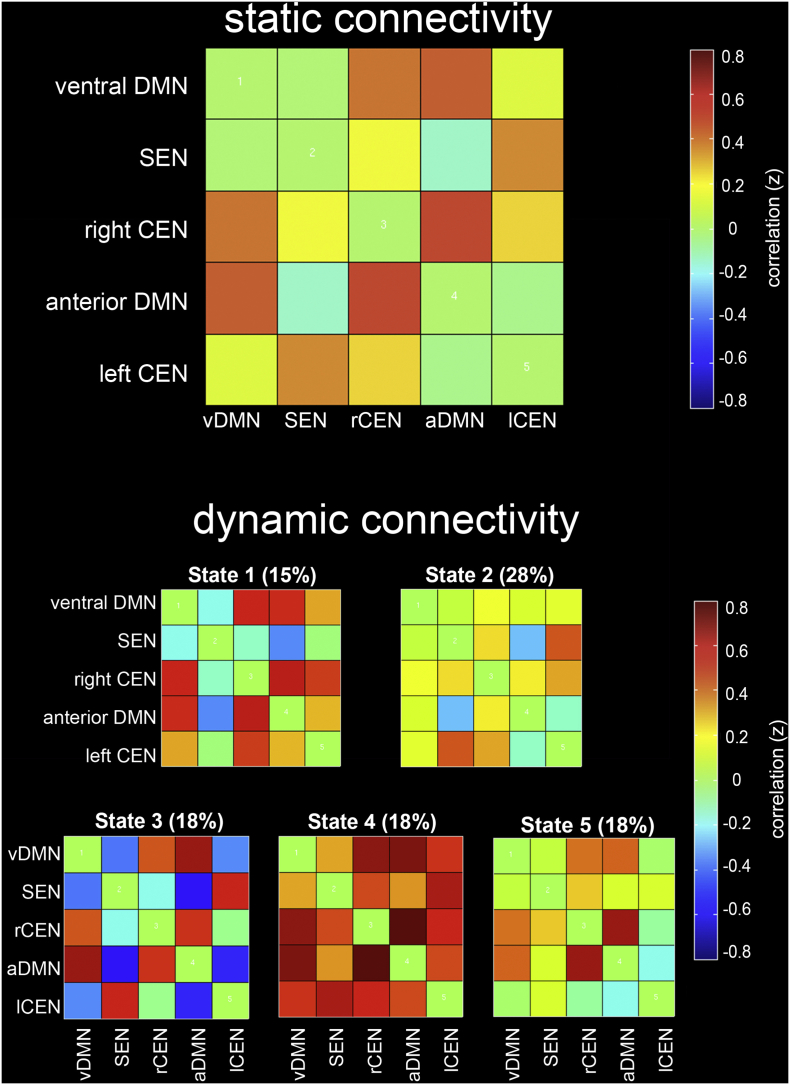
Youth with higher trait resilience spent a lower fraction of time in a particular dynamic rsFC state, characterized by heightened rsFC between the anterior DMN and right CEN. Within this state, trait resilience was associated with lower rsFC of the SEN with the right CEN and anterior DMN. There were no associations among trait resilience and conventional static rsFC. Importantly, although more resilient youth reported lower depressive symptoms, the effects of resilience on rsFC were independent of depressive symptoms and adversity exposure.
The present study is the first to report on the neural correlates of trait resilience in youth, and offers initial insight into potential adaptive patterns of brain organization in the context of environmental stressors. Understanding the neural dynamics underlying positive adaptation to early adversity will aid in the development of interventions that focus on strengthening resilience rather than mitigating already-present psychological problems.
大多数接触到与威胁相关的逆境(例如,暴力、虐待、忽视)的儿童都具有弹性,也就是说,他们表现出健康心理发展的稳定轨迹。尽管如此,大多数关于逆境后神经发育变化的研究都集中在神经相关的结果上,例如精神病理学。儿科人群中特质弹性的神经相关因素尚不清楚,也不清楚它们是否与逆境暴露和无不良后果(例如,抑郁症状)相关的神经相关因素不同。
这项功能磁共振成像(fMRI)研究报告了一个来自各种压力环境(例如,低收入、与威胁相关的逆境暴露)的 55 名 6-17 岁儿童和青少年的多样化样本。参与者完成了多回波多带静息态 fMRI 扫描以及特质弹性和情绪相关症状(例如,抑郁症状)的自我报告测量。静息态数据被提交给独立成分分析(ICA),以识别核心神经认知网络(突显和情绪网络[SEN]、默认模式网络[DMN]、中央执行网络[CEN])。我们测试了特质弹性与核心神经认知网络的动态(即随时间变化)和传统静态(即整个会话平均)静息态功能连接(rsFC)之间的联系。
具有较高特质弹性的青少年在特定动态 rsFC 状态中花费的时间比例较低,其特征是前 DMN 和右 CEN 之间的 rsFC 增强。在这种状态下,特质弹性与 SEN 与右 CEN 和前 DMN 的 rsFC 降低有关。特质弹性与传统静态 rsFC 之间没有关联。重要的是,尽管更有弹性的青少年报告的抑郁症状较低,但 rsFC 与弹性的影响与抑郁症状和逆境暴露无关。
本研究首次报告了青少年特质弹性的神经相关因素,并为环境压力源背景下大脑组织潜在的适应性模式提供了初步见解。了解积极适应早期逆境的神经动力学将有助于开发专注于增强弹性而不是减轻已经存在的心理问题的干预措施。