Hu Xiaoqing, Huang Ying-Ying, Wang Yuguang, Wang Xiaoyuan, Hamblin Michael R
State Key Laboratory of Food Science and Technology, School of Biotechnology, Jiangnan University, Wuxi, China.
International Joint Laboratory on Food Safety, Jiangnan University, Wuxi, China.
Front Microbiol. 2018 Jun 27;9:1299. doi: 10.3389/fmicb.2018.01299. eCollection 2018.
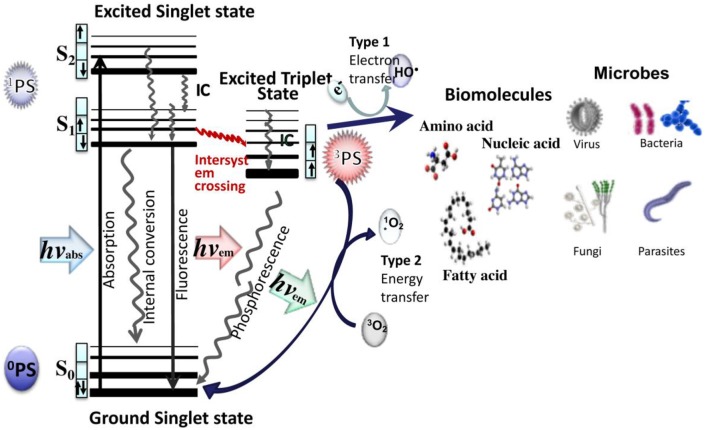
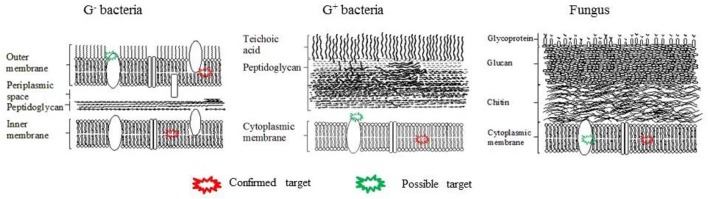
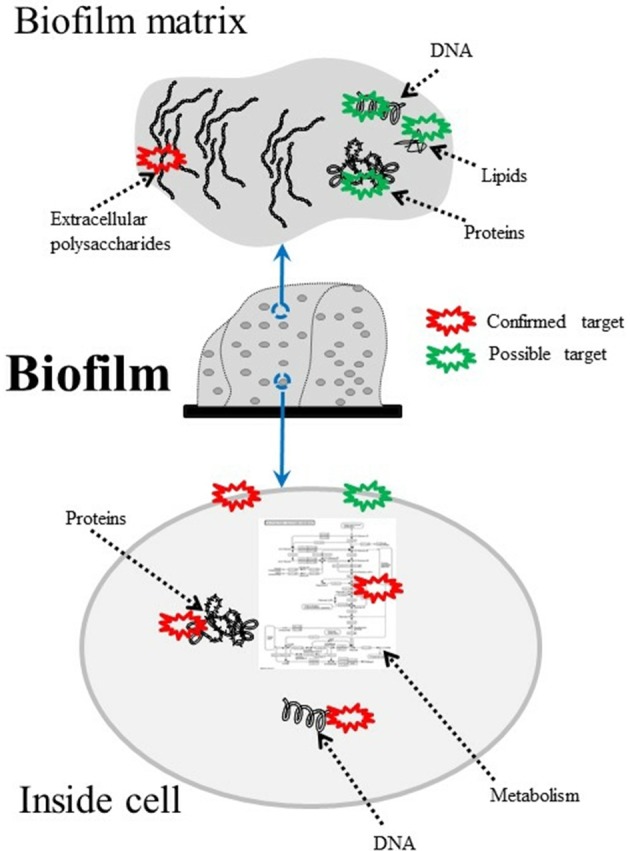
Biofilm describes a microbially-derived sessile community in which microbial cells are firmly attached to the substratum and embedded in extracellular polymeric matrix. Microbial biofilms account for up to 80% of all bacterial and fungal infections in humans. Biofilm-associated pathogens are particularly resistant to antibiotic treatment, and thus novel antibiofilm approaches needed to be developed. Antimicrobial Photodynamic therapy (aPDT) had been recently proposed to combat clinically relevant biofilms such as dental biofilms, ventilator associated pneumonia, chronic wound infections, oral candidiasis, and chronic rhinosinusitis. aPDT uses non-toxic dyes called photosensitizers (PS), which can be excited by harmless visible light to produce reactive oxygen species (ROS). aPDT is a multi-stage process including topical PS administration, light irradiation, and interaction of the excited state with ambient oxygen. Numerous and aPDT studies have demonstrated biofilm-eradication or substantial reduction. ROS are produced upon photo-activation and attack adjacent targets, including proteins, lipids, and nucleic acids present within the biofilm matrix, on the cell surface and inside the microbial cells. Damage to non-specific targets leads to the destruction of both planktonic cells and biofilms. The review aims to summarize the progress of aPDT in destroying biofilms and the mechanisms mediated by ROS. Finally, a brief section provides suggestions for future research.
生物膜是指一种由微生物形成的固着群落,其中微生物细胞牢固地附着于基质并包埋于细胞外聚合物基质中。微生物生物膜占人类所有细菌和真菌感染的比例高达80%。与生物膜相关的病原体对抗生素治疗具有特别强的抗性,因此需要开发新的抗生物膜方法。最近有人提出采用抗菌光动力疗法(aPDT)来对抗临床上相关的生物膜,如牙菌斑、呼吸机相关性肺炎、慢性伤口感染、口腔念珠菌病和慢性鼻窦炎。aPDT使用称为光敏剂(PS)的无毒染料,这些染料可被无害的可见光激发以产生活性氧(ROS)。aPDT是一个多阶段过程,包括局部施用PS、光照射以及激发态与周围氧气的相互作用。大量的aPDT研究已证明其对生物膜有根除或显著减少的作用。光激活后会产生活性氧,这些活性氧会攻击相邻的靶标,包括生物膜基质内、细胞表面和微生物细胞内的蛋白质、脂质和核酸。对非特异性靶标的损伤会导致浮游细胞和生物膜的破坏。本综述旨在总结aPDT在破坏生物膜方面的进展以及由活性氧介导的机制。最后,简短的一部分内容为未来研究提供了建议。