Kubo Satoshi, Nakayamada Shingo, Sakata Kei, Kitanaga Yukihiro, Ma Xiaoxue, Lee Seunghyun, Ishii Akina, Yamagata Kaoru, Nakano Kazuhisa, Tanaka Yoshiya
The First Department of Internal Medicine, University of Occupational and Environmental Health, Kitakyushu, Japan.
Mitsubishi Tanabe Pharma, Yokohama, Japan.
Front Immunol. 2018 Jun 28;9:1510. doi: 10.3389/fimmu.2018.01510. eCollection 2018.
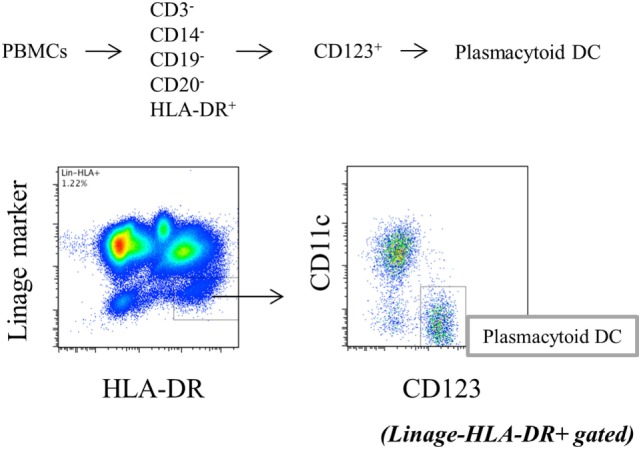
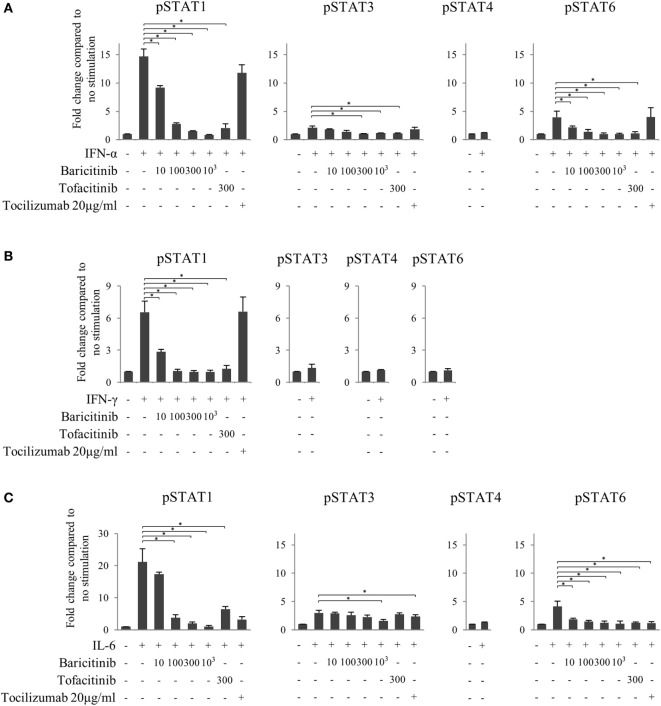
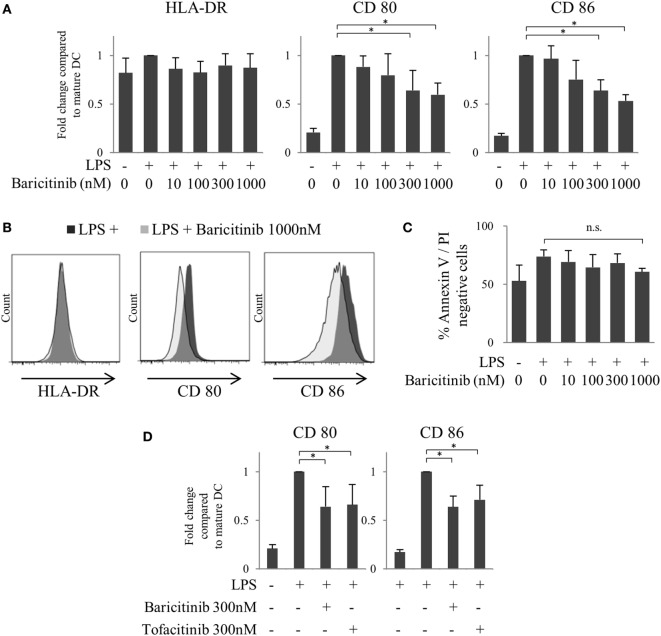
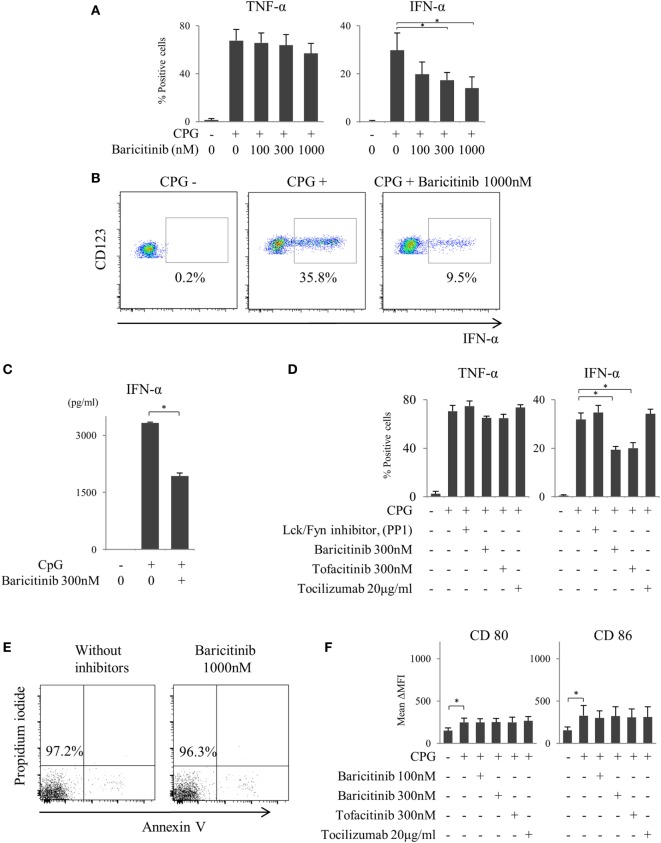
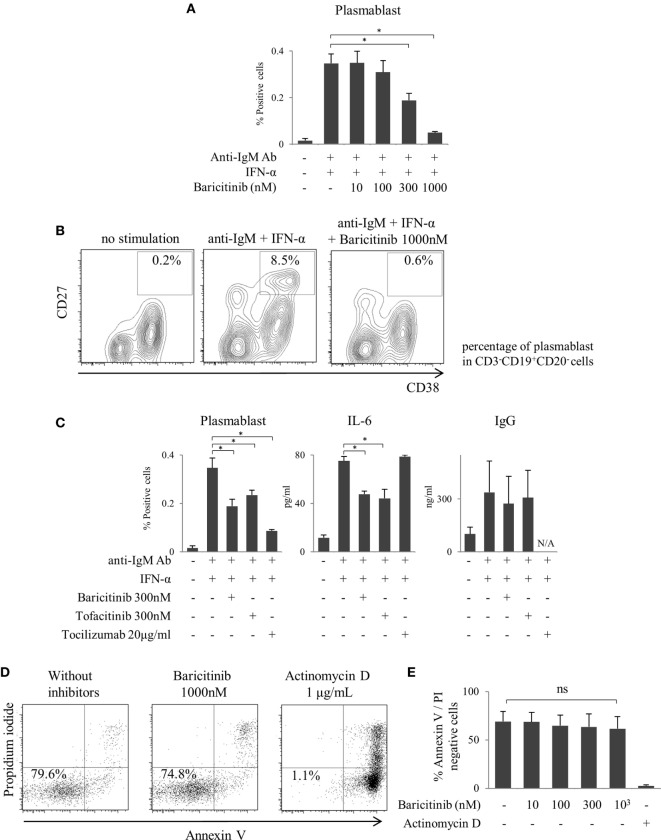
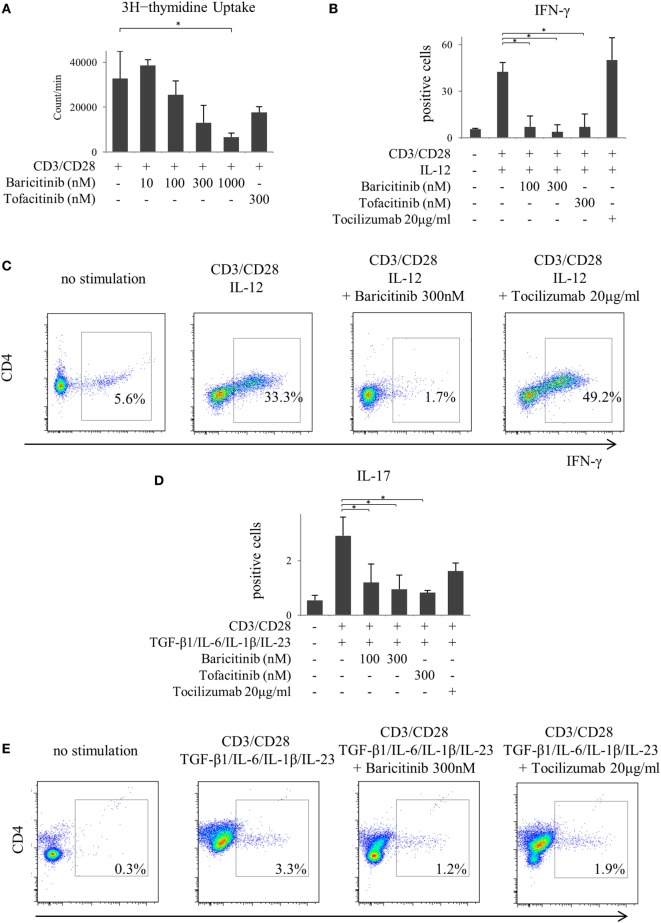
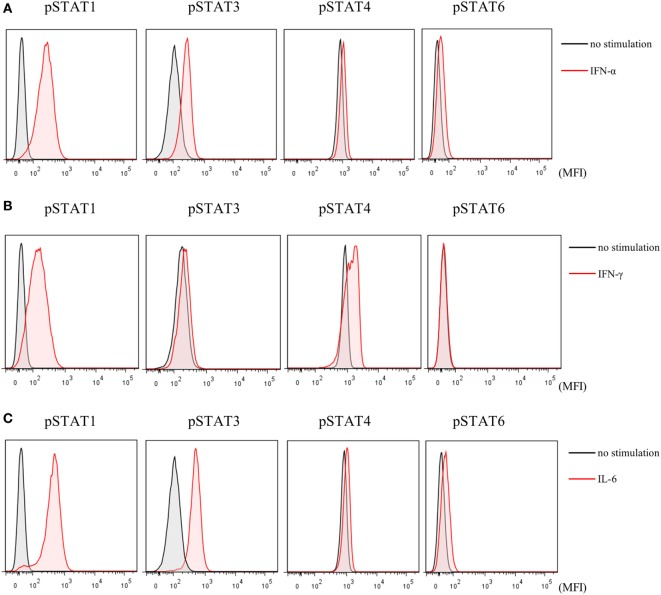
The purpose of this study was to elucidate the mechanism of action of baricitinib on Janus kinase (JAK)/signal transducer and activator of transcription (STAT) signaling, which involves in human innate and adaptive immune system. The effects of baricitinib were evaluated using human monocyte-derived dendritic cells (MoDCs), plasmacytoid dendritic cells (pDCs), B cells, and T cells. Baricitinib concentration-dependently suppressed the expression of CD80/CD86 on MoDCs and the production of type-I interferon (IFN) by pDCs. Baricitinib also suppressed the differentiation of human B cells into plasmablasts by B cell receptor and type-I IFN stimuli and inhibited the production of interleukin (IL)-6 from B cells. Human CD4 T cells proliferated after T cell receptor stimulation with anti-CD3 and anti-CD28 antibody; however, such proliferation was suppressed by baricitinib in a concentration-dependent manner. In addition, baricitinib inhibited Th1 differentiation after IL-12 stimulation and Th17 differentiation by TGF-β1, IL-6, IL-1β, and IL-23 stimulation. Tofacitinib showed similar effects in these experiments. In naive CD4 T cells, IFN-α and IFN-γ induced phosphorylation of STAT1, which was inhibited by baricitinib and tofacitinib. Furthermore, IL-6-induced phosphorylation of STAT1 and STAT3 was also inhibited by JAK inhibitors. In conclusion, the results indicated that baricitinib suppresses the differentiation of plasmablasts, Th1 and Th17 cells, as well as innate immunity, such as the T cell stimulatory capacity of dendritic cells. Thus, JAK inhibitors can be potentially clinically effective not only in rheumatoid arthritis but other immune-related diseases.
本研究的目的是阐明巴瑞替尼对参与人类固有和适应性免疫系统的Janus激酶(JAK)/信号转导子和转录激活子(STAT)信号传导的作用机制。使用人单核细胞衍生的树突状细胞(MoDC)、浆细胞样树突状细胞(pDC)、B细胞和T细胞评估了巴瑞替尼的作用效果。巴瑞替尼浓度依赖性地抑制MoDC上CD80/CD86的表达以及pDC产生I型干扰素(IFN)。巴瑞替尼还通过B细胞受体和I型IFN刺激抑制人B细胞向浆母细胞的分化,并抑制B细胞产生白细胞介素(IL)-6。人CD4 T细胞在用抗CD3和抗CD28抗体刺激T细胞受体后增殖;然而,这种增殖被巴瑞替尼以浓度依赖性方式抑制。此外,巴瑞替尼在IL-12刺激后抑制Th1分化,并在转化生长因子-β1、IL-6、IL-1β和IL-23刺激下抑制Th17分化。托法替布在这些实验中显示出类似的效果。在初始CD4 T细胞中,IFN-α和IFN-γ诱导STAT1磷酸化,这被巴瑞替尼和托法替布抑制。此外,JAK抑制剂也抑制IL-6诱导的STAT1和STAT3磷酸化。总之,结果表明巴瑞替尼抑制浆母细胞、Th1和Th17细胞的分化以及固有免疫,如树突状细胞的T细胞刺激能力。因此,JAK抑制剂不仅在类风湿关节炎中可能具有临床疗效,在其他免疫相关疾病中也可能有效。