da Silva Alexandre Freitas, Dezordi Filipe Zimmer, Loreto Elgion Lucio Silva, Wallau Gabriel Luz
Pós Graduação em Biociências e Biotecnologia em Saúde, Instituto Aggeu Magalhães (IAM), Recife, Pernambuco Brazil.
2Departamento de Bioquímica e Biologia Molecular, Universidade Federal de Santa Maria, Santa Maria, Rio Grande do Sul Brazil.
Mob DNA. 2018 Jul 7;9:23. doi: 10.1186/s13100-018-0127-2. eCollection 2018.
The majority of Eukaryotic genomes are composed of a small portion of stable (non-mobile) genes and a large fraction of parasitic mobile elements such as transposable elements and endogenous viruses: the Mobilome. Such important component of many genomes are normally underscored in genomic analysis and detailed characterized mobilomes only exists for model species. In this study, we used a combination of de novo and homology approaches to characterize the Mobilome of two non-model parasitoid wasp species.
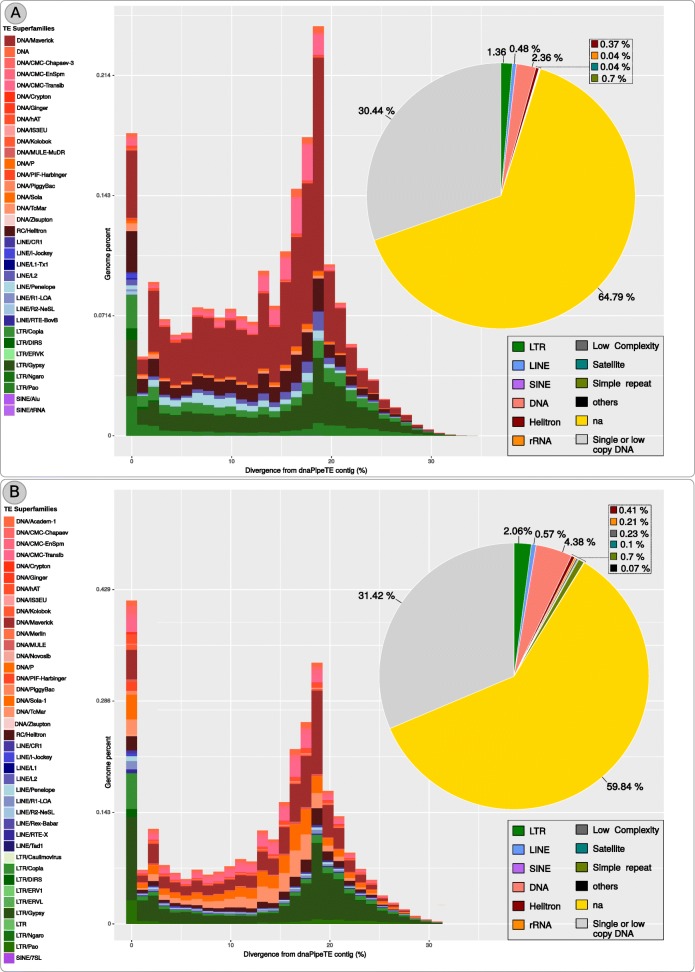
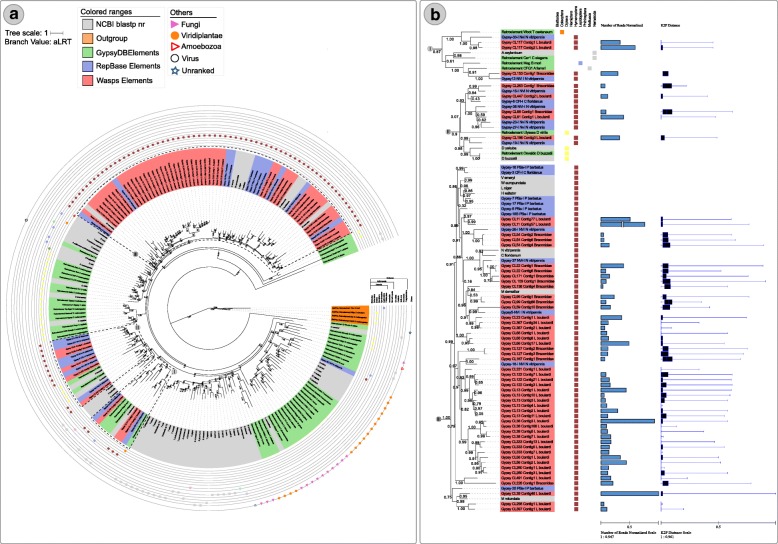
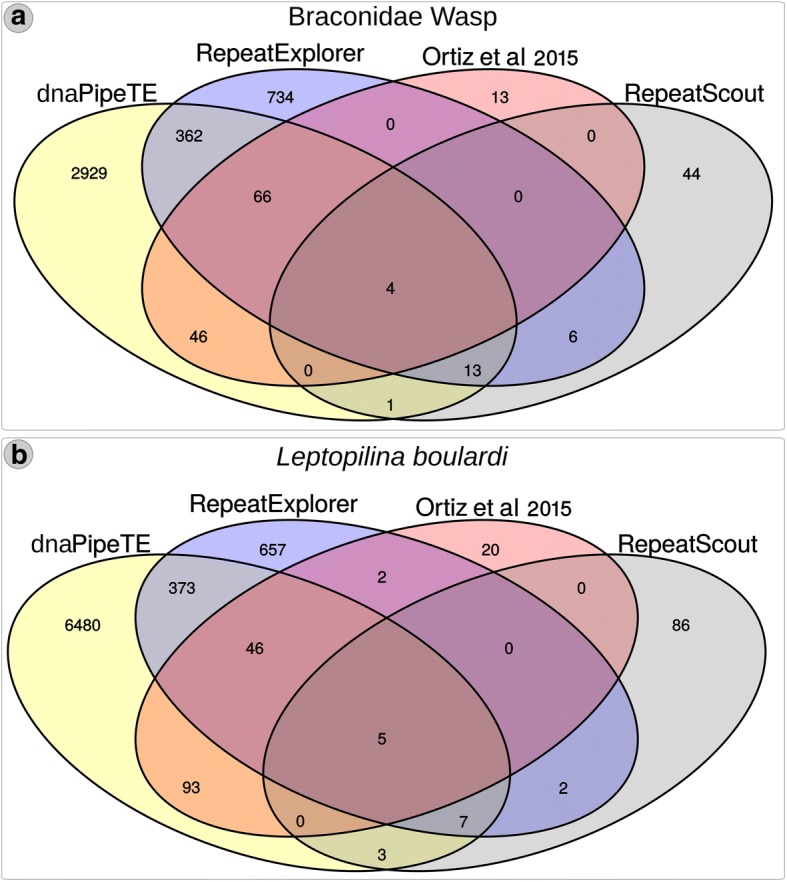
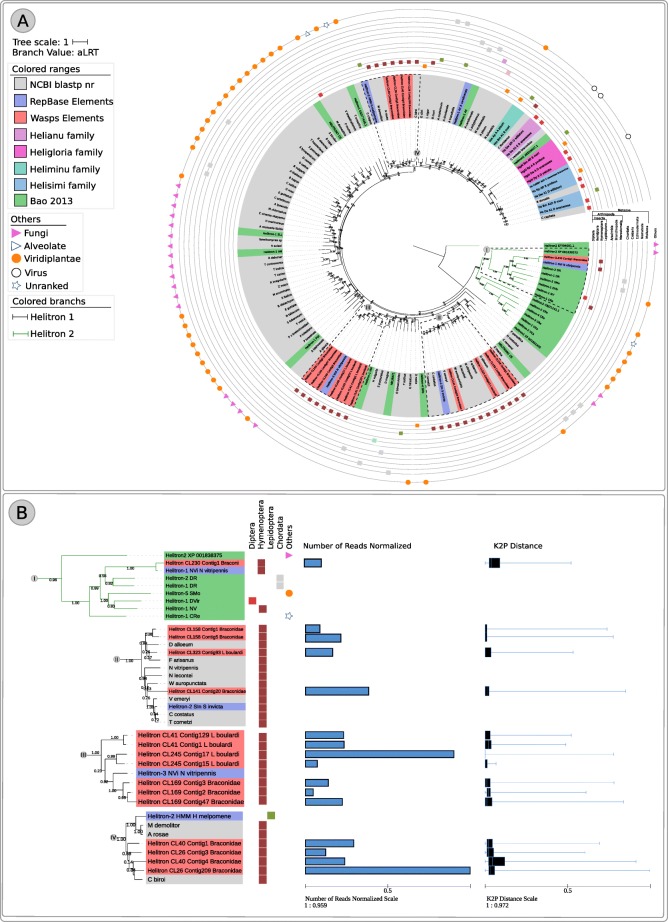
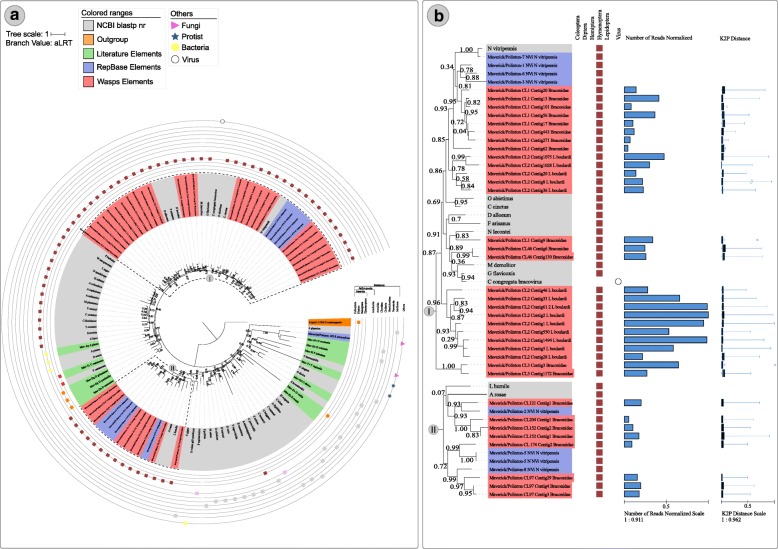
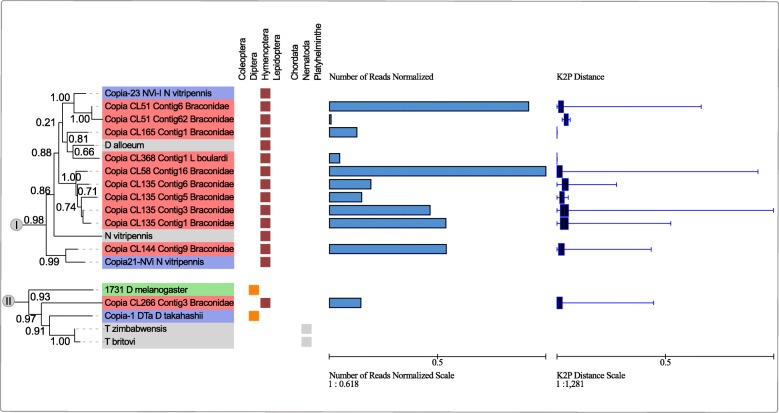
The different methodologies employed for TE characterization recovered TEs with different features as TE consensus number and size. Moreover, some TEs were detected only by one or few methodologies. RepeatExplorer and dnaPipeTE estimated a low TE content of 5.86 and 4.57% for Braconidae wasp and 5.22% and 7.42% for species, respectively. Both mobilomes are composed by a miscellaneous of ancient and recent elements. Braconidae wasps presented a large diversity of Class II TEs while other TE superfamilies were more equally diverse in both species. Phylogenetic analysis of reconstructed elements showed that vertical transfer is the main mode of transmission.
Different methodologies should be used complementarity in order to achieve better mobilome characterization. Both wasps genomes have one of the lower mobilome estimates among all Hymenoptera genomes studied so far and presented a higher proportion of Class II than Class I TEs. The large majority of superfamilies analyzed phylogenetically showed that the elements are being inherited by vertical transfer. Overall, we achieved a deep characterization of the mobilome in two non-model parasitoid wasps improving our understanding of their evolution.
大多数真核生物基因组由一小部分稳定(非移动)基因和一大部分寄生性移动元件组成,如转座元件和内源性病毒,即移动基因组。许多基因组的这一重要组成部分在基因组分析中通常被忽视,只有模式物种才有详细表征的移动基因组。在本研究中,我们结合从头测序和同源性方法来表征两种非模式寄生蜂物种的移动基因组。
用于转座元件表征的不同方法回收了具有不同特征(如转座元件共有序列数量和大小)的转座元件。此外,一些转座元件仅通过一种或几种方法检测到。RepeatExplorer和dnaPipeTE估计茧蜂科黄蜂的转座元件含量较低,分别为5.86%和4.57%,而另一种物种的转座元件含量分别为5.22%和7.42%。两个移动基因组均由古老和近期元件混合组成。茧蜂科黄蜂呈现出大量不同的II类转座元件,而其他转座元件超家族在两个物种中的多样性更为平均。对重建元件的系统发育分析表明,垂直传递是主要的传播方式。
应互补使用不同方法以实现更好的移动基因组表征。在迄今为止研究的所有膜翅目基因组中,这两种黄蜂基因组的移动基因组估计值均较低,且II类转座元件的比例高于I类。系统发育分析的绝大多数超家族表明,元件是通过垂直传递遗传的。总体而言,我们对两种非模式寄生蜂的移动基因组进行了深入表征,增进了我们对其进化的理解。