Marín Silvia, Pardo Olga, Sánchez Alfredo, Sanchis Yovana, Vélez Dinoraz, Devesa Vicenta, Font Guillermina, Yusà Vicent
Food Safety Research Area, Foundation for the Promotion of Health and Biomedical Research of Valencia Region, FISABIO. Av. Catalunya, 21, 46020, Valencia, Spain.
Analytical Chemistry Department. University of Valencia, Av. Vicent Andrés Estellés s/n, 46100 Burjassot, Valencia, Spain.
Toxicol Rep. 2018 May 21;5:654-670. doi: 10.1016/j.toxrep.2018.05.005. eCollection 2018.
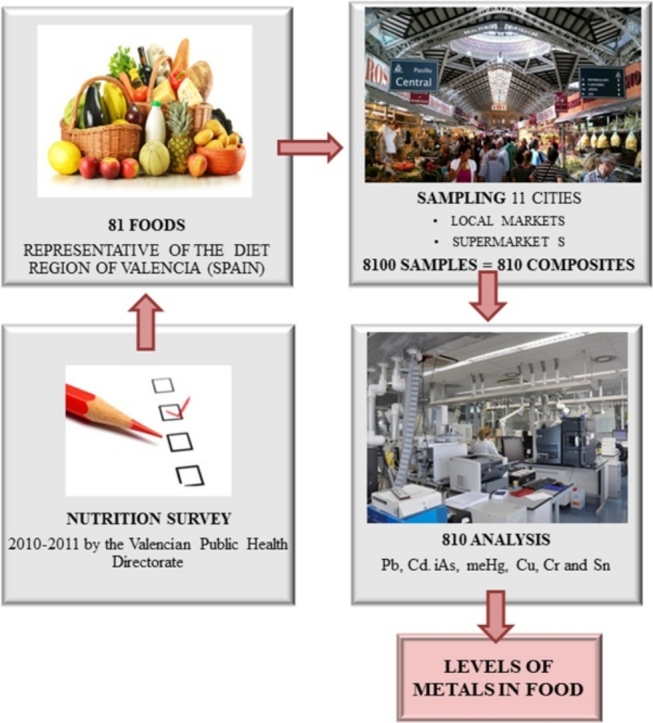
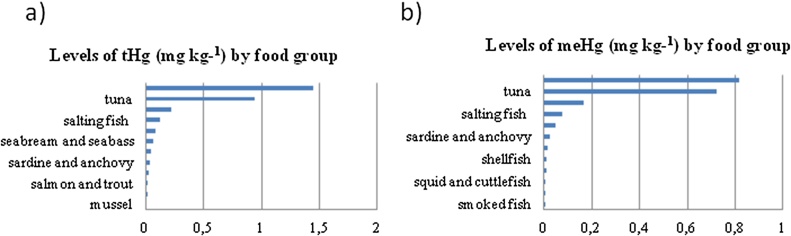
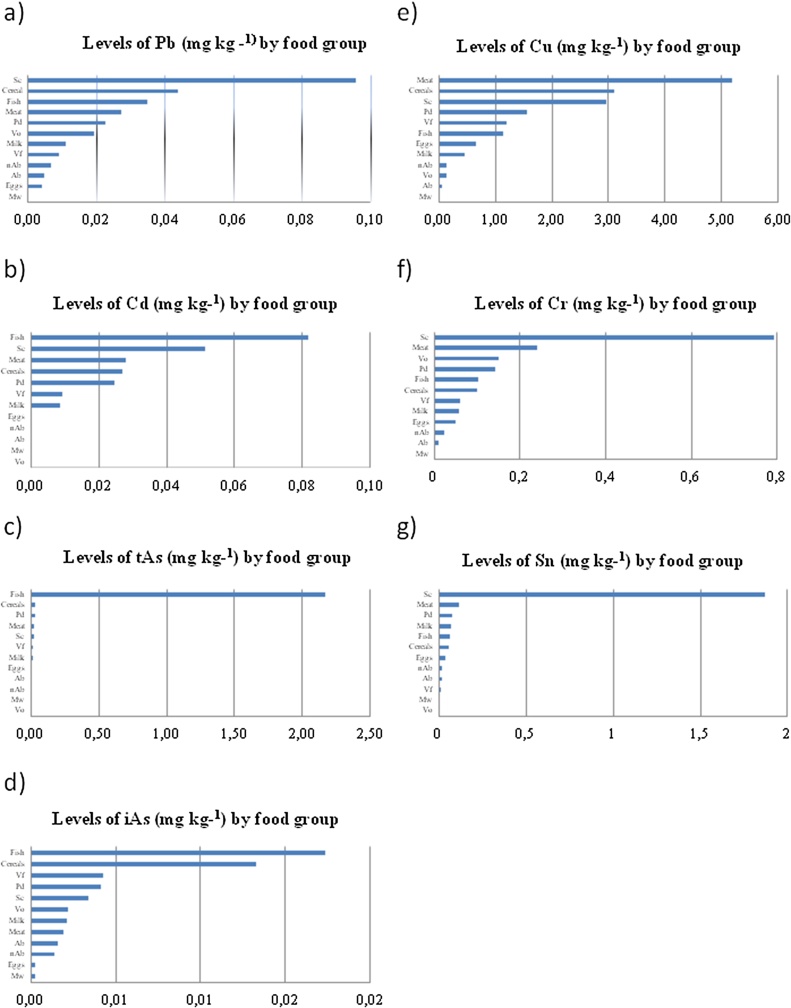
Concentrations of lead, mercury, cadmium, arsenic, tin, copper and chromium were measured in a study carried out in 2010-2011. A total of 8100 food samples were collected and composite samples for 12 food groups were analysed for metal concentration levels. Metal levels were, in general, below the maximum levels set by the current European legislation. The fish group presented the highest Cd, Hg and As levels, whereas sweeteners and condiments group was the most contaminated food group by Pb, Cr and Sn and the meat group had the highest concentrations of Cu. The results of this study are generally similar to or lower than those observed in other studies conducted in other countries, except in the case of Hg, for which high values were obtained, mainly in swordfish. In addition, this survey confirms a decreasing tendency when compared with other studies carried out in Spain.
在2010 - 2011年开展的一项研究中,对铅、汞、镉、砷、锡、铜和铬的含量进行了测定。共采集了8100份食品样本,并对12个食品组的混合样本进行了金属含量水平分析。总体而言,金属含量低于现行欧洲法规设定的最高水平。鱼类组的镉、汞和砷含量最高,而甜味剂和调味品组是受铅、铬和锡污染最严重的食品组,肉类组的铜含量最高。除汞外,本研究结果总体上与其他国家开展的其他研究结果相似或更低,汞的含量主要在剑鱼中较高。此外,与在西班牙开展的其他研究相比,本次调查证实了含量呈下降趋势。