Key Lab of Urban Pollutant Conversion, Institute of Urban Environment, Chinese Academy of Sciences, Xiamen, 361021, China.
College of Materials Science and Engineering, Xiamen University of Technology, Xiamen, 361024, China.
Sci Rep. 2018 Jul 13;8(1):10595. doi: 10.1038/s41598-018-29019-z.
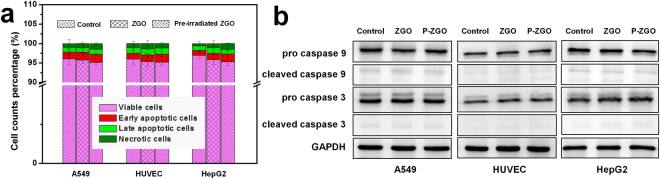
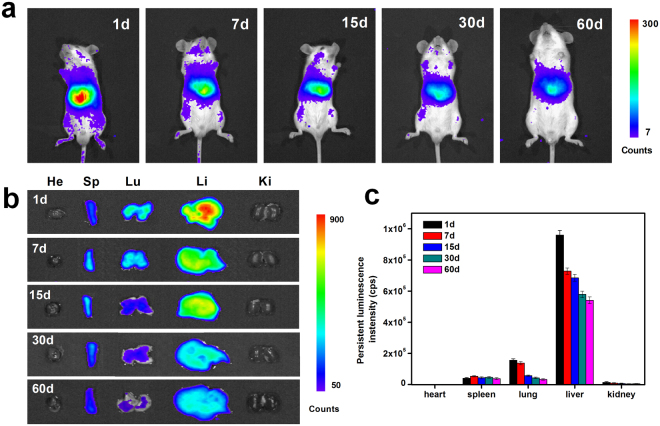
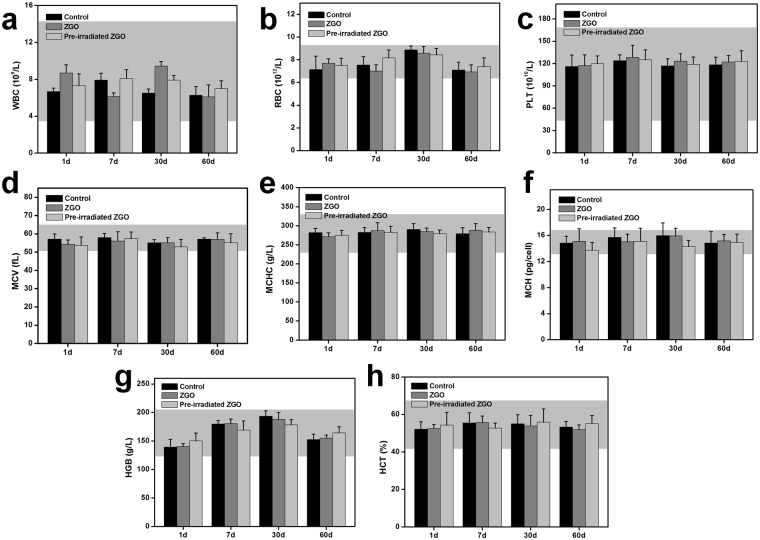
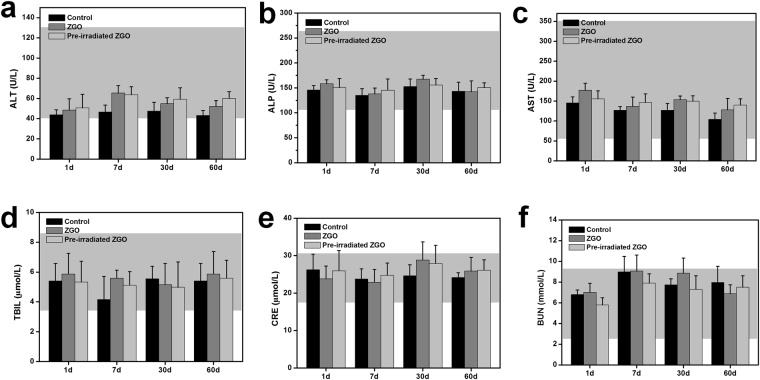
Near-infrared (NIR) persistent luminescence nanoparticles (NPLNPs) have become one of the most promising candidates for bioimaging. Different from the other fluorescence nanoprobes, the NIR persistent luminescence of NPLNPs can last for a long time after excitation, double exposure that is nanoparticles and light exist during the long-term bioimaging. However, to date, the potential risk of nanoparticles and NIR persistent luminescence of NPLNPs is still unknown. In this study, Cr3 + -doped zinc gallate, ZnGaSnO:Cr (ZGO), the most promising NPLNPs in bioimaging, was chosen as a representative for potential risk assessment. We evaluated the potential risk of nanoparticles and NIR persistent luminescence of ZGO for a long period of time. In vitro study showed that the ZGO possessed a low cytotoxicity. In vivo biodistribution results showed that the ZGO mainly accumulated in the reticuloendothelial system after intravenous injection and could be gradually cleared from the body by digestive system. In addition, the ZGO did not exhibit appreciable toxicity in mice over a period of 60 days. It's also worth mentioning that long-term NIR persistent luminescence of ZGO did not exhibit obvious toxicities both in vitro and in vivo. Our results provide important information with regards to the risk of NPLNPs in long-term bioimaging.
近红外(NIR)持续发光纳米颗粒(NPLNPs)已成为生物成像最有前途的候选者之一。与其他荧光纳米探针不同,NPLNPs 的 NIR 持续发光在激发后可以长时间持续,这意味着在长期的生物成像过程中,纳米颗粒和光同时存在。然而,迄今为止,纳米颗粒和 NPLNPs 的 NIR 持续发光的潜在风险仍然未知。在本研究中,选择了最有前途的生物成像用 NPLNPs——Cr3+掺杂的锌镓酸盐 ZnGaSnO:Cr(ZGO)作为代表性物质来进行潜在风险评估。我们评估了 ZGO 纳米颗粒和 NIR 持续发光的潜在风险,评估时间长达很长一段时间。体外研究表明,ZGO 具有低细胞毒性。体内生物分布结果表明,ZGO 经静脉注射后主要积聚在网状内皮系统中,并可通过消化系统逐渐从体内清除。此外,在 60 天的时间内,ZGO 在小鼠体内未表现出明显的毒性。值得一提的是,ZGO 的长期 NIR 持续发光在体外和体内均未表现出明显的毒性。我们的研究结果为 NPLNPs 在长期生物成像中的风险提供了重要信息。