Department of Spinal Surgery, Shanghai East Hospital, Tongji University School of Medicine, Shanghai, China,
Key Laboratory of Protein Modification and Degradation, School of Basic Medical Sciences, Affiliated Cancer Hospital, Institute of Guangzhou Medical University, Guangzhou Medical University, Guangzhou, China.
Int J Nanomedicine. 2018 Jul 4;13:3883-3896. doi: 10.2147/IJN.S162262. eCollection 2018.
It is predicted that with increased life expectancy in the whole world, there will be a greater demand for synthetic biomedical materials to repair or regenerate lost, injured or diseased tissues. Natural polymers, as biomedical materials, have been widely applied in the field of regenerative medicine.
By incorporation of nanoporous diopside bioglass (nDPB) into glia-din (GL) matrix, macro-nanoporous scaffolds of nDPB/GL composites (DGC) were fabricated by method of solution compressing and particles leaching.
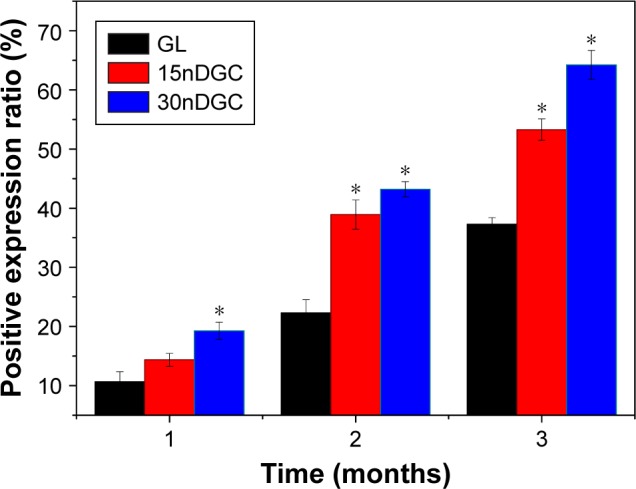
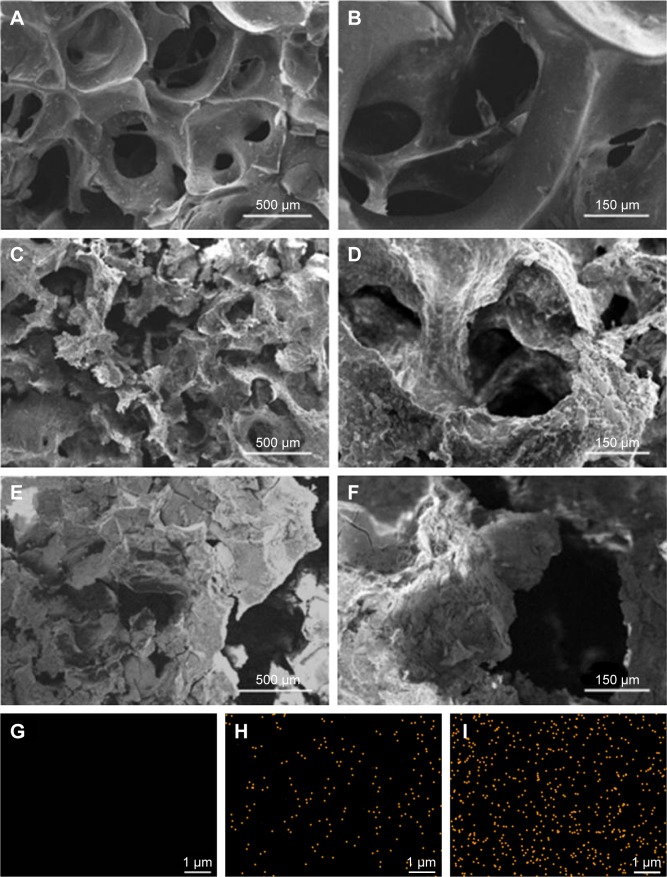
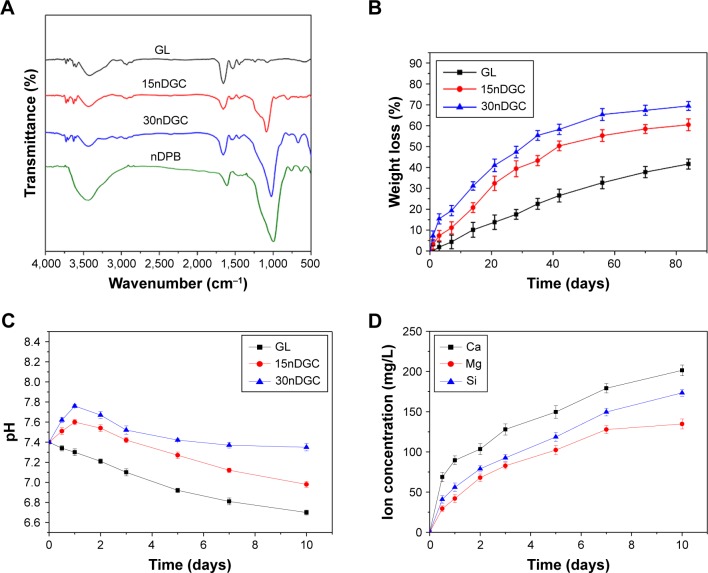
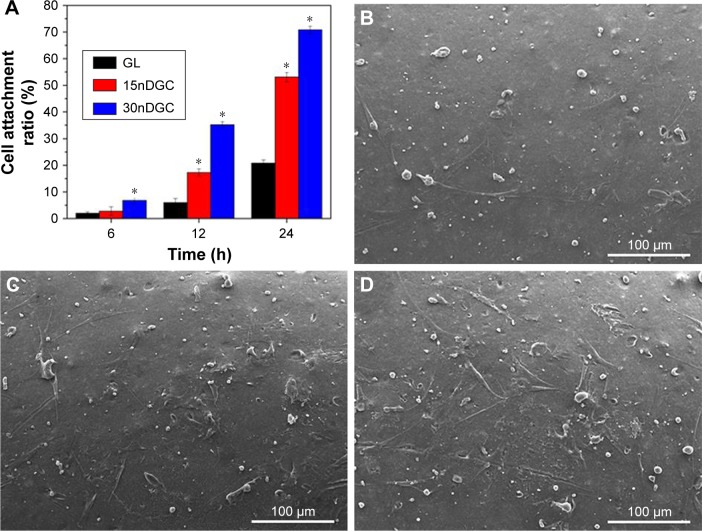
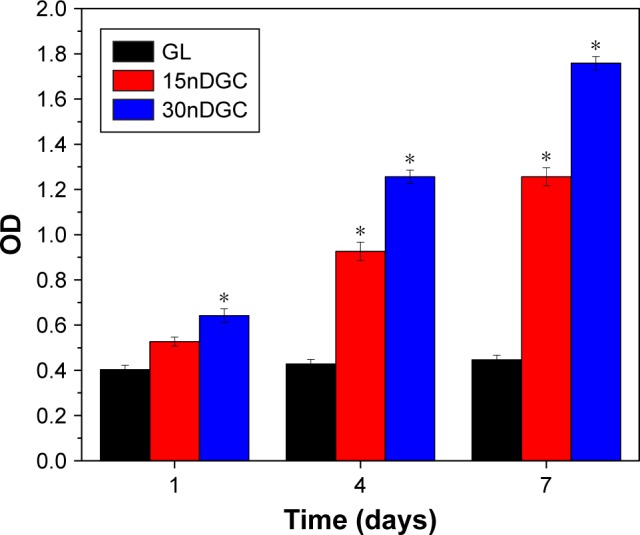
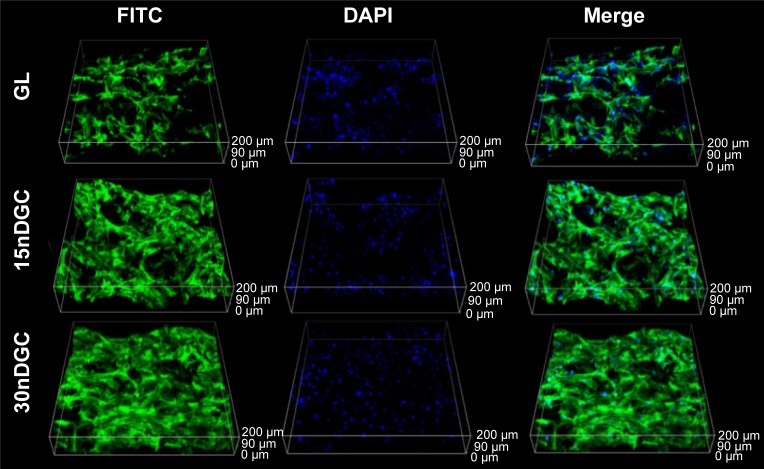
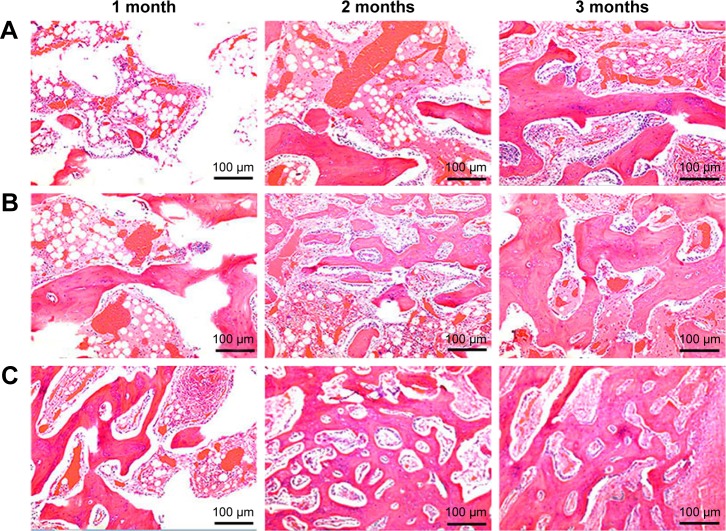
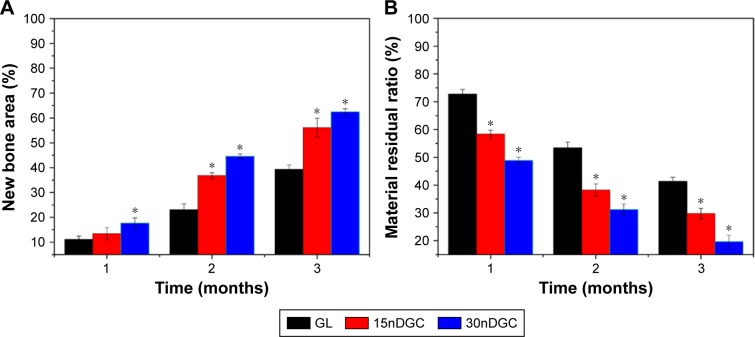
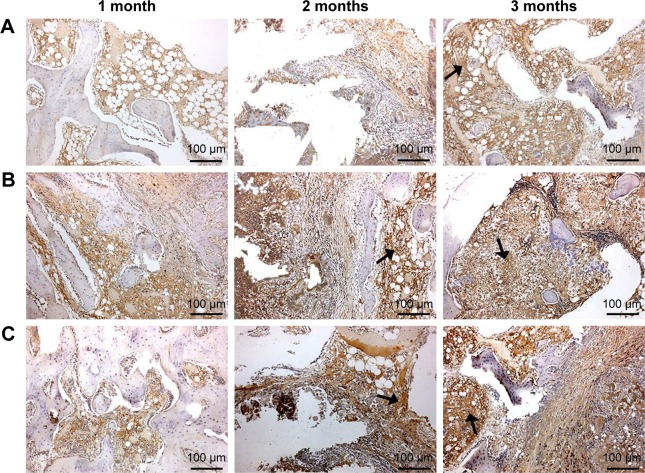
The results revealed that the DGC scaffolds possessed well-interconnected macropores of 200-500 μm and nanopores of 4 nm, and the porosity and degradability of DGC scaffolds remarkably increased with the increase in nDPB content. In addition, in vitro cell experiments revealed that the adhesion and growth of MC3T3-E1 cells on DGC scaffolds were significantly promoted, which depended on nDPB content. Moreover, the results of histological evaluations confirmed that the osteogenic properties and degradability of DGC scaffolds in vivo significantly improved, which were nDPB content dependent. Furthermore, the results of immunohistochemical analysis demonstrated that, with the increase in nDPB content, the type I collagen expression in DGC scaffolds in vivo obviously enhanced, indicating excellent osteogenesis.
The results demonstrated that the DGC scaffolds containing 30 wt% nDPB (30nDGC) exhibited good biocompatibility and new bone formation ability, which might have a great potential for applications in bone regeneration.
预计随着全球预期寿命的延长,对用于修复或再生失去、受伤或患病组织的合成生物医学材料的需求将会增加。天然聚合物作为生物医学材料,已广泛应用于再生医学领域。
通过将纳米多孔透辉石生物玻璃(nDPB)掺入神经胶质纤维酸性蛋白(GL)基质中,通过溶液压缩和颗粒浸出的方法制备了 nDPB/GL 复合材料(DGC)的宏观纳米多孔支架。
结果表明,DGC 支架具有 200-500μm 的连通大孔和 4nm 的纳米孔,DGC 支架的孔隙率和降解性随着 nDPB 含量的增加而显著增加。此外,体外细胞实验表明,DGC 支架上 MC3T3-E1 细胞的黏附和生长得到了显著促进,这取决于 nDPB 含量。此外,组织学评价结果证实,DGC 支架在体内的成骨性能和降解性得到了显著改善,这与 nDPB 含量有关。此外,免疫组织化学分析的结果表明,随着 nDPB 含量的增加,DGC 支架在体内的 I 型胶原蛋白表达明显增强,表明具有优异的成骨性能。
结果表明,含有 30wt%nDPB(30nDGC)的 DGC 支架具有良好的生物相容性和新骨形成能力,可能在骨再生应用中有很大的潜力。