Ammar El-Desouky, Hall David G, Shatters Robert G
USDA-ARS, US Horticultural Research Laboratory, Fort Pierce, FL 34945, USA.
University of Florida, IFAS, Fort Pierce, FL 34945, USA.
J Microsc Ultrastruct. 2017 Jan-Mar;5(1):9-20. doi: 10.1016/j.jmau.2016.01.005. Epub 2016 Feb 1.
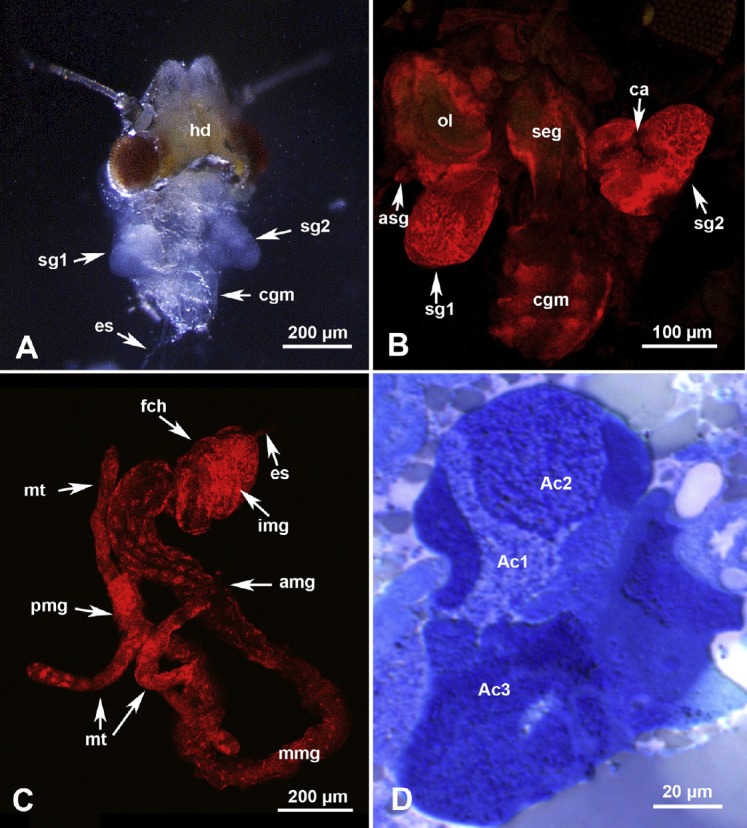
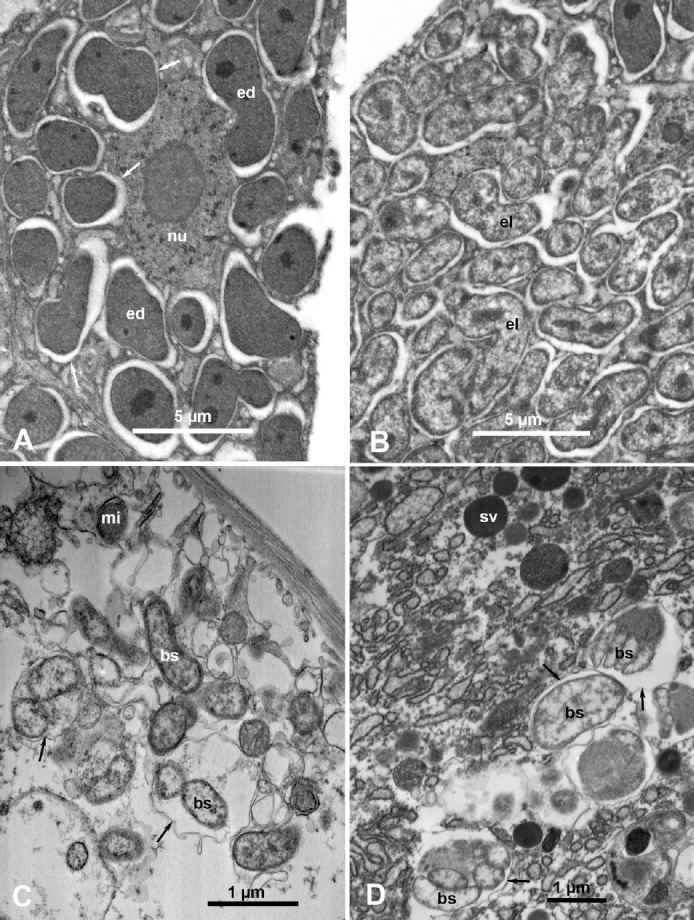
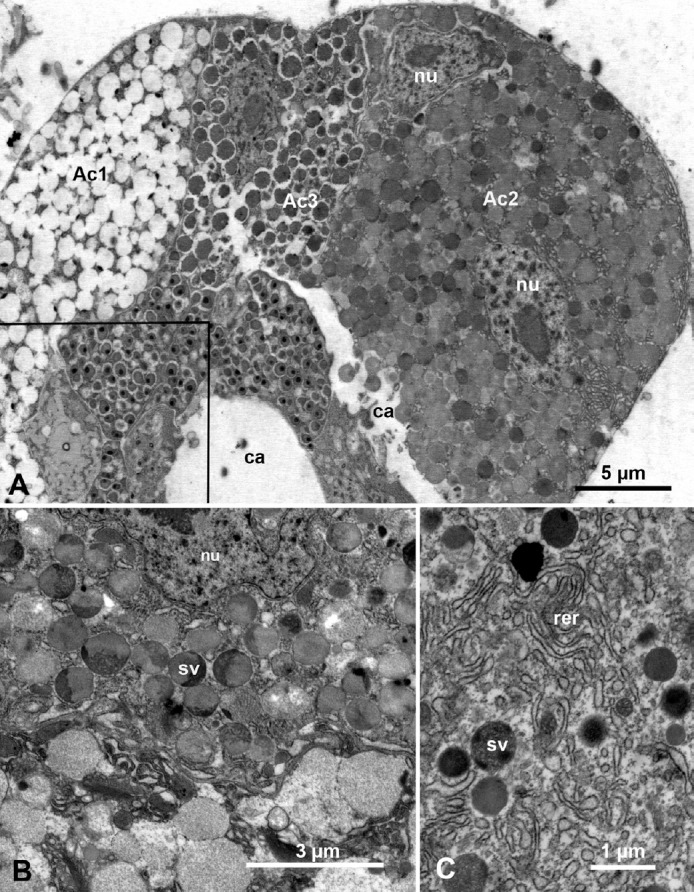
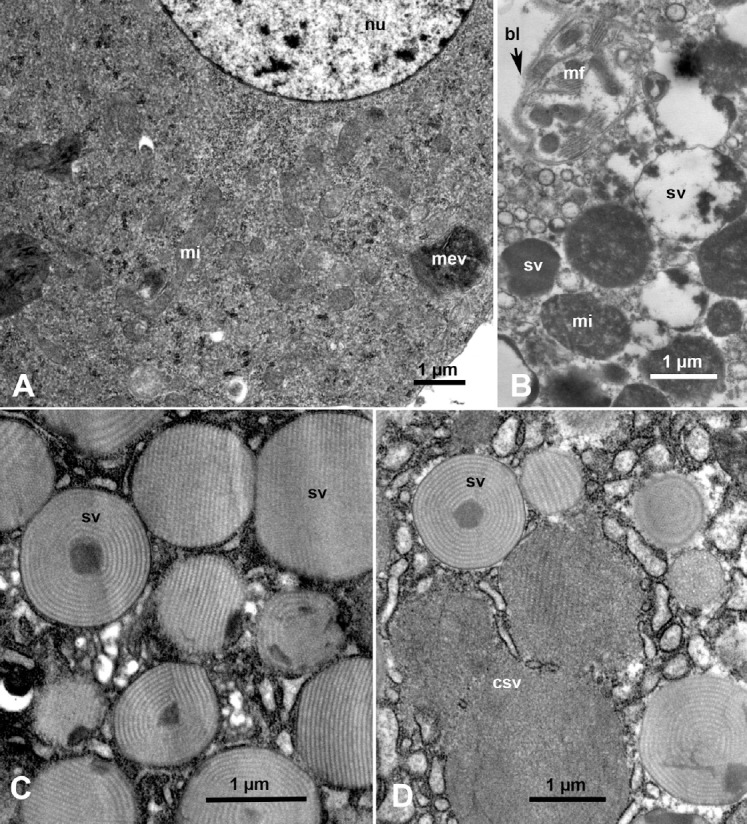
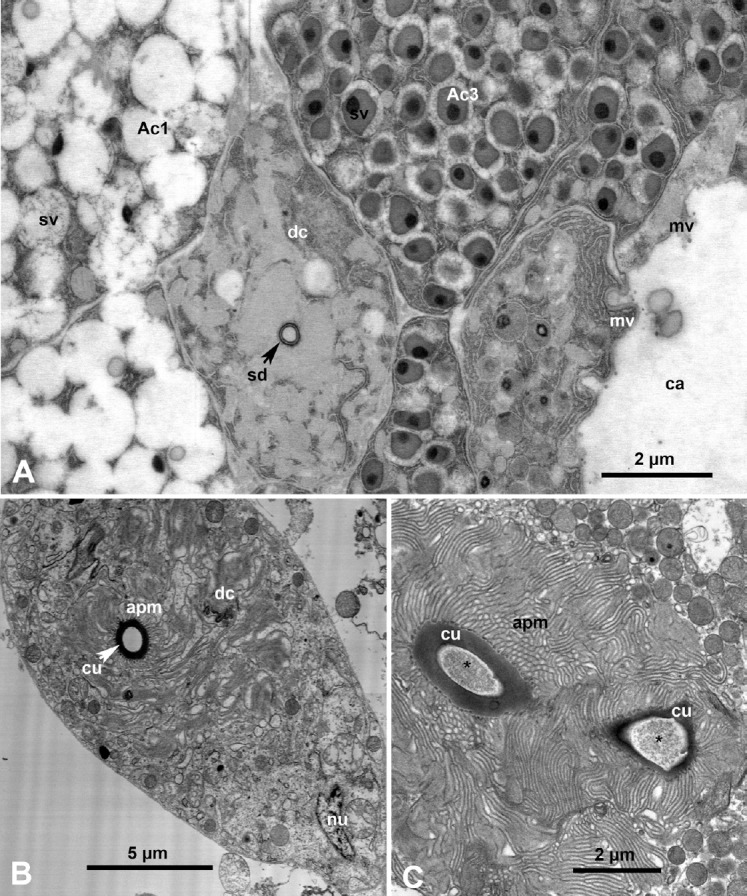
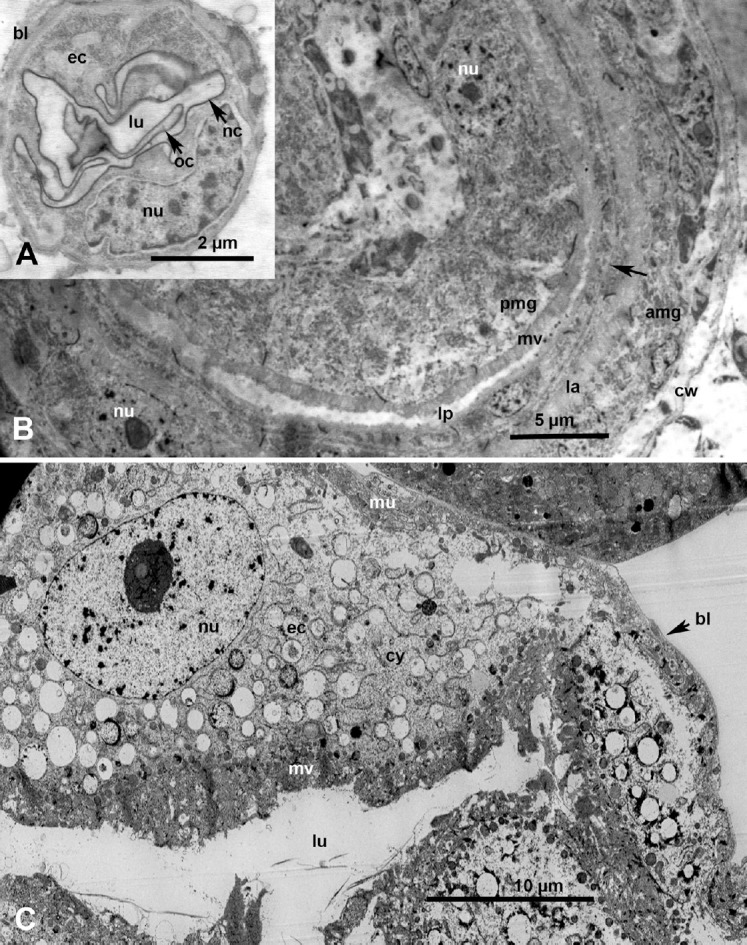
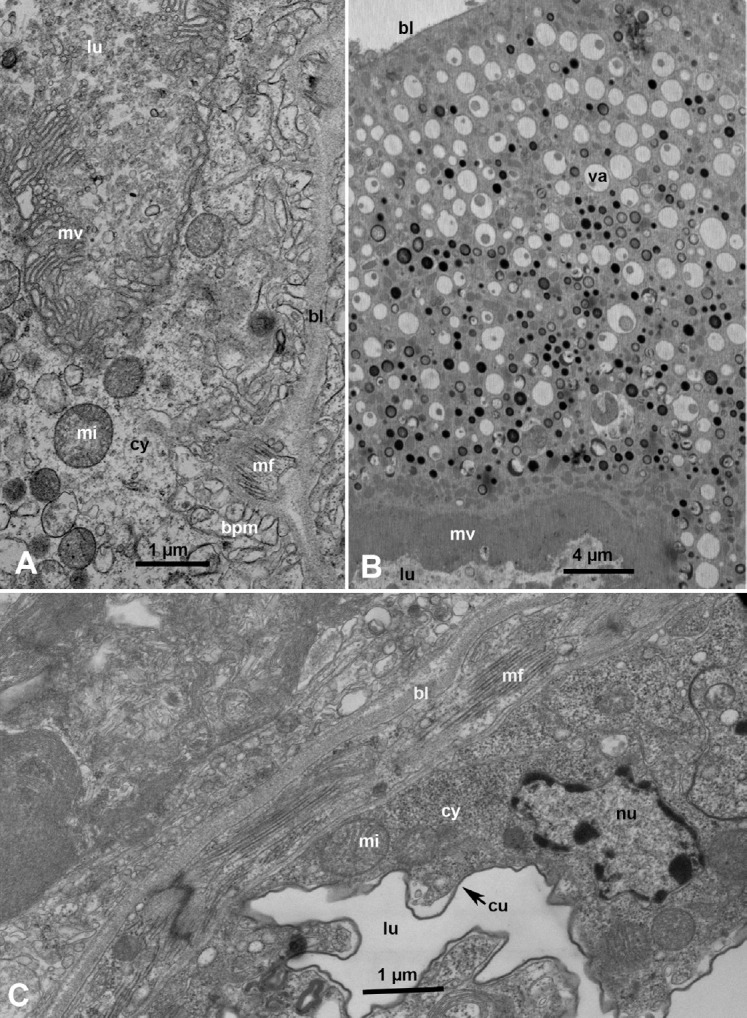
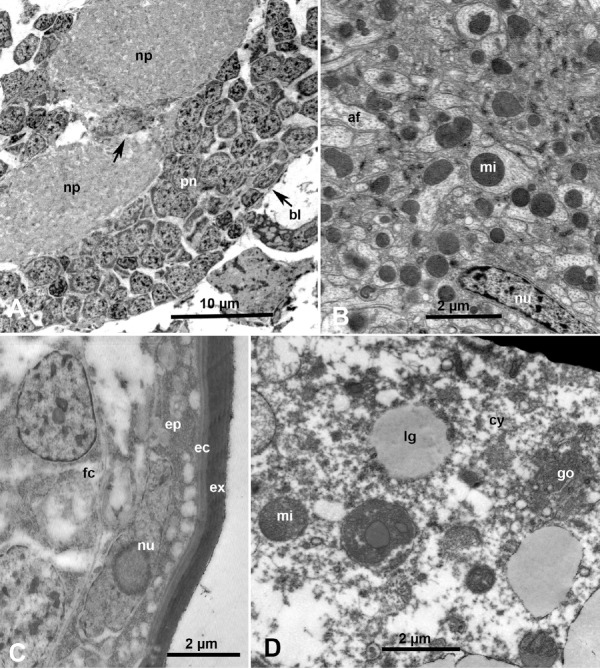
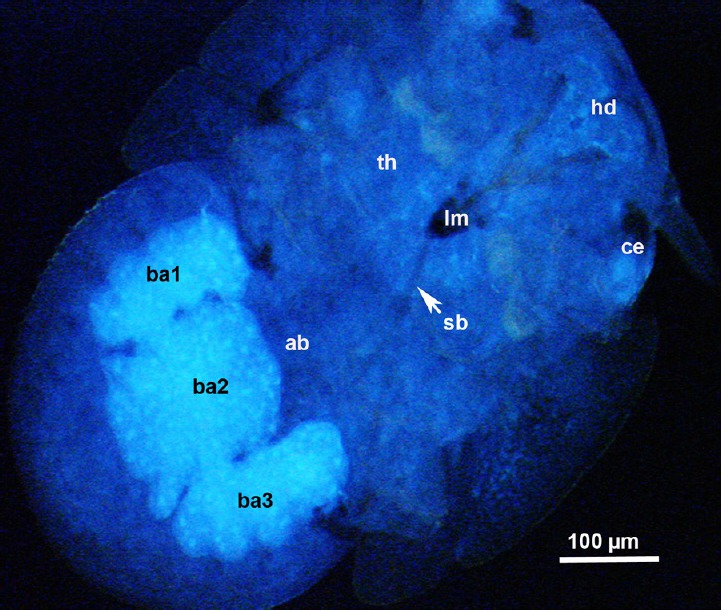
The Asian citrus psyllid (ACP, , Hemiptera: Liviidae) is the principal vector of Liberibacter asiaticus (Las), the putative bacterial agent of citrus greening/huanglongbing (HLB); currently the most serious citrus disease worldwide. Las is transmitted in a persistent-propagative manner by ACP, and the salivary glands and midgut have been suggested as transmission barriers that can impede translocation of Las within the vector. However, no detailed ultrastructural studies have been reported on these organs in this or other psyllid species, although some bacterium-like structures have been described in them and assumed to be the causal agents of HLB. In this study, we describe the ultrastructure of the salivary glands, filter chamber, other parts of the alimentary canal, and other organs and tissues of ACP including the compound ganglionic mass (in the thorax) and the bacteriome (in the abdomen). Furthermore, in addition to two ultrastructurally apparently different symbiotic bacteria found in the bacteriome, other morphological types of bacteria were found in the gut epithelial cells and salivary glands of both Las-infected (quantitative polymerase chain reaction positive) and noninfected (quantitative polymerase chain reaction negative) ACP. These results show the importance of immunolabeling, fluorescence hybridization, or other labeling techniques that must be used before identifying any bacterium-like structures in ACP or other vectors as Las or other possible agents of HLB. This ultrastructural investigation should help future work on the cellular and subcellular aspects of pathogen-psyllid relationships, including the study of receptors, binding sites, and transmission barriers of Las and other pathogens within their psyllid vectors.
亚洲柑橘木虱(ACP,半翅目:木虱科)是亚洲韧皮杆菌(Las)的主要传播媒介,Las被认为是柑橘黄龙病(HLB)的致病细菌,而柑橘黄龙病是目前全球最严重的柑橘病害。Las通过ACP以持久性增殖方式传播,唾液腺和中肠被认为是传播屏障,可阻碍Las在传播媒介体内的转移。然而,尽管在这些器官中描述过一些类似细菌的结构,并认为它们是HLB的病原体,但尚未见有关本物种或其他木虱物种这些器官的详细超微结构研究报道。在本研究中,我们描述了ACP唾液腺、滤室、消化道其他部分以及其他器官和组织的超微结构,包括复合神经节团(位于胸部)和菌瘤(位于腹部)。此外,除了在菌瘤中发现两种超微结构明显不同的共生细菌外,在Las感染(定量聚合酶链反应阳性)和未感染(定量聚合酶链反应阴性)的ACP的肠道上皮细胞和唾液腺中还发现了其他形态类型的细菌。这些结果表明,在将ACP或其他传播媒介中任何类似细菌的结构鉴定为Las或HLB的其他可能病原体之前,必须使用免疫标记、荧光杂交或其他标记技术。这项超微结构研究应有助于未来开展关于病原体与木虱关系的细胞和亚细胞层面的研究,包括研究Las和其他病原体在其木虱传播媒介体内的受体、结合位点和传播屏障。