State Key Laboratory of Cognitive Neuroscience and Learning & IDG/McGovern Institute for Brain Research, Beijing Normal University, Beijing, China; Center for Collaboration and Innovation in Brain and Learning Sciences, Beijing Normal University, Beijing, China; Beijing Key Laboratory of Brain Imaging and Connectomics, Beijing Normal University, Beijing, China.
Department of Radiology, Beijing Tiantan Hospital, Capital Medical University, Beijing, China; Tiantan Image Research Center, China National Clinical Research Center for Neurological Diseases, Beijing, China; Department of Radiology, Xuanwu Hospital, Capital Medical University, Beijing, China.
Neuroimage Clin. 2018 Mar 28;19:232-239. doi: 10.1016/j.nicl.2018.03.034. eCollection 2018.
To investigate the rich-club organization in clinically isolated syndrome (CIS) and multiple sclerosis (MS), and to characterize its relationships with physical disabilities and cognitive impairments.
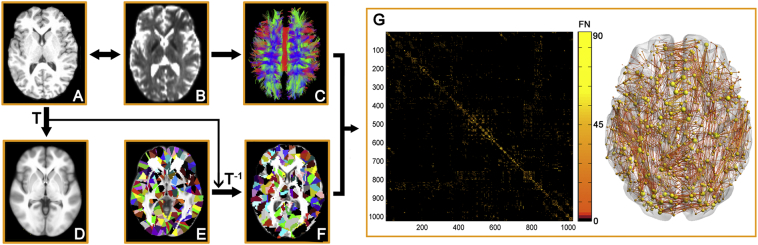
We constructed high-resolution white matter (WM) structural networks in 41 CIS, 32 MS and 35 healthy controls (HCs) using diffusion MRI and deterministic tractography. Group differences in rich-club organization, global and local network metrics were investigated. The relationship between the altered network metrics, brain lesions and clinical variables including EDSS, MMSE, PASAT, disease duration were calculated. Additionally, reproducibility analysis was performed using different parcellation schemes.
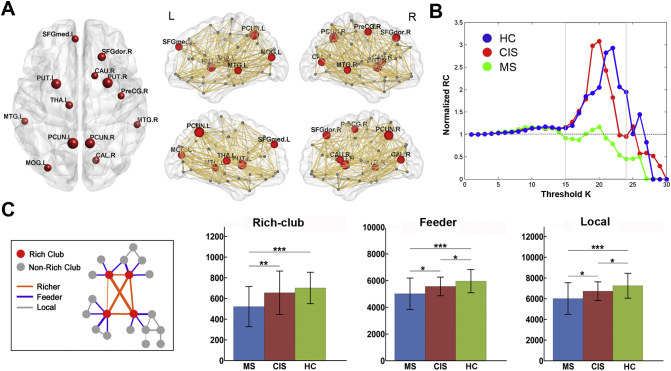
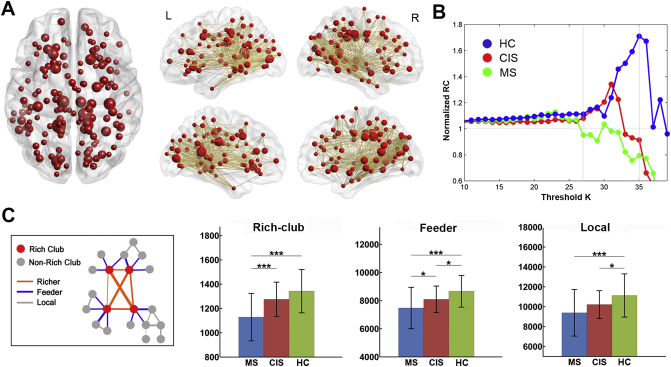
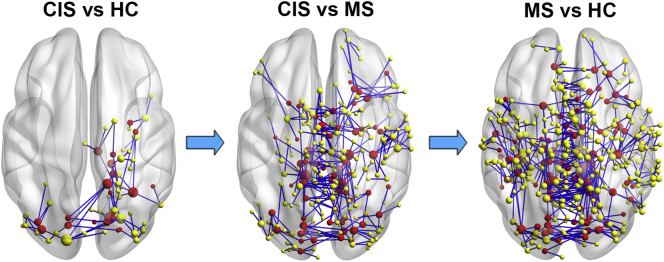
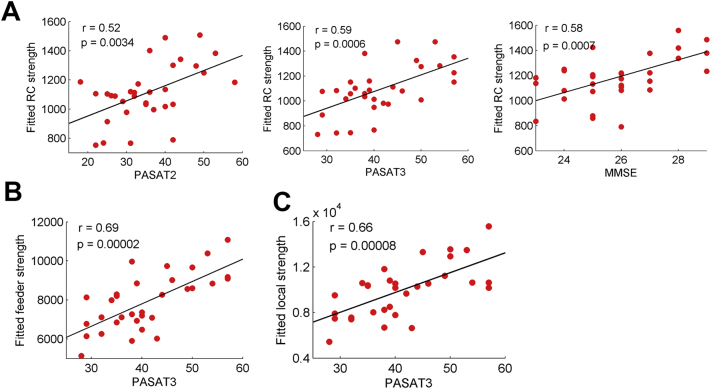
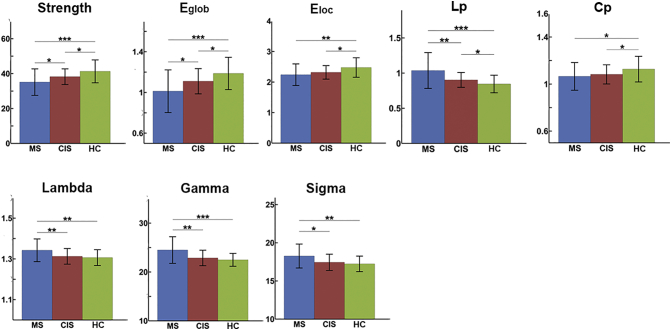
Compared with HCs, MS patients exhibited a decreased strength in all types of connections (rich-club: < 0.0001; feeder: = 0.0004; and local: = 0.0026). CIS patients showed intermediate values between MS patients and HCs and exhibited a decreased strength in feeder and local connections (feeder: = 0.019; and local: = 0.031) but not in rich-club connections. Compared with CIS patients, MS patients showed significant reductions in rich-club connections ( = 0.0004). The reduced strength of rich-club and feeder connections was correlated with cognitive impairments in the MS group. These results were independent of lesion distribution and reproducible across different brain parcellation schemes.
The rich-club organization was disrupted in MS patients and relatively preserved in CIS. The disrupted rich-club connectivity was correlated with cognitive impairment in MS. These findings suggest that impaired rich-club connectivity is an essential feature of progressive structural network disruption, heralding the development of clinical disability in MS.
研究临床孤立综合征(CIS)和多发性硬化(MS)中的丰富俱乐部组织,并描述其与身体残疾和认知障碍的关系。
我们使用弥散磁共振成像和确定性追踪技术在 41 例 CIS、32 例 MS 和 35 例健康对照者(HCs)中构建了高分辨率白质(WM)结构网络。研究了丰富俱乐部组织、全局和局部网络指标的组间差异。计算了改变的网络指标与脑损伤以及包括 EDSS、MMSE、PASAT、疾病持续时间在内的临床变量之间的关系。此外,还使用不同的分割方案进行了可重复性分析。
与 HCs 相比,MS 患者的所有类型连接的强度均降低(丰富俱乐部: < 0.0001;馈线: = 0.0004;和本地: = 0.0026)。CIS 患者的数值处于 MS 患者和 HCs 之间,其馈线和本地连接的强度降低(馈线: = 0.019;和本地: = 0.031),但丰富俱乐部连接的强度没有降低。与 CIS 患者相比,MS 患者的丰富俱乐部连接明显减少( = 0.0004)。丰富俱乐部和馈线连接的强度降低与 MS 组的认知障碍相关。这些结果独立于病变分布,在不同的脑分割方案中具有可重复性。
MS 患者的丰富俱乐部组织被破坏,而 CIS 患者的丰富俱乐部组织相对保留。破坏的丰富俱乐部连接与 MS 患者的认知障碍相关。这些发现表明,受损的丰富俱乐部连接是进行性结构网络破坏的重要特征,预示着 MS 临床残疾的发展。