Wang Bo, Blaszczyk Anthony J, Knox Hayley L, Zhou Shengbin, Blaesi Elizabeth J, Krebs Carsten, Wang Roy X, Booker Squire J
Biochemistry. 2018 Aug 21;57(33):4972-4984. doi: 10.1021/acs.biochem.8b00693. Epub 2018 Aug 9.
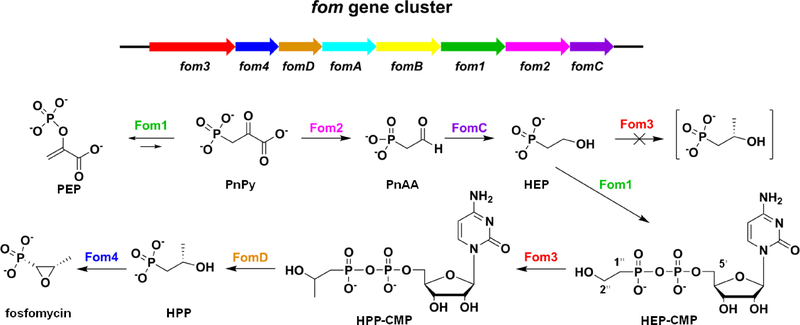
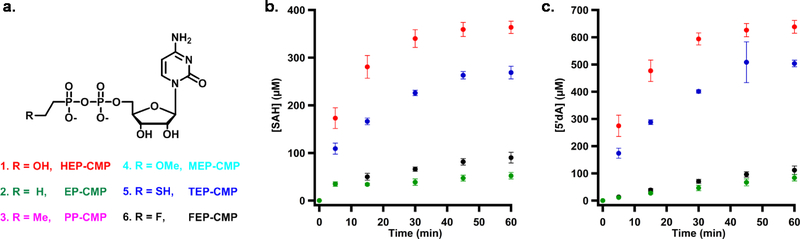
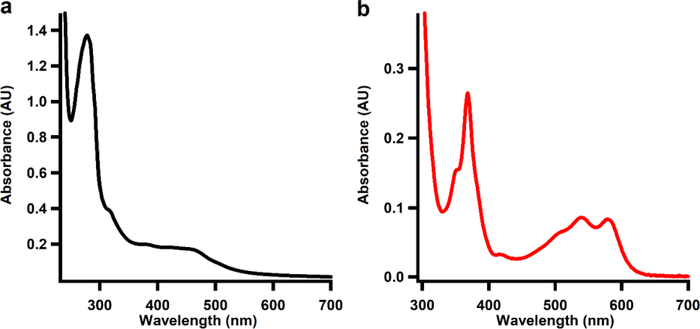
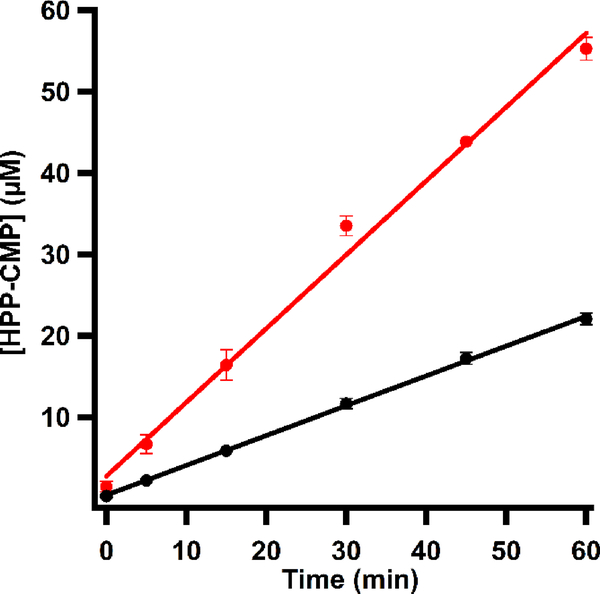
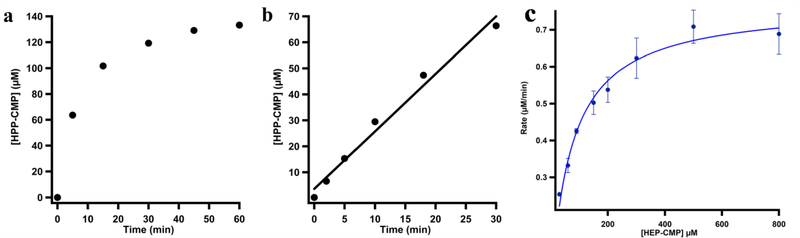
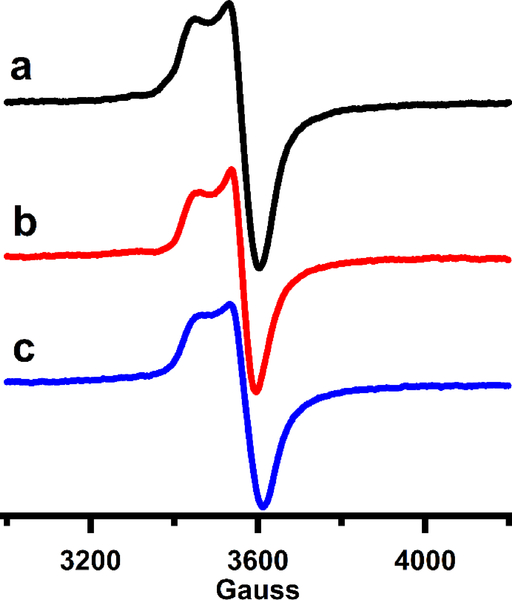
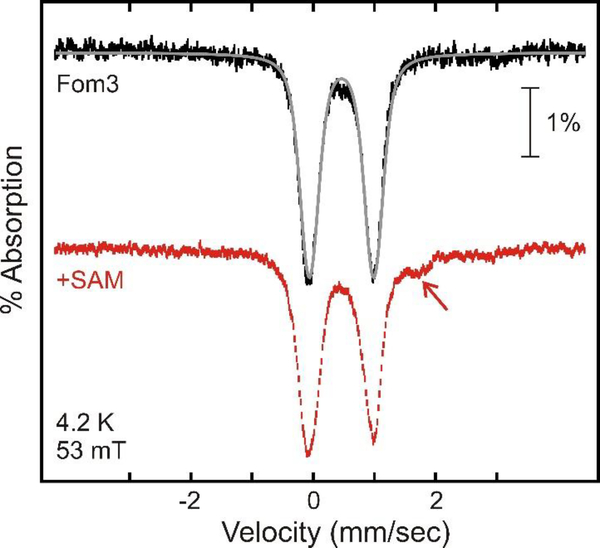
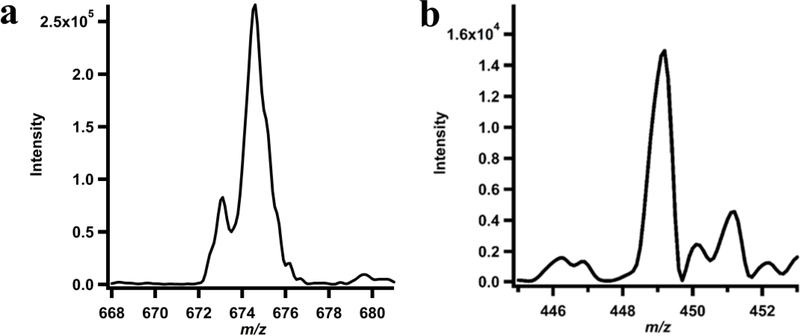
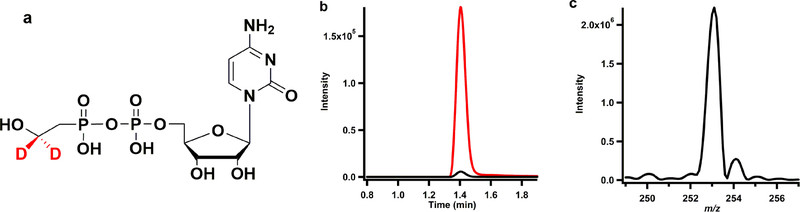
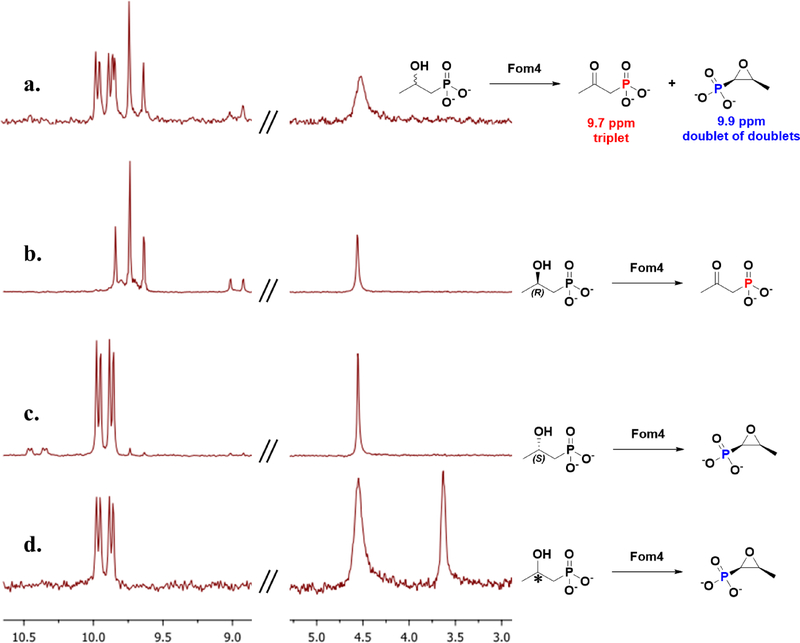
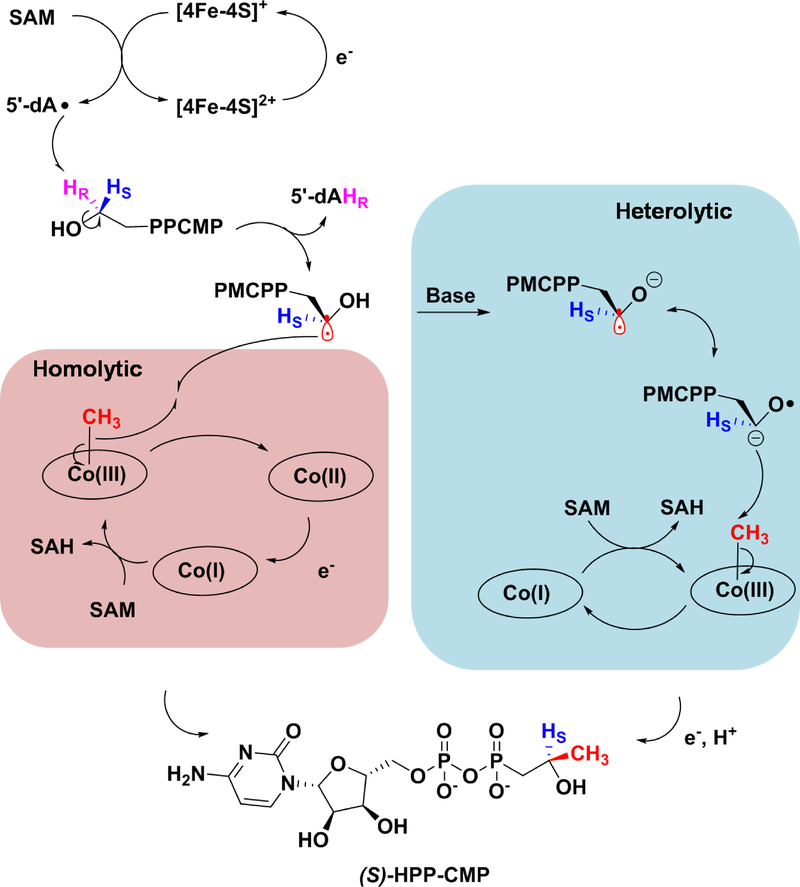
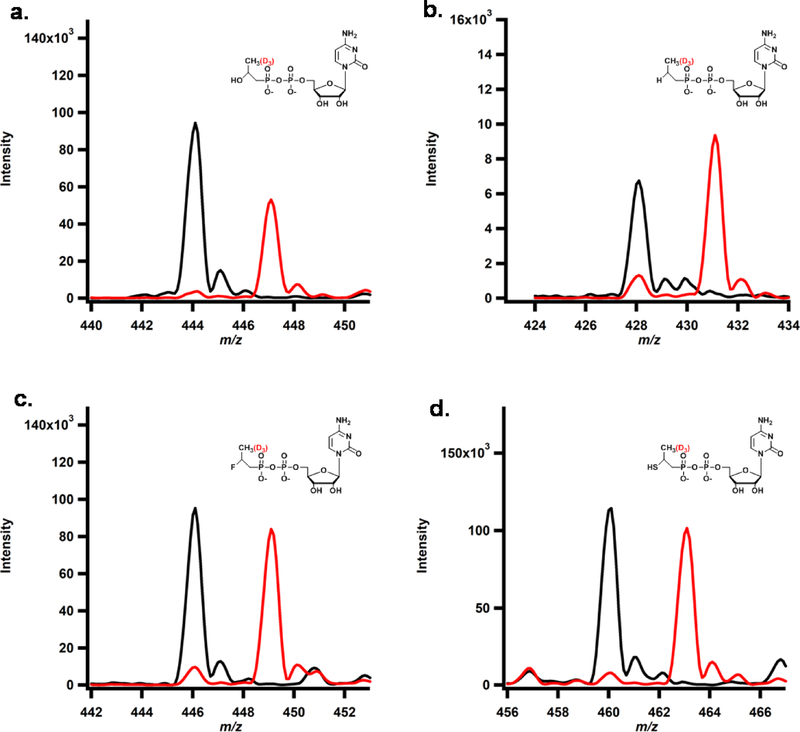
Fom3, a cobalamin-dependent radical S-adenosylmethionine (SAM) methylase, has recently been shown to catalyze the methylation of carbon 2″ of cytidylyl-2-hydroxyethylphosphonate (HEP-CMP) to form cytidylyl-2-hydroxypropylphosphonate (HPP-CMP) during the biosynthesis of fosfomycin, a broad-spectrum antibiotic. It has been hypothesized that a 5'-deoxyadenosyl 5'-radical (5'-dA) generated from the reductive cleavage of SAM abstracts a hydrogen atom from HEP-CMP to prime the substrate for addition of a methyl group from methylcobalamin (MeCbl); however, the mechanistic details of this reaction remain elusive. Moreover, it has been reported that Fom3 catalyzes the methylation of HEP-CMP to give a mixture of the ( S)-HPP and ( R)-HPP stereoisomers, which is rare for an enzyme-catalyzed reaction. Herein, we describe a detailed biochemical investigation of a Fom3 that is purified with 1 equiv of its cobalamin cofactor bound, which is almost exclusively in the form of MeCbl. Electron paramagnetic resonance and Mössbauer spectroscopies confirm that Fom3 contains one [4Fe-4S] cluster. Using deuterated enantiomers of HEP-CMP, we demonstrate that the 5'-dA generated by Fom3 abstracts the C2″- pro-R hydrogen of HEP-CMP and that methyl addition takes place with inversion of configuration to yield solely ( S)-HPP-CMP. Fom3 also sluggishly converts cytidylyl-ethylphosphonate to the corresponding methylated product but more readily acts on cytidylyl-2-fluoroethylphosphonate, which exhibits a lower C2″ homolytic bond-dissociation energy. Our studies suggest a mechanism in which the substrate C2″ radical, generated upon hydrogen atom abstraction by the 5'-dA, directly attacks MeCbl to transfer a methyl radical (CH) rather than a methyl cation (CH), directly forming cob(II)alamin in the process.
Fom3是一种依赖钴胺素的自由基S-腺苷甲硫氨酸(SAM)甲基转移酶,最近的研究表明,在广谱抗生素磷霉素的生物合成过程中,它能催化胞苷-2-羟乙基膦酸酯(HEP-CMP)的2″位碳原子甲基化,形成胞苷-2-羟丙基膦酸酯(HPP-CMP)。据推测,SAM还原裂解产生的5'-脱氧腺苷5'-自由基(5'-dA)从HEP-CMP中提取一个氢原子,使底物能够接受甲基钴胺素(MeCbl)提供的甲基;然而,该反应的具体机制仍不清楚。此外,有报道称Fom3催化HEP-CMP甲基化生成(S)-HPP和(R)-HPP立体异构体的混合物,这在酶催化反应中较为罕见。在此,我们描述了对一种结合了1当量钴胺素辅因子的Fom3进行的详细生化研究,该辅因子几乎完全以MeCbl的形式存在。电子顺磁共振和穆斯堡尔光谱证实Fom3含有一个[4Fe-4S]簇。使用HEP-CMP的氘代对映体,我们证明Fom3产生的5'-dA提取HEP-CMP的C2″-前手性氢,并且甲基化反应发生构型翻转,仅生成(S)-HPP-CMP。Fom3也能缓慢地将胞苷-乙基膦酸酯转化为相应的甲基化产物,但更容易作用于胞苷-2-氟乙基膦酸酯,后者具有较低的C2″均裂键解离能。我们的研究提出了一种机制,即5'-dA提取氢原子后产生的底物C2″自由基直接攻击MeCbl以转移一个甲基自由基(CH)而非甲基阳离子(CH),在此过程中直接形成钴胺(II)素。