Wellman Center for Photomedicine, Massachusetts General Hospital, Boston, MA 02114, USA.
Photochem Photobiol Sci. 2018 Nov 1;17(11):1515-1533. doi: 10.1039/c8pp00195b. Epub 2018 Jul 25.
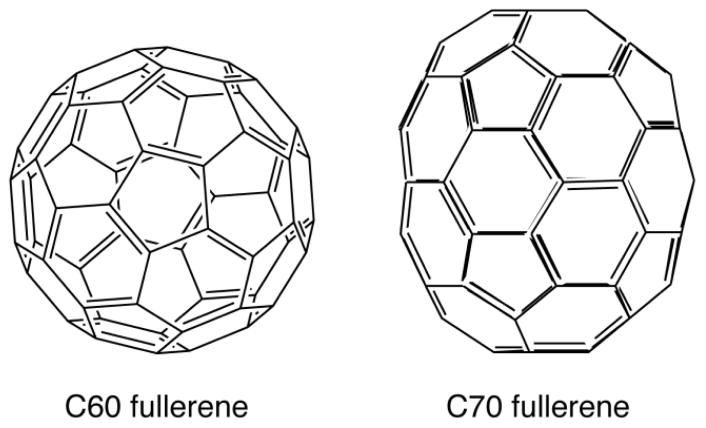
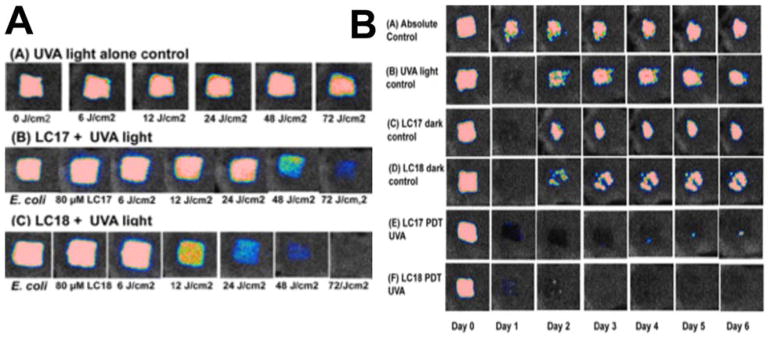
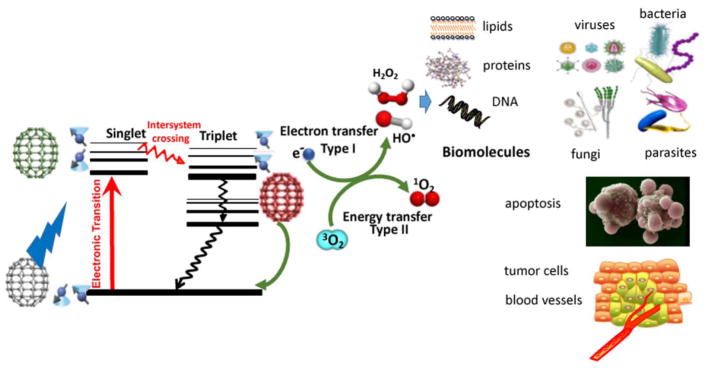
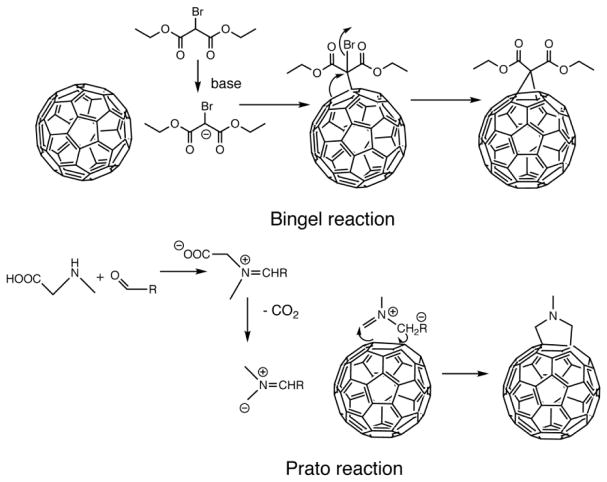
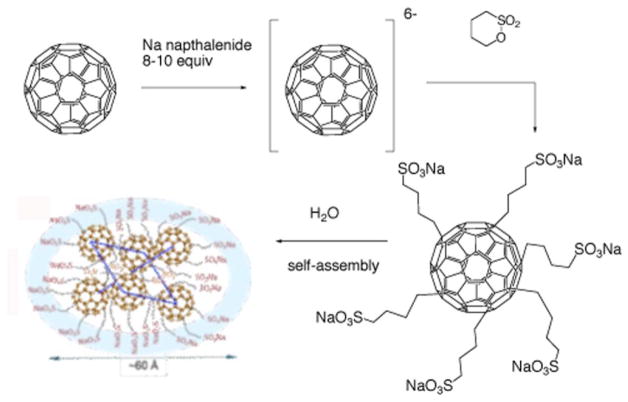
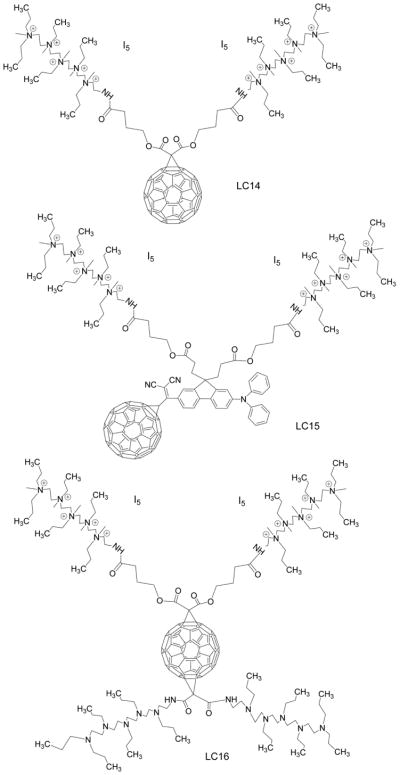
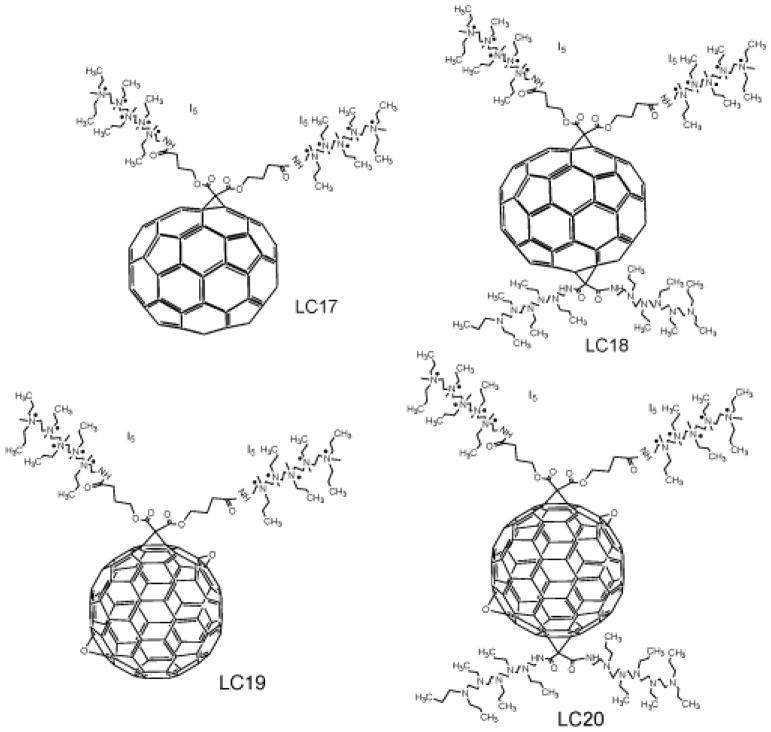
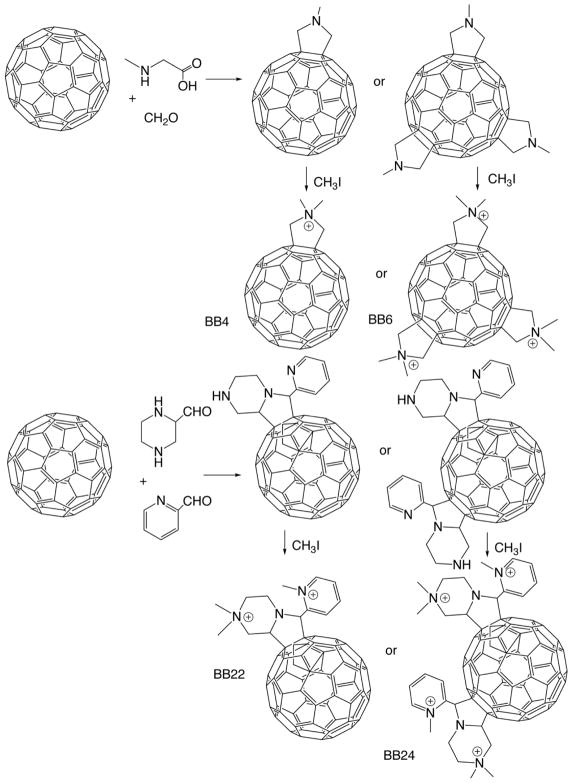
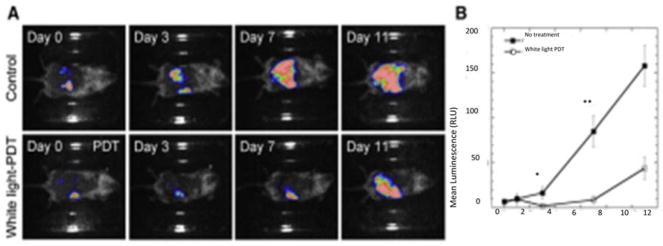
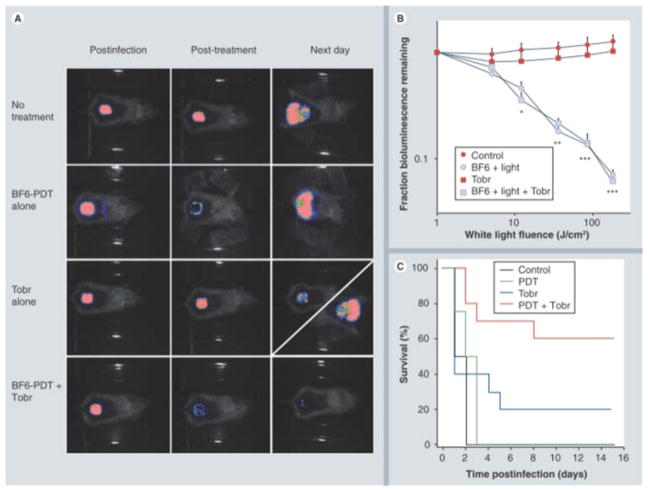
One class of carbon nanomaterials is the closed cages known as fullerenes. The first member to be discovered in 1985 was C60, called "buckminsterfullerene" as its cage structure resembled a geodesic dome. Due to their extended π-conjugation they absorb visible light, possess a high triplet yield and can generate reactive oxygen species upon illumination, suggesting a possible role of fullerenes in photodynamic therapy (PDT). Pristine C is highly hydrophobic and prone to aggregation, necessitating functionalization to provide aqueous solubility and biocompatibility. The most common functional groups attached are anionic (carboxylic or sulfonic acids) or cationic (various quaternary ammonium groups). Depending on the functionalization, these fullerenes can be designed to be taken up into cancer cells, or to bind to microbial cells (Gram-positive, Gram-negative bacteria, fungi). Fullerenes can be excited with a wide range of wavelengths, UVA, blue, green or white light. We have reported a series of functionalized fullerenes (C, C, C) with attached polycationic chains and additional light-harvesting antennae that can be used in vitro and in animal models of localized infections. Advantages of fullerenes as photosensitizers are: (a) versatile functionalization; (b) light-harvesting antennae; (c) ability to undergo Type 1, 2, and 3 photochemistry; (d) electron transfer can lead to oxygen-independent photokilling; (e) antimicrobial activity can be potentiated by inorganic salts; (f) can self-assemble into supramolecular fullerosomes; (g) components of theranostic nanoparticles; (h) high resistance to photobleaching. Disadvantages include: (a) highly hydrophobic and prone to aggregation; (b) overall short wavelength absorption; (c) relatively high molecular weight; (d) paradoxically can be anti-oxidants; (e) lack of fluorescence emission for imaging.
有一种碳纳米材料是封闭笼状的富勒烯。1985 年首次发现的成员是 C60,因其笼状结构类似于一种测地线圆顶而被称为“巴克敏斯特富勒烯”。由于其扩展的π共轭,它们吸收可见光,具有高三重态产率,并在光照下产生活性氧物种,这表明富勒烯可能在光动力疗法(PDT)中发挥作用。原始 C 具有很高的疏水性和易于聚集的特性,因此需要进行功能化处理以提供水溶性和生物相容性。最常见的附着官能团是阴离子(羧酸或磺酸)或阳离子(各种季铵基团)。根据功能化的不同,这些富勒烯可以被设计为被癌细胞吸收,或者与微生物细胞(革兰氏阳性菌、革兰氏阴性菌、真菌)结合。富勒烯可以用多种波长的光激发,包括 UVA、蓝光、绿光或白光。我们已经报道了一系列带有附加聚阳离子链和额外光捕获天线的功能化富勒烯(C、C、C),这些富勒烯可以在体外和局部感染的动物模型中使用。富勒烯作为光敏剂的优点有:(a)多功能化功能;(b)光捕获天线;(c)能够进行 1 型、2 型和 3 型光化学;(d)电子转移可以导致不依赖于氧气的光杀伤;(e)可以通过无机盐增强抗菌活性;(f)可以自组装成超分子富勒烯;(g)治疗学纳米颗粒的组成部分;(h)对光漂白有很高的抵抗力。缺点包括:(a)高度疏水性和易于聚集;(b)整体短波长吸收;(c)相对较高的分子量;(d)矛盾的是可以作为抗氧化剂;(e)缺乏荧光发射用于成像。