Akens Margarete K, Chien Claudia, Katchky Ryan N, Kreder Hans J, Finkelstein Joel, Whyne Cari M
Techna Institute, University Health Network, 101 College Street, Rm 15-311, Toronto, ON, M5J 2S2, Canada.
Department of Medical Biophysics, University of Toronto, Toronto, ON, Canada.
BMC Musculoskelet Disord. 2018 Jul 27;19(1):260. doi: 10.1186/s12891-018-2199-z.
Orthopaedic implant infections are difficult to eradicate because bacteria adhering to implant surfaces inhibit the ability of the immune system and antibiotics to combat these infections. Thermal cycling is a temperature modulation process that improves performance and longevity of materials through molecular structural reorientation, thereby increasing surface uniformity. Thermal cycling may change material surface properties that reduce the ability for bacteria to adhere to the surface of orthopaedic implants. This study aims to determine whether thermal cycling of orthopaedic implants can reduce bacterial growth.
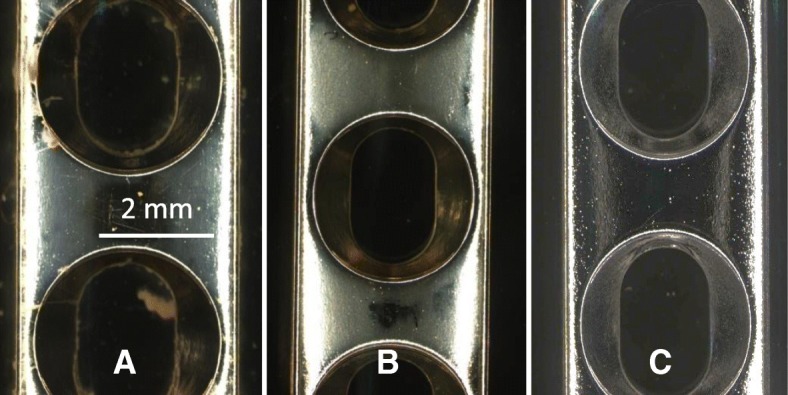
In a randomized, blinded in-vitro study, titanium and stainless steel plates treated with thermal cycling were compared to controls. Twenty-seven treated and twenty-seven untreated plates were covered with 10 ml tryptic soy broth containing ~ 10 colony forming units (CFU)/ml of bioluminescent Staphylococcus aureus (S. aureus)Xen29 and incubated at 37 °C for 14d. Quantity and viability of bacteria were characterized using bioluminescence imaging, live/dead staining and determination of CFUs.
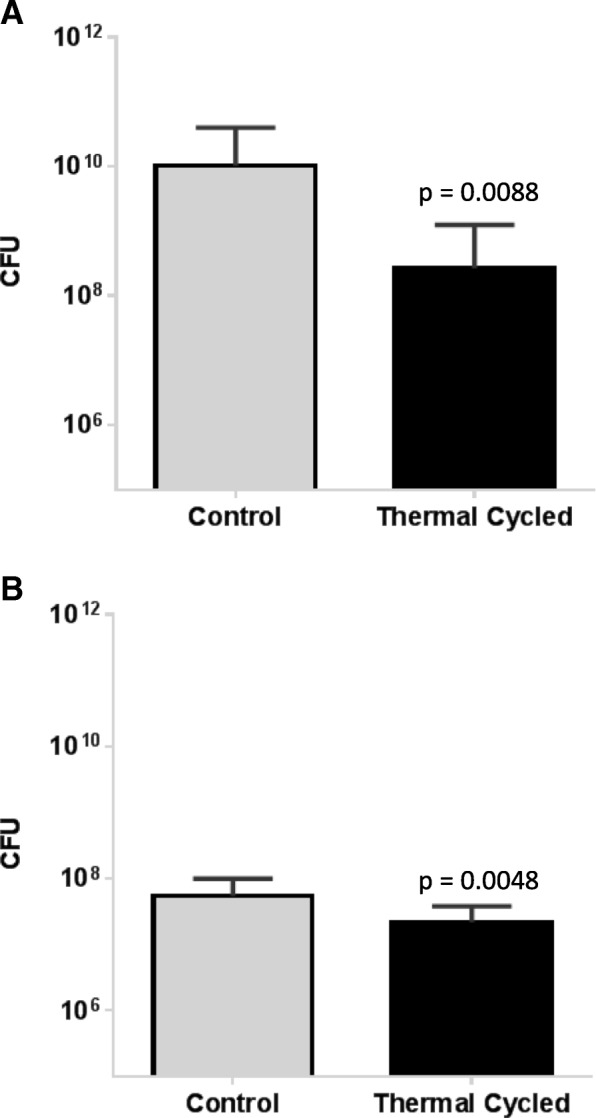
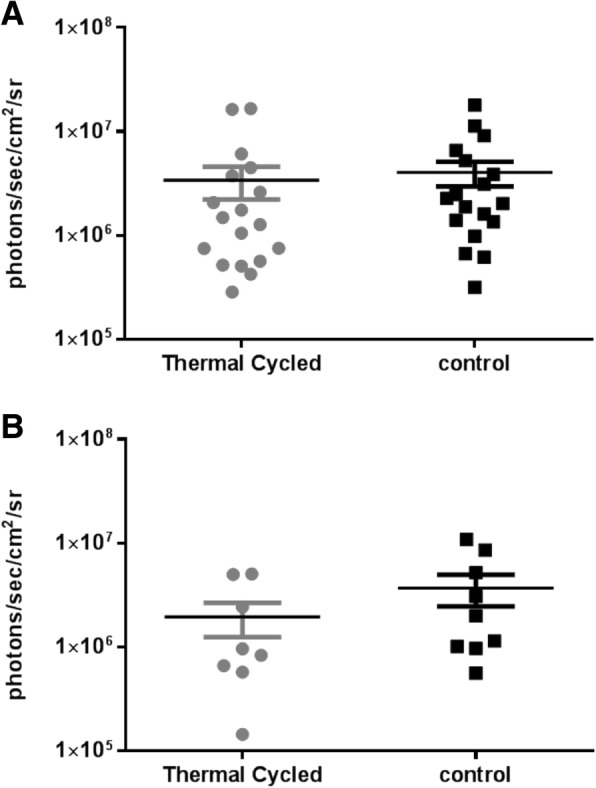
Significantly fewer CFUs grow on treated stainless steel plates compared to controls (p = 0.0088). Similar findings were seen in titanium plates (p = 0.0048) following removal of an outlier. No differences were evident in live/dead staining using confocal microscopy, or in metabolic activity determined using bioluminescence imaging (stainless steel plates: p = 0.70; titanium plates: p = 0.26).
This study shows a reduction in CFUs formation on thermal cycled plates in-vitro. Further in-vivo studies are necessary to investigate the influence of thermal cycling on bacterial adhesion during bone healing. Thermal cycling has demonstrated improved wear and strength, with reductions in fatigue and load to failure. The added ability to reduce bacterial adhesions demonstrates another potential benefit of thermal cycling in orthopaedics, representing an opportunity to reduce complications following fracture fixation or arthroplasty.
骨科植入物感染难以根除,因为附着在植入物表面的细菌会抑制免疫系统和抗生素对抗这些感染的能力。热循环是一种温度调制过程,通过分子结构重新定向来提高材料的性能和寿命,从而增加表面均匀性。热循环可能会改变材料表面特性,降低细菌附着在骨科植入物表面的能力。本研究旨在确定骨科植入物的热循环是否能减少细菌生长。
在一项随机、盲法体外研究中,将经过热循环处理的钛板和不锈钢板与对照组进行比较。27块处理过的板和27块未处理的板覆盖有10毫升含有约10个菌落形成单位(CFU)/毫升生物发光金黄色葡萄球菌(金黄色葡萄球菌)Xen29的胰蛋白胨大豆肉汤,并在37℃下孵育14天。使用生物发光成像、活/死染色和CFU测定来表征细菌的数量和活力。
与对照组相比,处理过的不锈钢板上生长的CFU明显更少(p = 0.0088)。去除一个异常值后,钛板也有类似的发现(p = 0.0048)。使用共聚焦显微镜进行的活/死染色或使用生物发光成像测定的代谢活性均无明显差异(不锈钢板:p = 0.70;钛板:p = 0.26)。
本研究表明,体外热循环处理的板上CFU形成减少。需要进一步的体内研究来调查热循环对骨愈合过程中细菌粘附的影响。热循环已显示出改善的磨损和强度,同时降低了疲劳和失效载荷。减少细菌粘附的额外能力证明了热循环在骨科中的另一个潜在益处,这代表了减少骨折固定或关节置换术后并发症的机会。