Immunology-Vaccinology, Department of Infectious and Parasitic Diseases, Faculty of Veterinary Medicine-FARAH, University of Liège, Liège, Belgium.
J Immunol Res. 2018 Jul 2;2018:2790627. doi: 10.1155/2018/2790627. eCollection 2018.
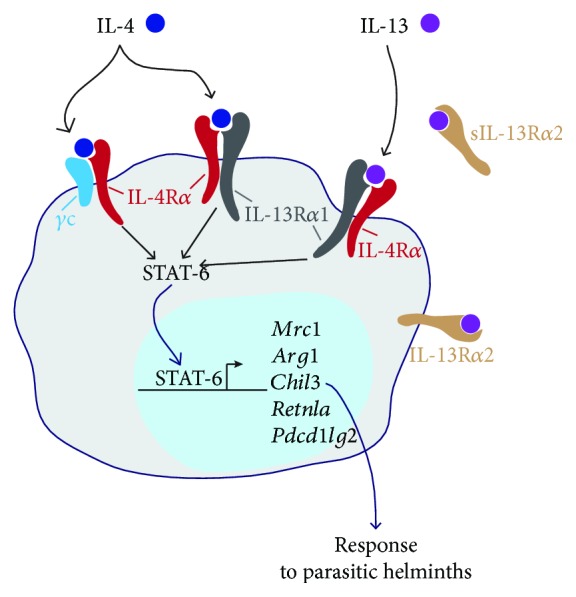
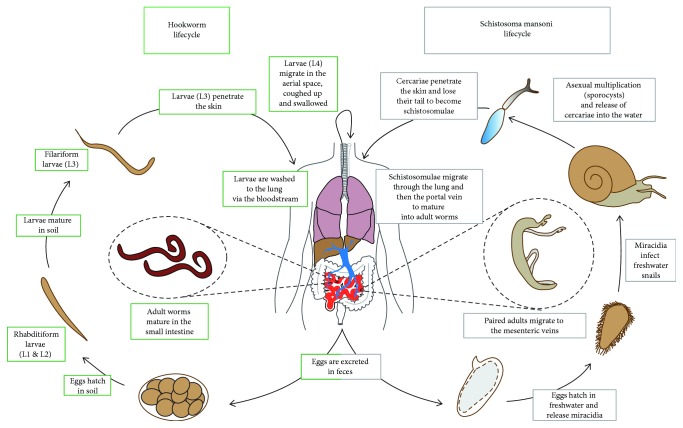
Macrophages are highly plastic innate immune cells that adopt an important diversity of phenotypes in response to environmental cues. Helminth infections induce strong type 2 cell-mediated immune responses, characterized among other things by production of high levels of interleukin- (IL-) 4 and IL-13. Alternative activation of macrophages by IL-4 was described as an opposite phenotype of classically activated macrophages, but the reality is much more complex. Their exact activation state as well as the role of these cells and associated molecules in type 2 immune responses remains to be fully understood. We can take advantage of a variety of helminth models available, each of which have their own feature including life cycle, site of infection, or pathological mechanisms influencing macrophage biology. Here, we reviewed the recent advances from the laboratory mouse about macrophage origin, polarization, activation, and effector functions during parasitic helminth infection.
巨噬细胞是高度可塑性的先天免疫细胞,它们会根据环境线索采用重要的多种表型。寄生虫感染会诱导强烈的 2 型细胞介导的免疫反应,其特征除其他外还包括高水平的白细胞介素 (IL-) 4 和 IL-13 的产生。IL-4 对巨噬细胞的替代性激活被描述为经典激活巨噬细胞的相反表型,但事实要复杂得多。它们的确切激活状态以及这些细胞和相关分子在 2 型免疫反应中的作用仍有待充分理解。我们可以利用各种现有的寄生虫模型,每个模型都有自己的特点,包括生命周期、感染部位或影响巨噬细胞生物学的病理机制。在这里,我们回顾了实验室小鼠在寄生虫感染期间关于巨噬细胞起源、极化、激活和效应功能的最新进展。