Department of Periodontology, School of Dentistry, Kyungpook National University, Daegu 41940, Republic of Korea.
Institute of Biomaterials and Bioengineering, Tokyo Medical and Dental University, Tokyo 101-0062, Japan.
Biomed Res Int. 2018 Jul 4;2018:1362958. doi: 10.1155/2018/1362958. eCollection 2018.
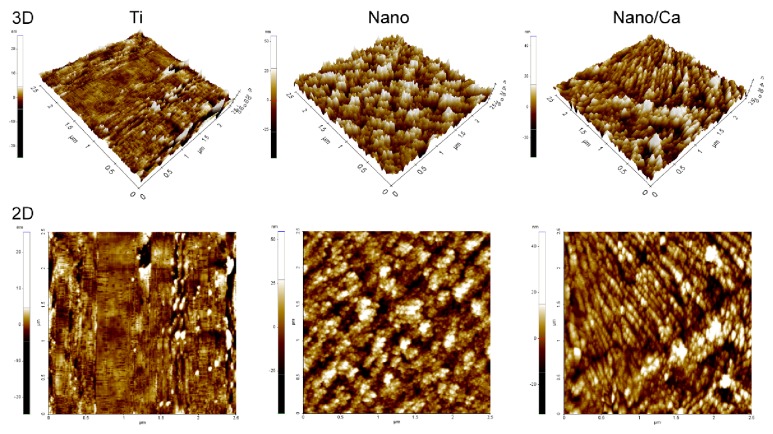
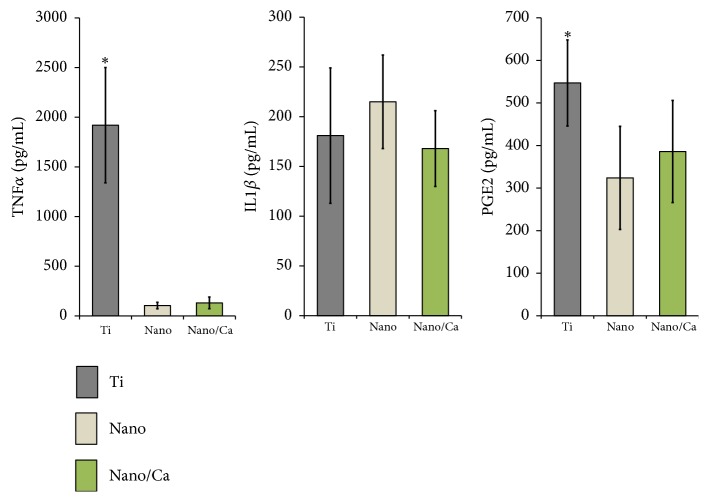
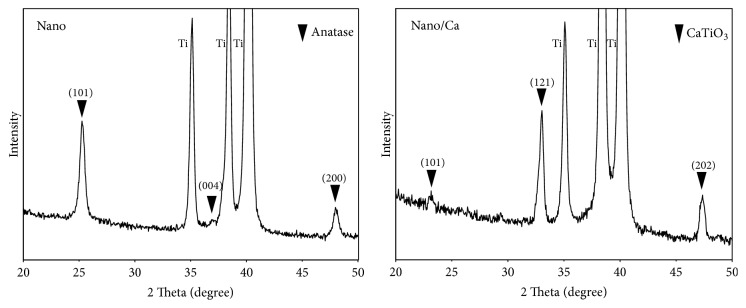
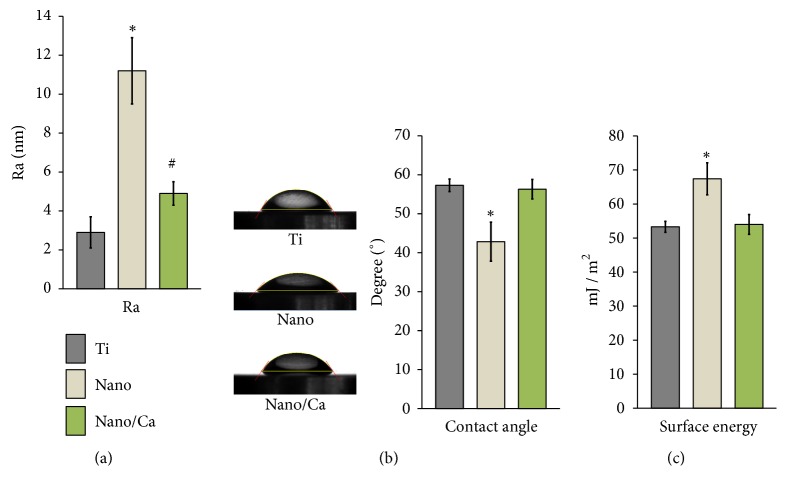
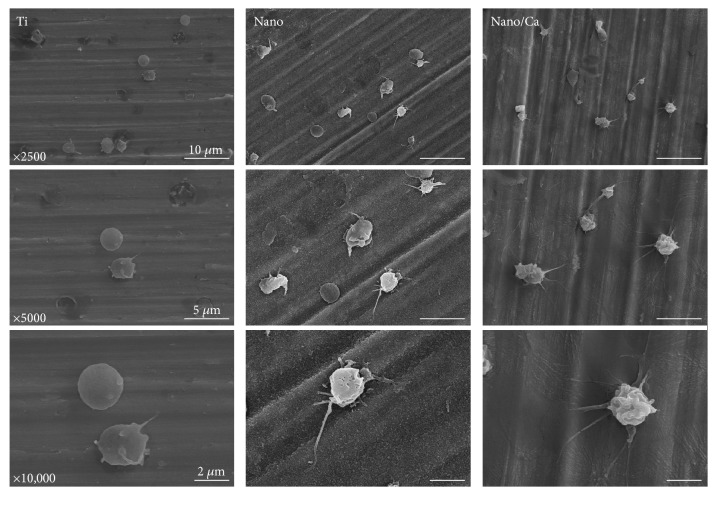
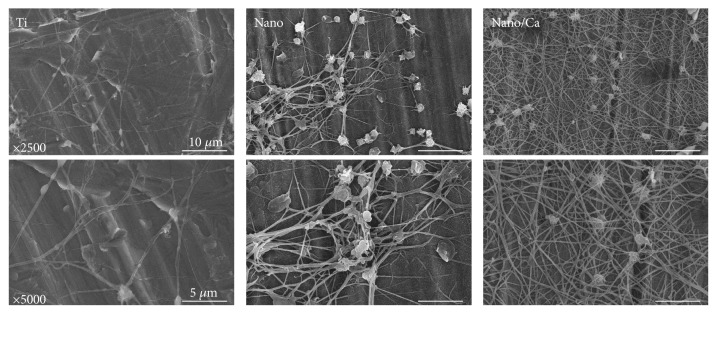
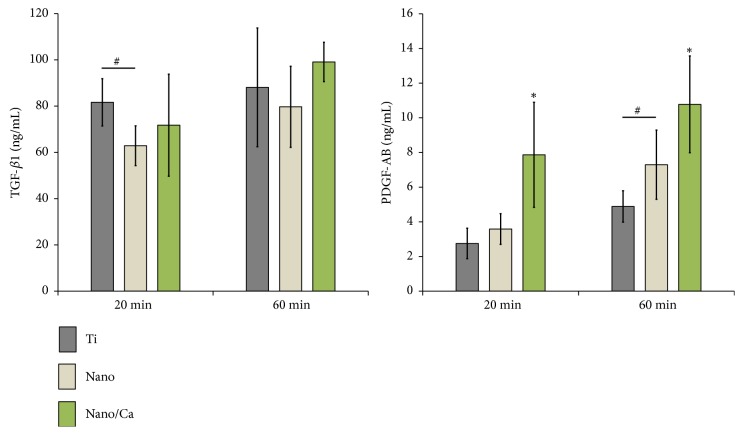
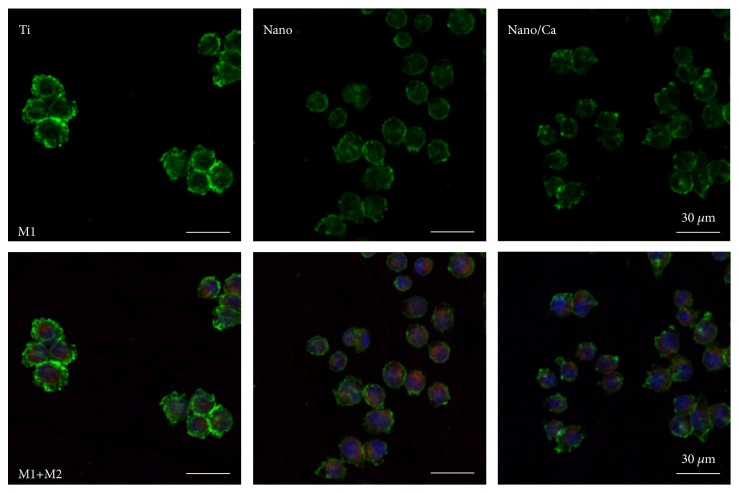
Early responses of blood platelets and immunoinflammatory cells (macrophages) to titanium (Ti) bone implants affect the subsequent biological healing of implants by modulating early tissue healing-microenvironments via the formation of temporary fibrin matrix scaffolds for stem cell migration and production of growth factors and cytokines. This study investigated the effects of nanoscale surface topography and calcium ion (Ca) modification of Ti surfaces on biocompatibility regulated by blood platelets and macrophages, for the future surface design of Ti bone implants with enhanced early osteogenic capacity. A nanostructured Ti surface with or without Ca enrichment was prepared using the hydrothermal treatment. Immediate and early functions of platelets and macrophages modulated by modified Ti surfaces were investigated by morphological observation of platelet spreading and fibrin matrix formation, platelet growth factor release, immunostaining of macrophage phenotypes, and macrophage inflammatory cytokine production. The results showed that surface nanoscale topographical modification of Ti promotes blood platelet activation and suppresses the inflammatory response of macrophages. In addition, surface chemistry modifications with Ca enhanced the platelet response-modulating function of the nanostructured Ti surface, which accelerated immediate fibrin matrix formation and platelet-derived growth factor-AB release. Thus, nanotopographical and Ca modifications of implant surfaces are expected to be effective approaches that favor the initial phase of wound healing around the Ti bone implants through positive modulation of immediate blood platelet function and early macrophage immunoinflammatory response.
血小板和免疫炎性细胞(巨噬细胞)对钛(Ti)骨植入物的早期反应通过形成临时纤维蛋白基质支架来调节干细胞迁移和生长因子和细胞因子的产生,从而影响植入物随后的生物愈合。本研究通过观察血小板的形态变化和纤维蛋白基质的形成、血小板生长因子的释放、巨噬细胞表型的免疫染色以及巨噬细胞炎症细胞因子的产生,研究了 Ti 表面纳米结构形貌和钙离子(Ca)修饰对血小板和巨噬细胞调节的生物相容性的影响,旨在为具有增强早期成骨能力的 Ti 骨植入物的未来表面设计提供依据。采用水热法制备了具有或不具有 Ca 富集的纳米结构 Ti 表面。通过观察血小板铺展和纤维蛋白基质形成、血小板生长因子释放、巨噬细胞表型的免疫染色以及巨噬细胞炎症细胞因子的产生,研究了修饰 Ti 表面对血小板和巨噬细胞即时和早期功能的调节作用。结果表明,Ti 的表面纳米形貌修饰促进了血小板的激活,抑制了巨噬细胞的炎症反应。此外,表面化学改性用 Ca 增强了纳米结构 Ti 表面对血小板反应的调节功能,从而加速了即时纤维蛋白基质的形成和血小板衍生生长因子-AB 的释放。因此,通过对即时血小板功能和早期巨噬细胞免疫炎症反应的正向调节,有望成为促进 Ti 骨植入物周围伤口愈合初始阶段的有效方法。