Virlouvet Laetitia, Avenson Thomas J, Du Qian, Zhang Chi, Liu Ning, Fromm Michael, Avramova Zoya, Russo Sabrina E
Department of Agronomy and Horticulture, University of Nebraska, Lincoln, NE, United States.
Institut Jean-Pierre Bourgin, INRA, AgroParisTech, CNRS, Université Paris-Saclay, Versailles, France.
Front Plant Sci. 2018 Jul 24;9:1058. doi: 10.3389/fpls.2018.01058. eCollection 2018.
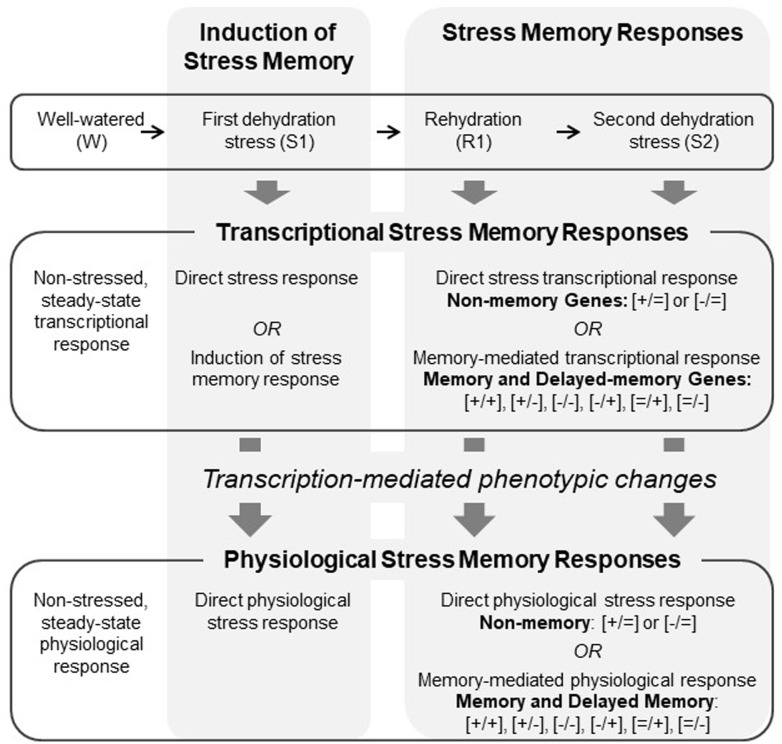
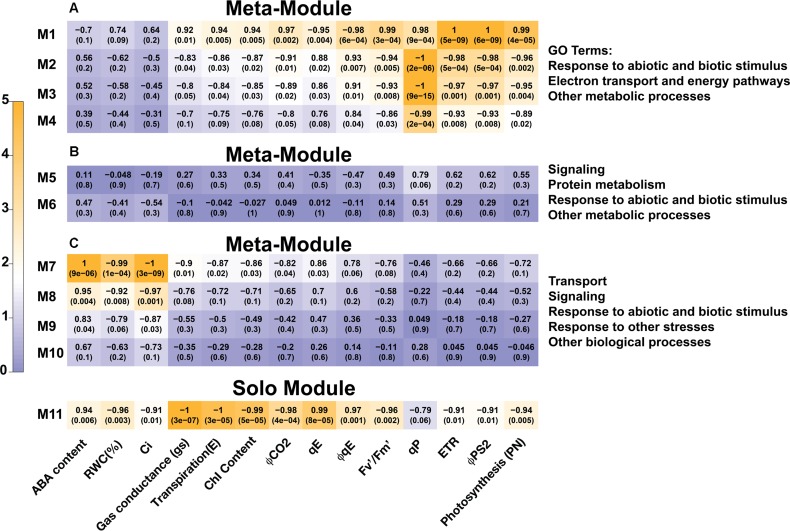
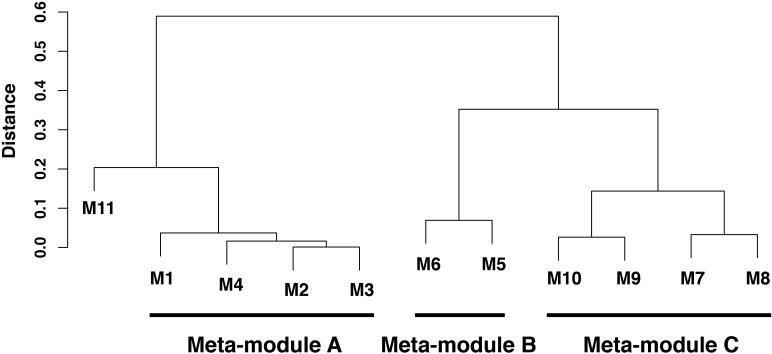
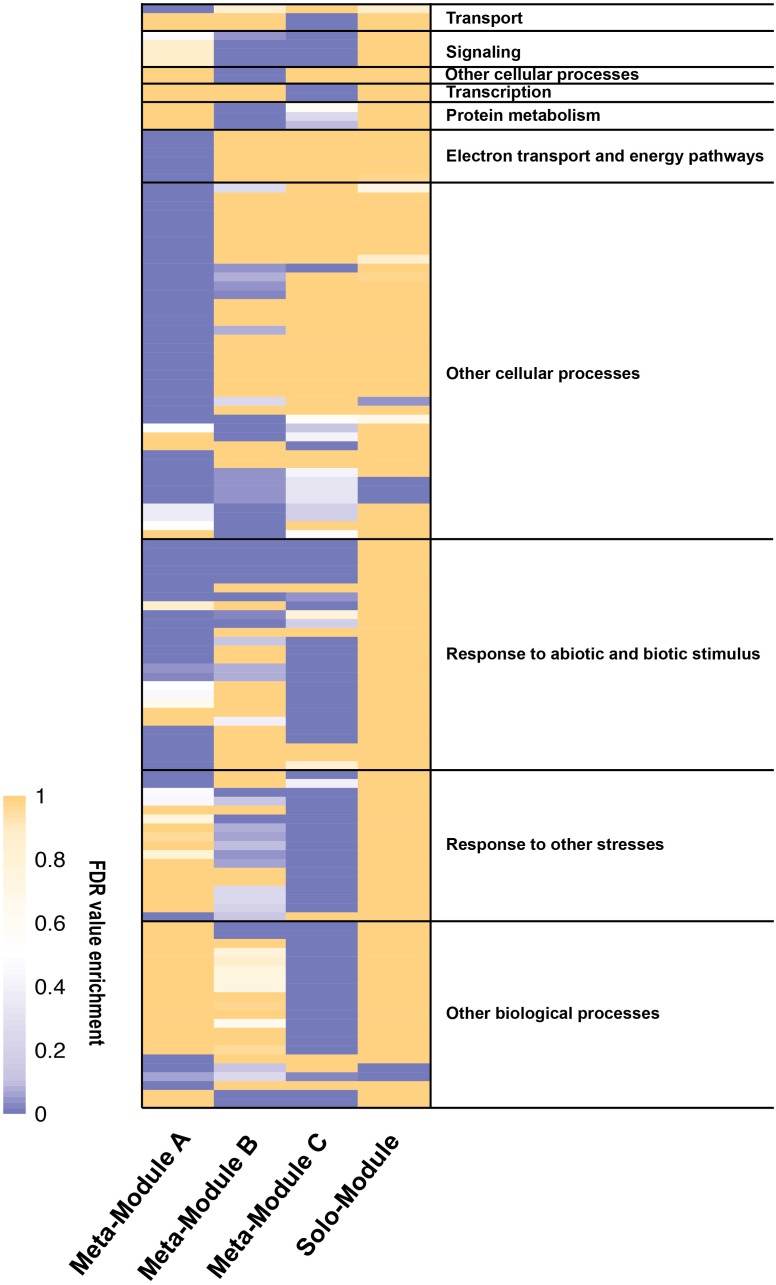
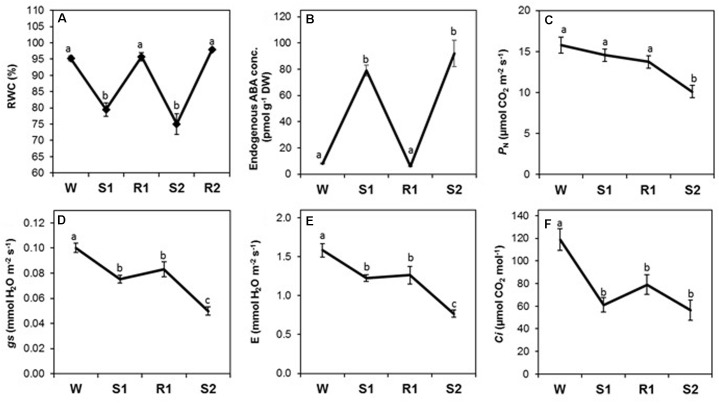
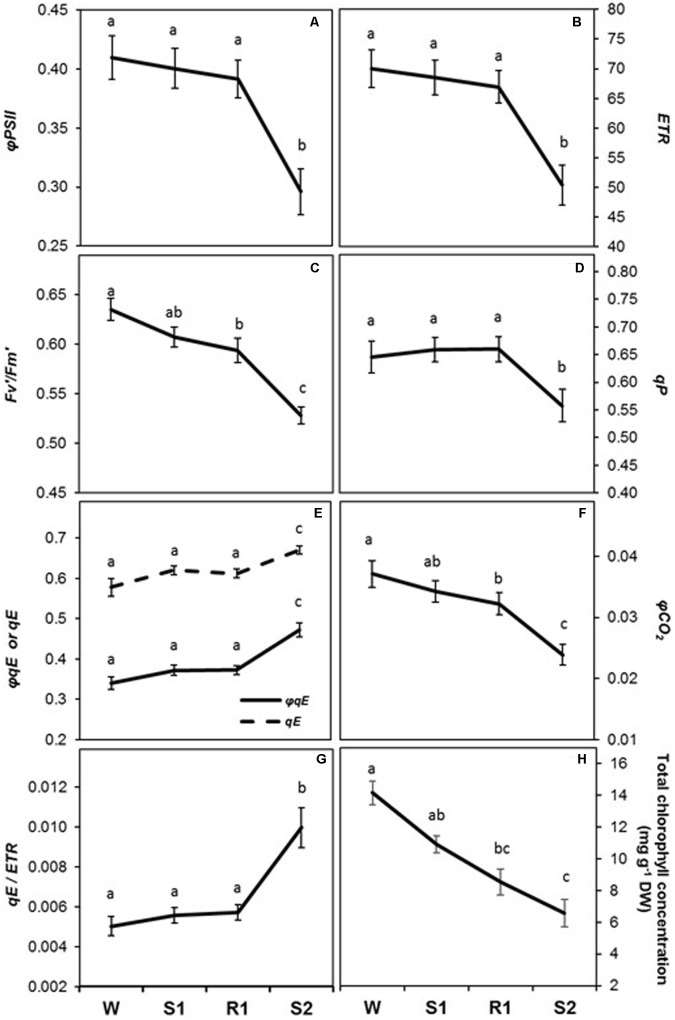
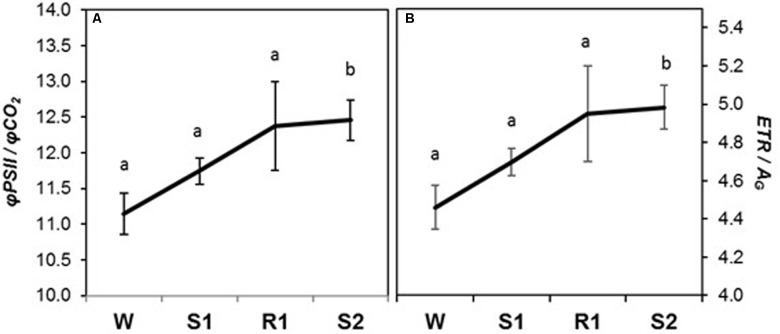
Stress memory refers to the observation that an initial, sub-lethal stress alters plants' responses to subsequent stresses. Previous transcriptome analyses of maize seedlings exposed to a repeated dehydration stress has revealed the existence of transcriptional stress memory in . Whether drought-related physiological responses also display memory and how transcriptional memory translates into physiological memory are fundamental questions that are still unanswered. Using a systems-biology approach we investigate whether/how transcription memory responses established in the genome-wide analysis of correlate with 14 physiological parameters measured during a repeated exposure of maize seedlings to dehydration stress. Co-expression network analysis revealed ten gene modules correlating strongly with particular physiological processes, and one module displaying strong, yet divergent, correlations with several processes suggesting involvement of these genes in coordinated responses across networks. Two processes key to the drought response, stomatal conductance and non-photochemical quenching, displayed contrasting memory patterns that may reflect trade-offs related to metabolic costs versus benefits of cellular protection. The main contribution of this study is the demonstration of coordinated changes in transcription memory responses at the genome level and integrated physiological responses at the cellular level upon repetitive stress exposures. The results obtained by the network-based systems analysis challenge the commonly held view that short-term physiological responses to stress are primarily mediated biochemically.
初始的亚致死应激会改变植物对后续应激的反应。先前对遭受反复脱水胁迫的玉米幼苗进行的转录组分析揭示了转录应激记忆的存在。干旱相关的生理反应是否也表现出记忆以及转录记忆如何转化为生理记忆,是尚未得到解答的基本问题。我们采用系统生物学方法,研究在对玉米幼苗反复进行脱水胁迫期间,在全基因组分析中建立的转录记忆反应是否/如何与所测量的14个生理参数相关。共表达网络分析揭示了与特定生理过程密切相关的10个基因模块,以及一个与多个过程呈现强烈但不同相关性的模块,这表明这些基因参与了跨网络的协同反应。干旱响应的两个关键过程,气孔导度和非光化学猝灭,呈现出相反的记忆模式,这可能反映了与代谢成本与细胞保护益处相关的权衡。本研究的主要贡献在于证明了在反复应激暴露下,基因组水平上转录记忆反应的协同变化以及细胞水平上综合生理反应的协同变化。基于网络的系统分析所获得的结果挑战了普遍持有的观点,即应激的短期生理反应主要由生化过程介导。