Human Performance Laboratory, Faculty of Kinesiology, University of Calgary, Calgary, Canada.
Department of Health and Physical Education, Mount Royal University, Calgary, Canada.
PLoS One. 2018 Aug 8;13(8):e0202026. doi: 10.1371/journal.pone.0202026. eCollection 2018.
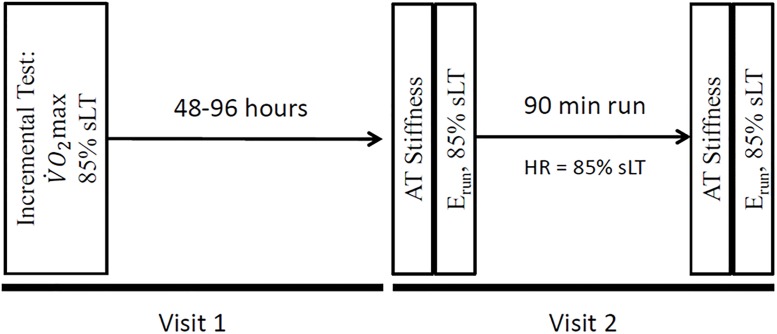
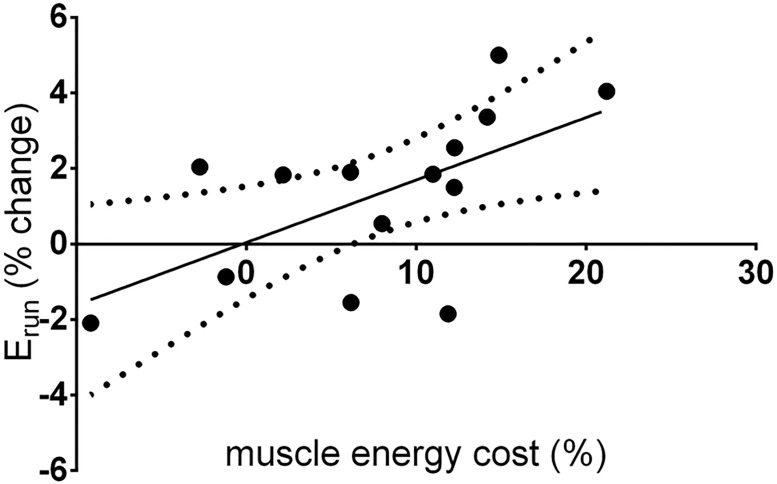
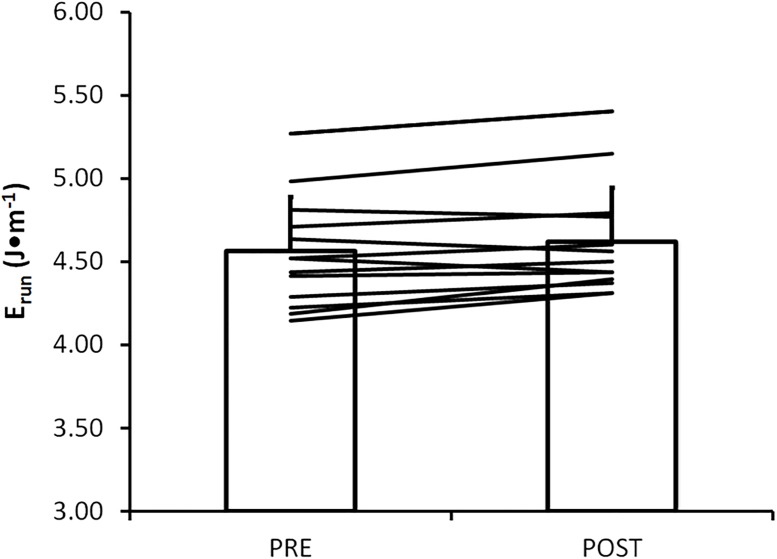
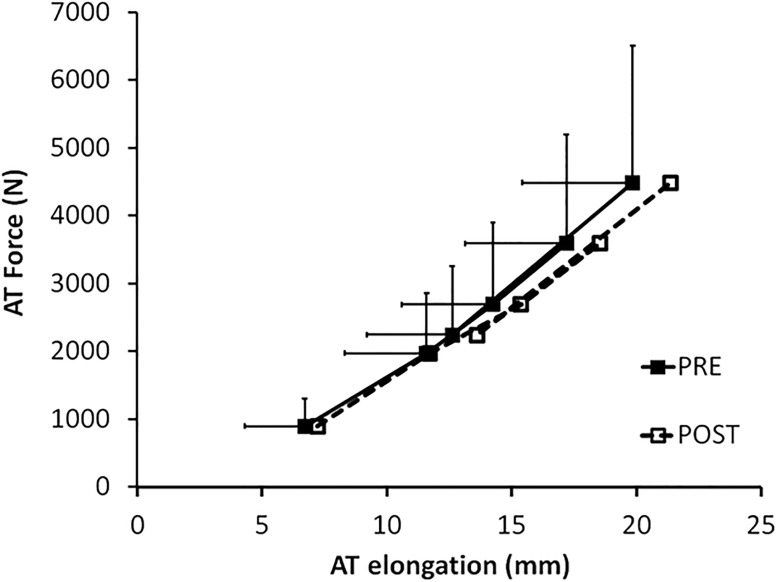
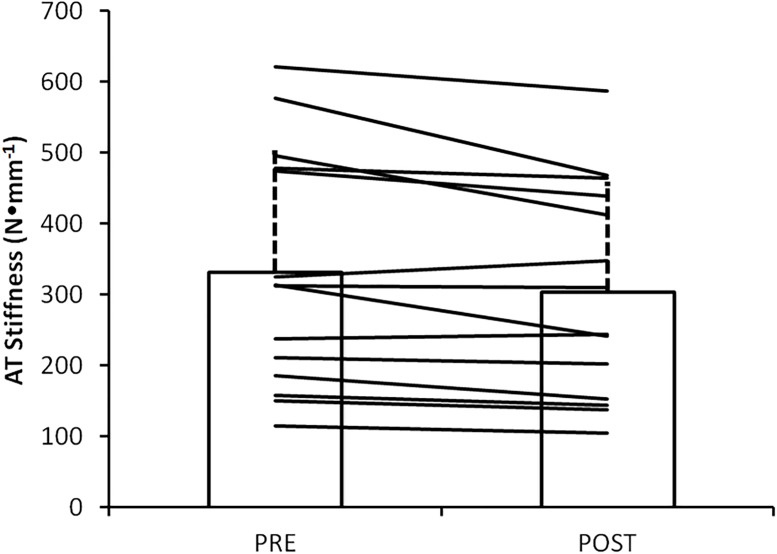
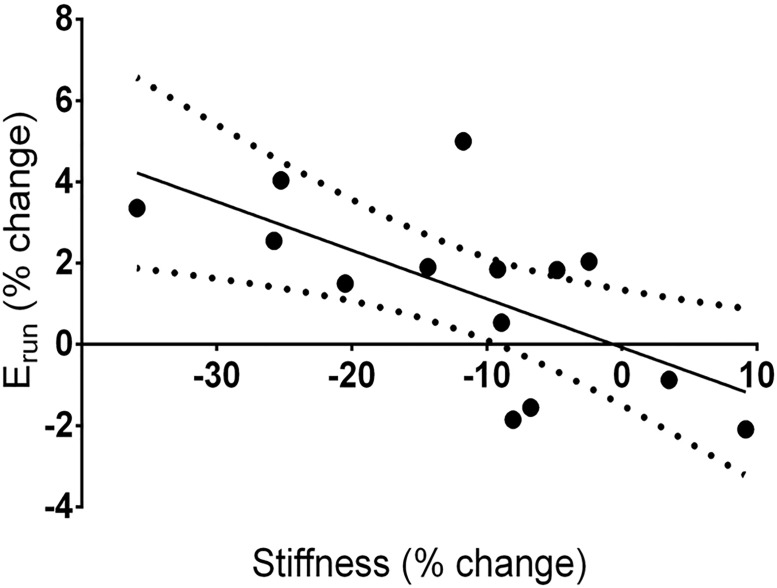
During prolonged running, the magnitude of Achilles tendon (AT) length change may increase, resulting in increased tendon strain energy return with each step. AT elongation might also affect the magnitude of triceps surae (TS) muscle shortening and shortening velocity, requiring greater activation and increased muscle energy cost. Therefore, we aimed to quantify the tendon strain energy return and muscle energy cost necessary to allow energy storage to occur prior to and following prolonged running. 14 trained male (n = 10) and female (n = 4) distance runners (24±4 years, 1.72±0.09 m, 61±10 kg, [Formula: see text] 64.6±5.8 ml•kg-1•min-1) ran 90 minutes (RUN) at approximately 85% of lactate threshold speed (sLT). Prior to and following RUN, AT stiffness and running energy cost (Erun) at 85% sLT were determined. AT energy return was calculated from AT stiffness, measured with dynamometry and ultrasound and estimated TS force during stance. TS energy cost was estimated on the basis of AT force and assumed crossbridge mechanics and energetics. Following RUN, AT stiffness was reduced from 328±172 N•mm-1 to 299±148 N•mm-1 (p = 0.022). Erun increased from 4.56±0.32 J•kg-1•m-1 to 4.62±0.32 J•kg-1•m-1 (p = 0.049). Estimated AT energy return was not different following RUN (p = 0.99). Estimated TS muscle energy cost increased significantly by 11.8±12.3 J•stride-1, (p = 0.0034), accounting for much of the post-RUN increase in Erun (8.6±14.5 J•stride-1,r2 = 0.31). These results demonstrate that a prolonged, submaximal run can reduce AT stiffness and increase Erun in trained runners, and that the elevated TS energy cost contributes substantially to the elevated Erun.
在长时间跑步过程中,跟腱(Achilles tendon,AT)长度变化的幅度可能会增加,从而导致每一步的肌腱应变能回弹性增加。跟腱伸长也可能会影响小腿三头肌(triceps surae,TS)肌肉缩短和缩短速度的幅度,需要更大的激活和增加肌肉能量消耗。因此,我们旨在量化在长时间跑步之前和之后发生能量储存所必需的肌腱应变能回弹性和肌肉能量消耗。14 名受过训练的男性(n=10)和女性(n=4)长跑运动员(24±4 岁,1.72±0.09 m,61±10 kg,[Formula: see text] 64.6±5.8 ml•kg-1•min-1)以大约 85%的乳酸阈速度(sLT)跑 90 分钟(RUN)。在 RUN 之前和之后,确定了 AT 硬度和以 85% sLT 的跑步能量消耗(Erun)。通过测力和超声测量 AT 刚度,并根据站立时的 TS 力估算 AT 能量回弹性。根据 AT 力和假设的横桥力学和能量学来估算 TS 能量消耗。在 RUN 之后,AT 硬度从 328±172 N•mm-1 降低到 299±148 N•mm-1(p=0.022)。Erun 从 4.56±0.32 J•kg-1•m-1 增加到 4.62±0.32 J•kg-1•m-1(p=0.049)。在 RUN 之后,估计的 AT 能量回弹性没有差异(p=0.99)。估计的 TS 肌肉能量消耗增加了 11.8±12.3 J•stride-1(p=0.0034),占 RUN 后 Erun 增加的很大一部分(8.6±14.5 J•stride-1,r2=0.31)。这些结果表明,长时间的亚最大强度跑步可以降低训练有素的跑步者的 AT 硬度并增加 Erun,并且升高的 TS 能量消耗对升高的 Erun 有很大贡献。