Center for Engineering in Medicine, Massachusetts General Hospital, Harvard Medical School and Shriners Hospitals for Children, Boston, Massachusetts, 02114, United States.
Department of Biomedical Engineering, Rutgers University, Piscataway, New Jersey, 08854, United States.
Nat Commun. 2018 Aug 10;9(1):3201. doi: 10.1038/s41467-018-05636-0.
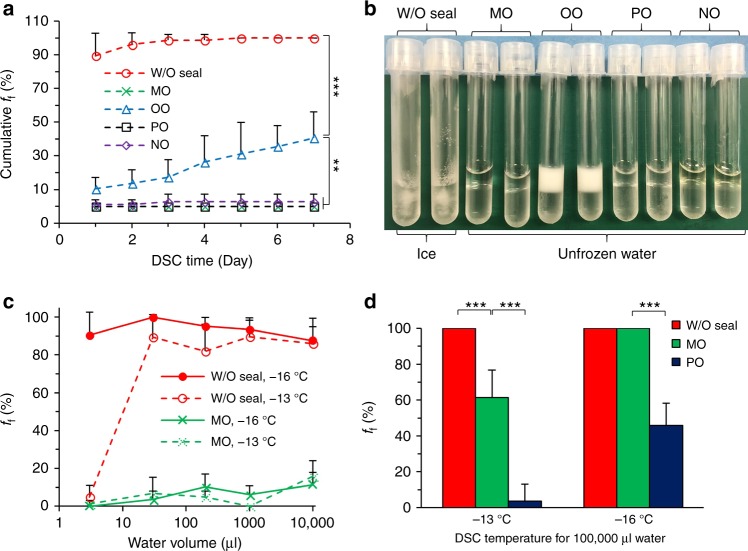
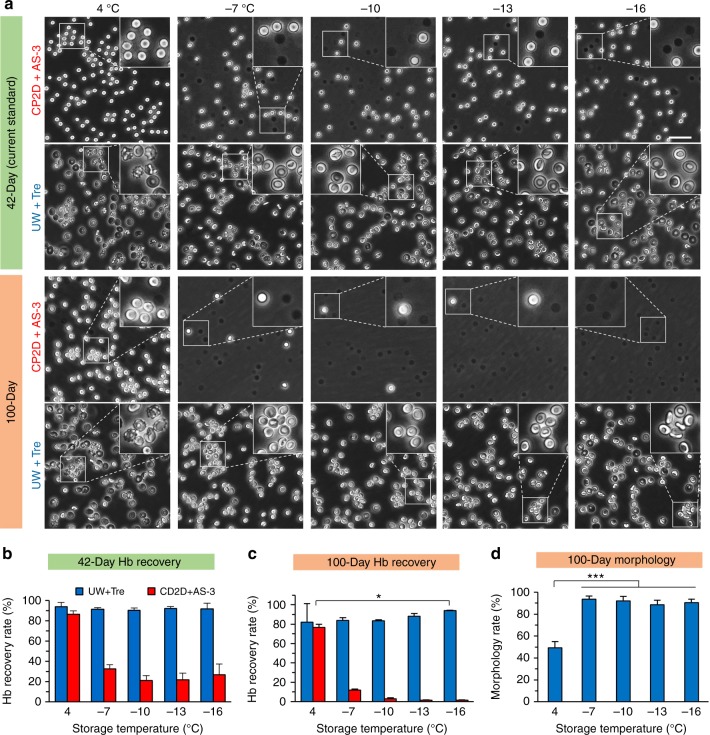
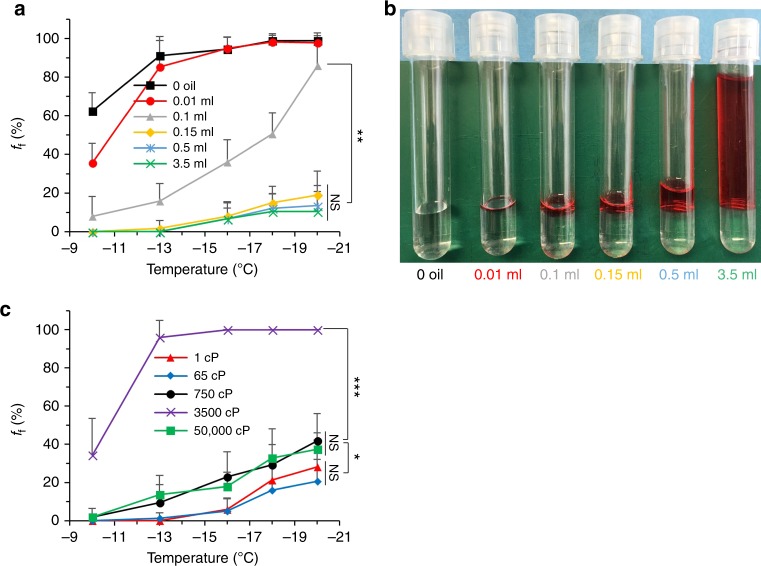
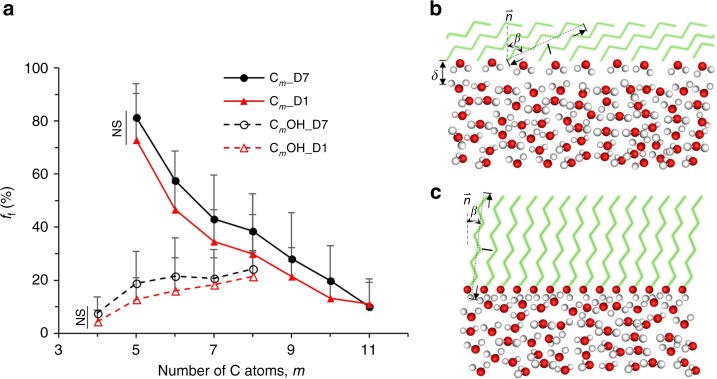
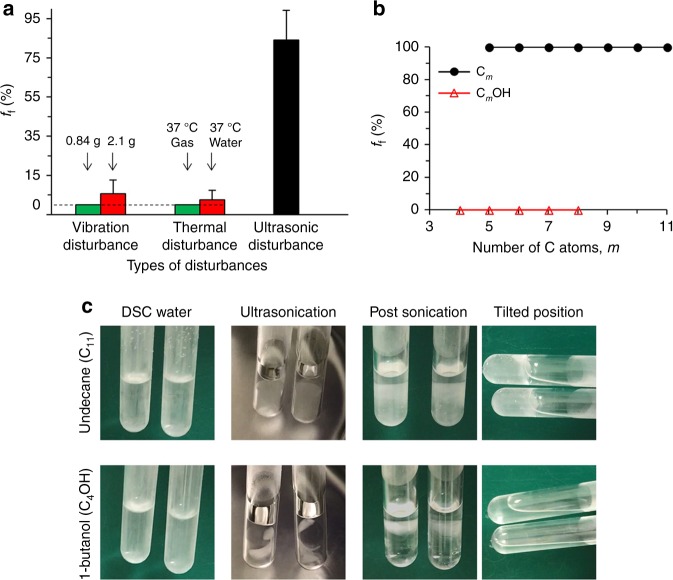
Supercooling of aqueous solutions is a fundamentally and practically important physical phenomenon with numerous applications in biopreservation and beyond. Under normal conditions, heterogeneous nucleation mechanisms critically prohibit the simultaneous long-term (> 1 week), large volume (> 1 ml), and low temperatures (< -10 °C) supercooling of aqueous solutions. Here, we report on the use of surface sealing of water by an oil phase to significantly diminish the primary heterogeneous nucleation at the water/air interface. We achieve deep supercooling (down to -20 °C) of large volumes of water (up to 100 ml) for long periods (up to 100 days) simultaneously via this approach. Since oils are mixtures of various hydrocarbons we also report on the use of pure alkanes and primary alcohols of various lengths to achieve the same. Furthermore, we demonstrate the utility of deep supercooling via preliminary studies on extended (100 days) preservation of human red blood cells.
水溶液的过冷现象是一种基础且实际重要的物理现象,在生物保存等领域有广泛的应用。在通常条件下,异质成核机制严重限制了水溶液的长时间(>1 周)、大容量(>1ml)和低温(<−10°C)过冷。在此,我们报告了通过油相来密封水的表面,从而显著减少水/空气界面处的初级异质成核。通过这种方法,我们可以同时实现大容量(高达 100ml)的水的深过冷(低至-20°C)和长时间(长达 100 天)。由于油是各种碳氢化合物的混合物,我们还报告了使用各种长度的纯烷烃和伯醇来实现这一目标。此外,我们通过对人类红细胞的延长(100 天)保存的初步研究,展示了深过冷的实用性。