Claine François, Coupeau Damien, Wiggers Laetitia, Muylkens Benoît, Kirschvink Nathalie
Veterinary Department, Faculty of Sciences, Namur Research Institute for Life Sciences (NARILIS), University of Namur (UNamur), Namur, Belgium,
Vet Med (Auckl). 2015 Jun 29;6:261-272. doi: 10.2147/VMRR.S83594. eCollection 2015.
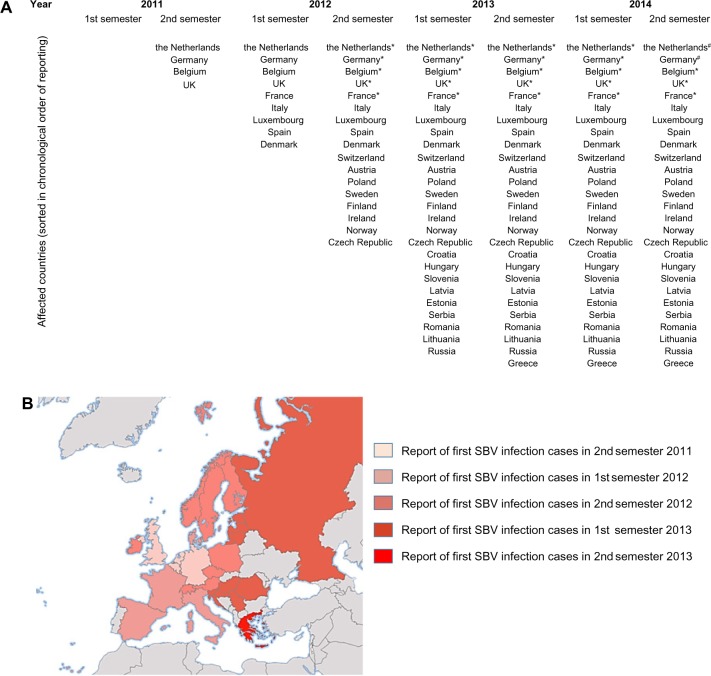
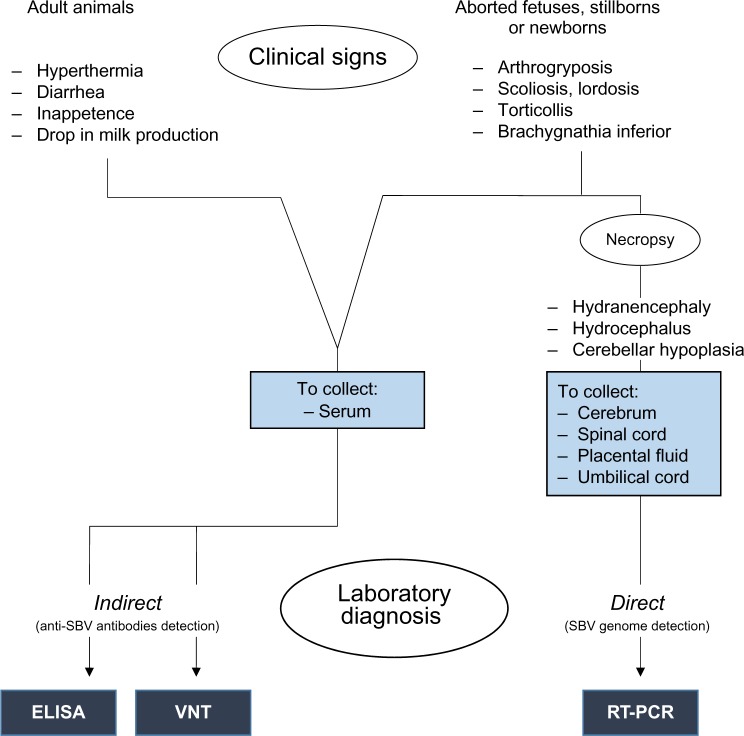
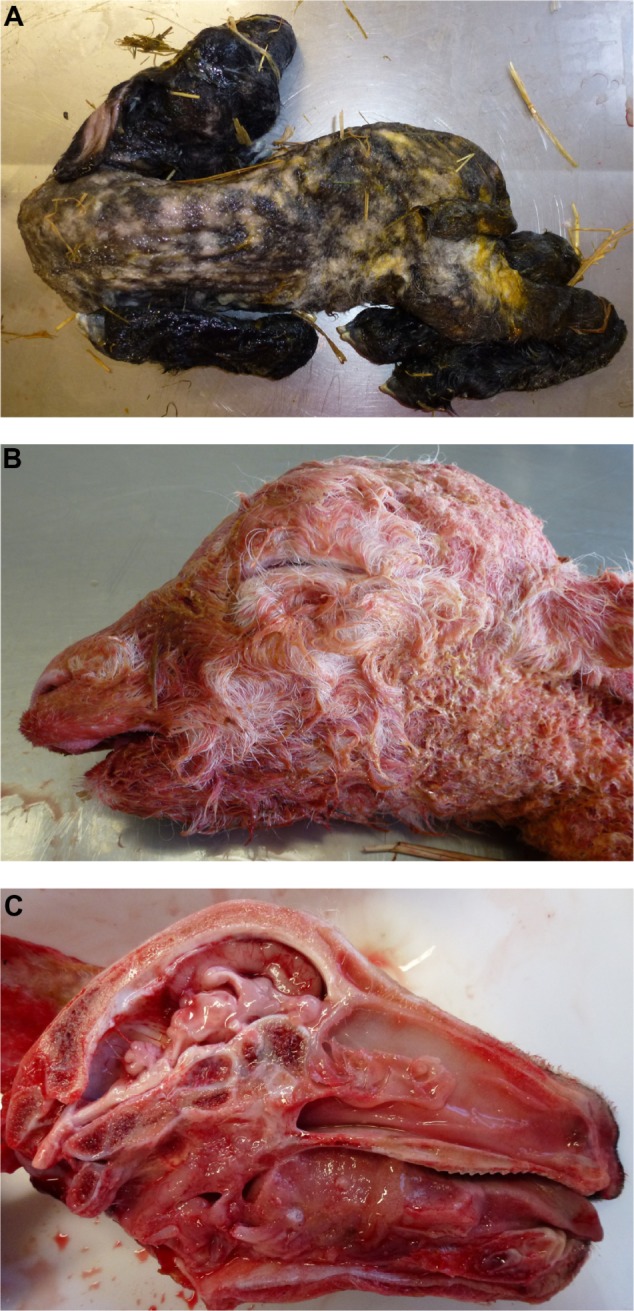
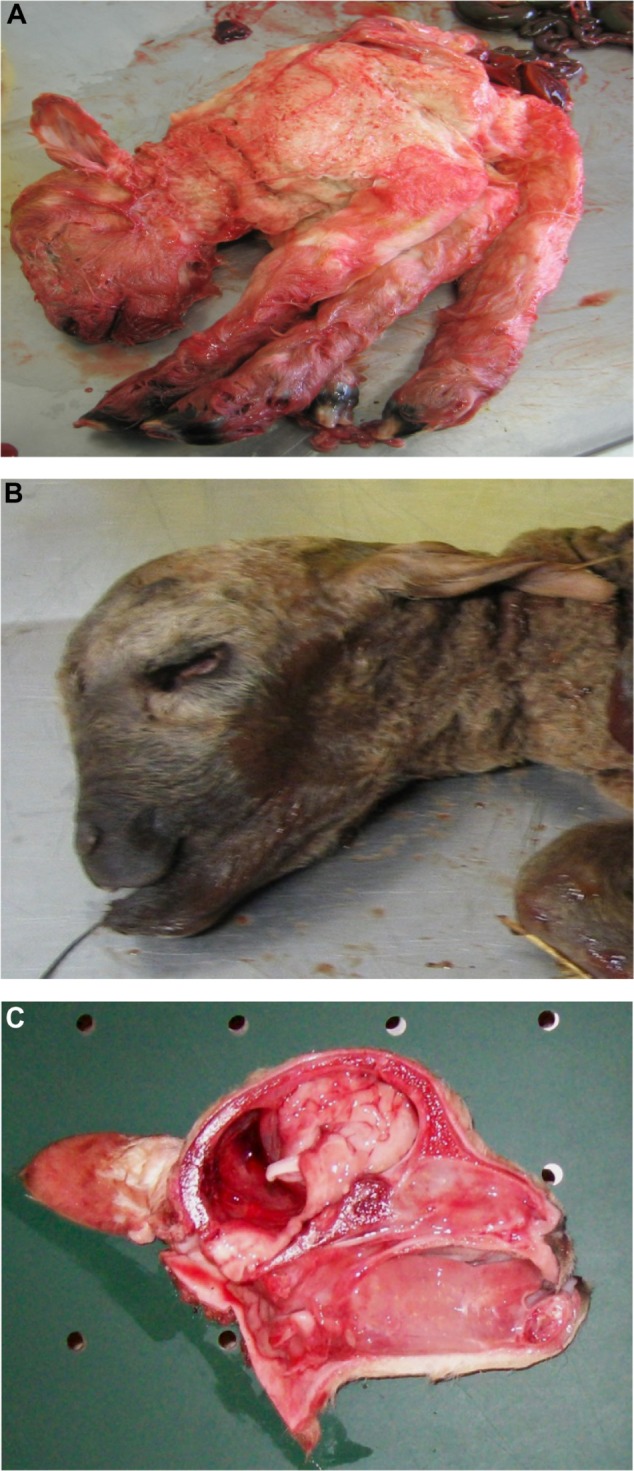
In 2011, European ruminant flocks were infected by Schmallenberg virus (SBV) leading to transient disease in adult cattle but abortions and congenital deformities in calves, lambs, and goat kids. SBV belonging to the Simbu serogroup (family Bunyaviridae and genus ) was first discovered in the same region where bluetongue virus serotype 8 (BTV-8) emerged 5 years before. Both viruses are transmitted by biting midges ( spp.) and share several similarities. This paper describes the current knowledge of temporal and geographical spread, molecular virology, transmission and susceptible species, clinical signs, diagnosis, prevention and control, impact on ruminant health, and productivity of SBV infection in Europe, and compares SBV infection with BTV-8 infection in ruminants.
2011年,欧洲反刍动物群受到施马伦贝格病毒(SBV)感染,导致成年牛出现短暂疾病,但犊牛、羔羊和山羊羔出现流产和先天性畸形。SBV属于辛布血清群(布尼亚病毒科 属),最早在5年前蓝舌病毒8型(BTV-8)出现的同一地区被发现。两种病毒均通过叮咬蠓( 属)传播,且有若干相似之处。本文介绍了欧洲关于SBV感染的时间和地理传播、分子病毒学、传播和易感物种、临床症状、诊断、预防和控制、对反刍动物健康的影响以及生产力的现有知识,并比较了反刍动物中SBV感染与BTV-8感染的情况。