Institut für Experimentelle und Klinische Pharmakologie und Toxikologie, Medizinische Fakultät, Albert-Ludwigs-Universität Freiburg, Freiburg, Germany.
Abteilung für Pharmakologie und Experimentelle Therapie, Medizinische Fakultät und ICePhA, Eberhard-Karls-Universität Tübingen, Germany.
PLoS Pathog. 2018 Aug 13;14(8):e1007248. doi: 10.1371/journal.ppat.1007248. eCollection 2018 Aug.
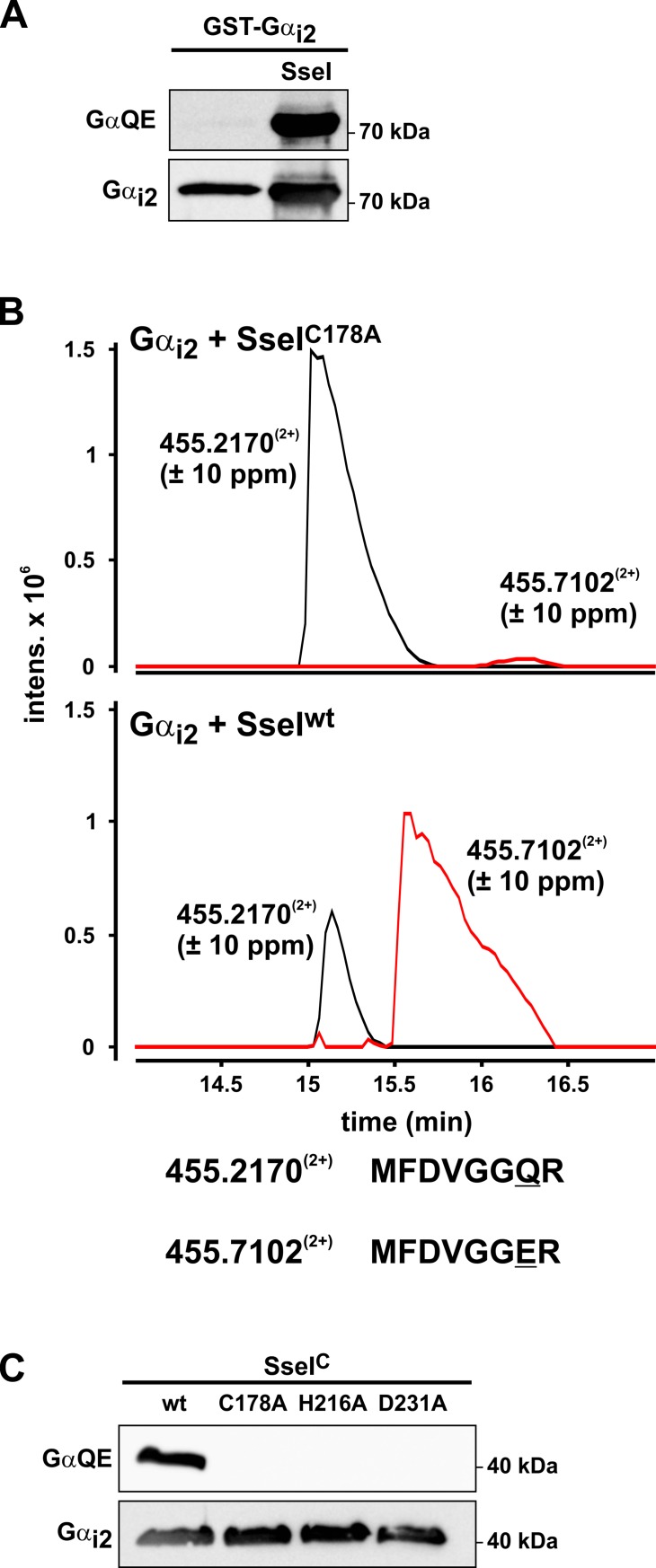
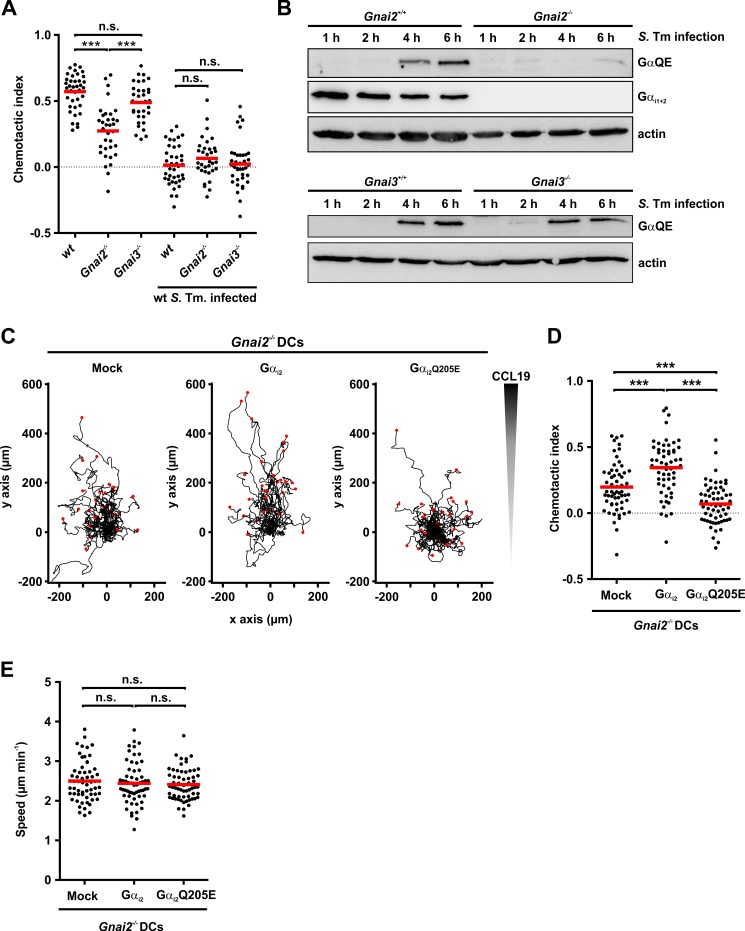
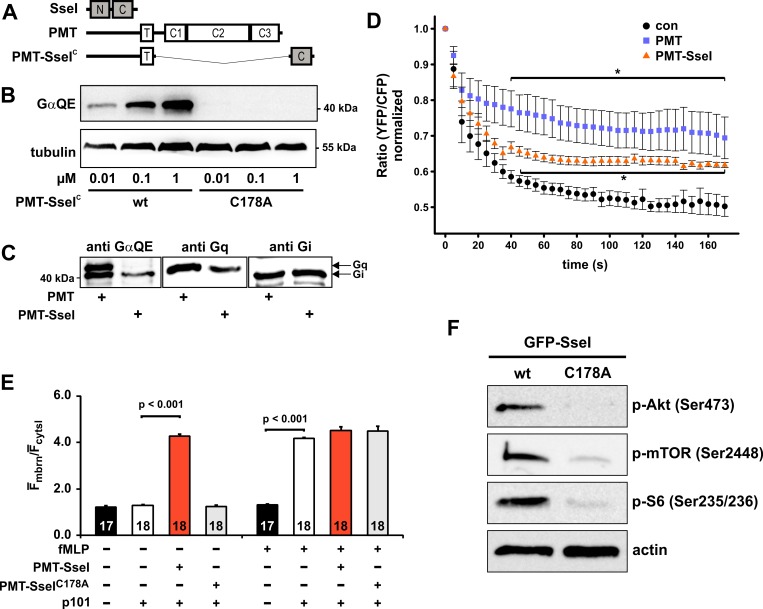
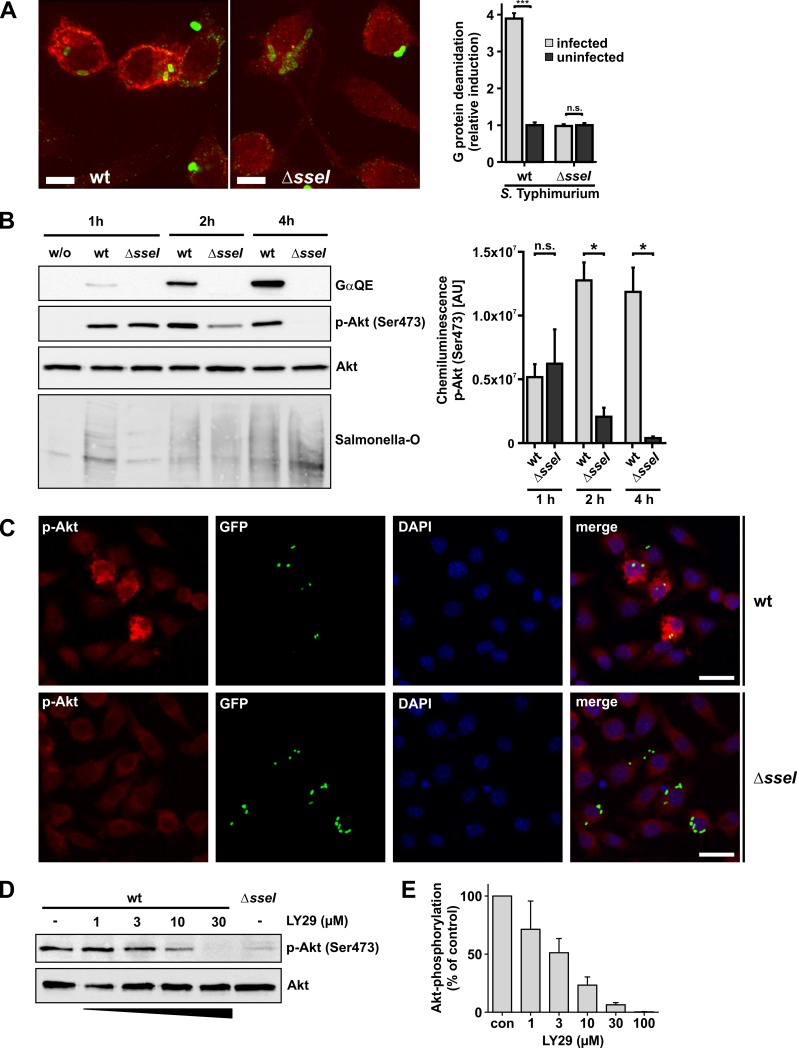
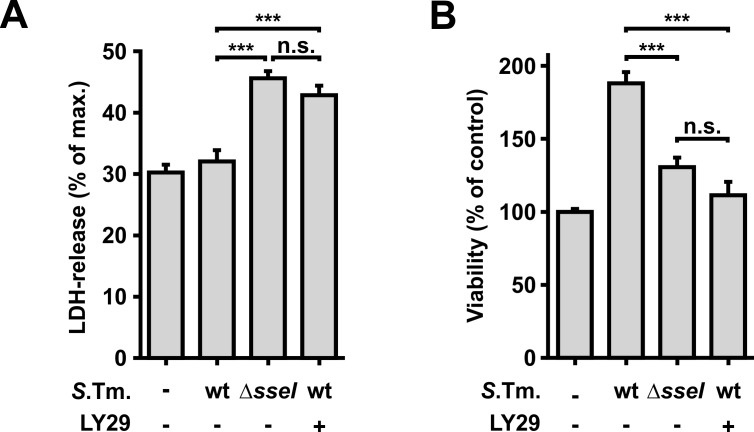
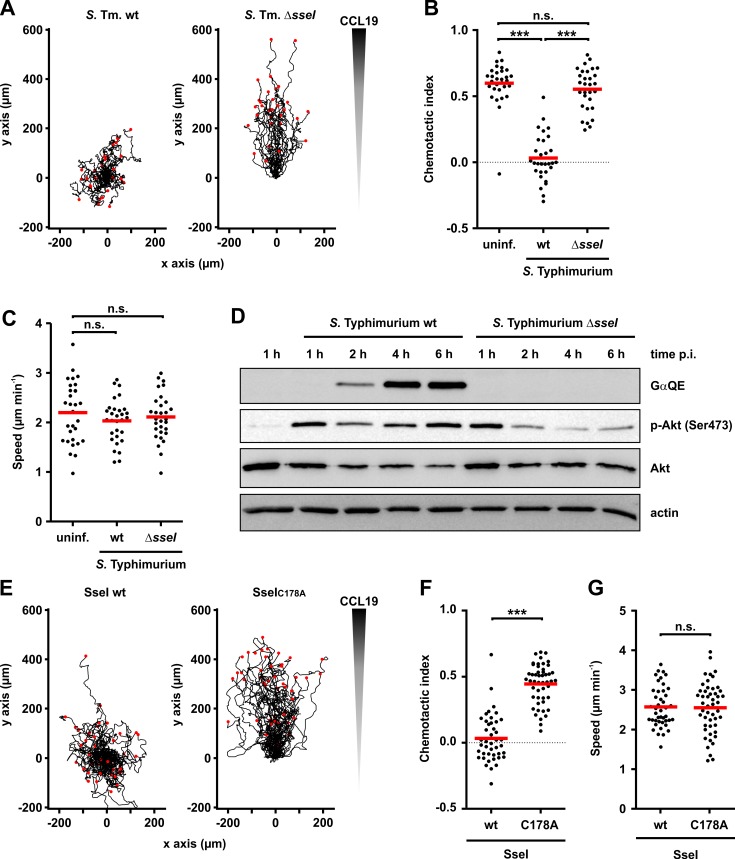
Salmonella enterica serotype Typhimurium (S. Typhimurium) is one of the most frequent causes of food-borne illness in humans and usually associated with acute self-limiting gastroenteritis. However, in immunocompromised patients, the pathogen can disseminate and lead to severe systemic diseases. S. Typhimurium are facultative intracellular bacteria. For uptake and intracellular life, Salmonella translocate numerous effector proteins into host cells using two type-III secretion systems (T3SS), which are encoded within Salmonella pathogenicity islands 1 (SPI-1) and 2 (SPI-2). While SPI-1 effectors mainly promote initial invasion, SPI-2 effectors control intracellular survival and proliferation. Here, we elucidate the mode of action of Salmonella SPI-2 effector SseI, which is involved in control of systemic dissemination of S. Typhimurium. SseI deamidates a specific glutamine residue of heterotrimeric G proteins of the Gαi family, resulting in persistent activation of the G protein. Gi activation inhibits cAMP production and stimulates PI3-kinase γ by Gαi-released Gβγ subunits, resulting in activation of survival pathways by phosphorylation of Akt and mTOR. Moreover, SseI-induced deamidation leads to non-polarized activation of Gαi and, thereby, to loss of directed migration of dendritic cells.
鼠伤寒沙门氏菌(S. Typhimurium)是人类中最常见的食源性病原体之一,通常与急性自限性肠胃炎有关。然而,在免疫功能低下的患者中,病原体可能会传播并导致严重的全身性疾病。鼠伤寒沙门氏菌是兼性细胞内细菌。为了摄取和在细胞内生存,沙门氏菌使用两种类型的 III 型分泌系统(T3SS)将许多效应蛋白转运到宿主细胞中,这两种系统都编码在沙门氏菌致病性岛 1(SPI-1)和 2(SPI-2)中。虽然 SPI-1 效应物主要促进初始入侵,但 SPI-2 效应物控制细胞内生存和增殖。在这里,我们阐明了参与控制鼠伤寒沙门氏菌全身性传播的沙门氏菌 SPI-2 效应物 SseI 的作用模式。SseI 使三聚体 G 蛋白的特定谷氨酰胺残基脱酰胺化,导致 G 蛋白持续激活。Gi 激活通过 Gαi 释放的 Gβγ亚基抑制 cAMP 的产生并刺激 PI3-激酶 γ,导致 Akt 和 mTOR 的磷酸化激活生存途径。此外,SseI 诱导的脱酰胺化导致 Gαi 的非极化激活,从而导致树突状细胞的定向迁移丧失。