
埃塞俄比亚动物源性食品中[具体物质]流行率的系统评价与荟萃分析。 (注:原文中“of ”后面缺少具体内容)
A systematic review and meta-analysis of prevalence of in foods of animal origin in Ethiopia.
作者信息
Assefa Ayalew, Bihon Amare
机构信息
Sekota Dryland Agricultural Research Center, Sekota, Ethiopia.
Semera University, College of Veterinary Medicine, Semera, Ethiopia.
出版信息
Heliyon. 2018 Aug 6;4(8):e00716. doi: 10.1016/j.heliyon.2018.e00716. eCollection 2018 Aug.
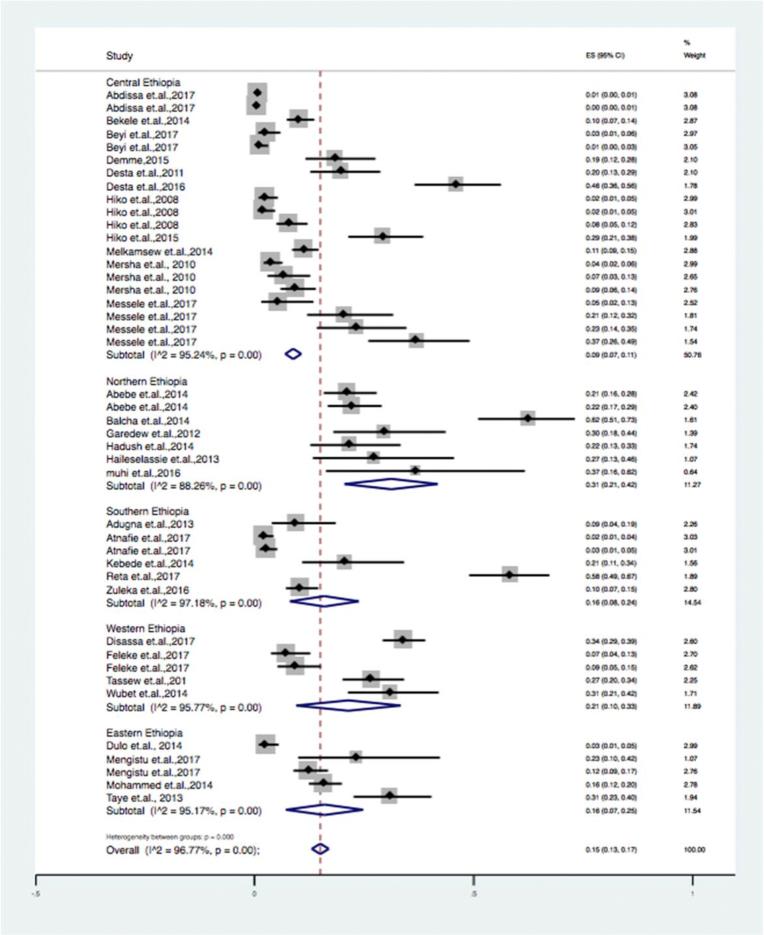
is one of the causes of gastrointestinal diseases worldwide causing millions of illness annually. The occurrence of in foods of animal origin in Ethiopia is arguably high due to many reasons like illegal slaughtering of animals in open fields, unhygienic slaughter practices in the abattoirs, and the risk of disease due to this organism is high because of a widespread tradition of raw meat consumption. The objective of this systematic review and meta-analysis was to pool estimates of the prevalence of the organism in different foods of animal origin which is the first of its kind in the country. The literature search was conducted to identify all published articles reporting the prevalence of in foods of animal origin. From all screened articles, 30 studies were eligible for final systematic review and meta-analysis. Because substantial heterogeneity was expected, random-effects meta-analyses were carried out to pool the prevalence of the organism from different foods of animal origin. The result indicated that between-study variability was high (τ2 = 0.00; heterogeneity I = 96.77% with Heterogeneity chi-square = 1298.92, a degree of freedom = 42 and a P-value of = 0.001) with the overall random pooled prevalence of 15% (95% CI = 13%-17%) in foods of animal origin. The result of meta-regression showed diagnosis method used, sample size and study year had contributed significantly to the heterogeneity of studies. This systematic review and meta-analysis showed the level of contamination of foods of animal origin in Ethiopia is high indicating the need for immediate planning of mitigation strategies and detection methods to reduce its level and impact throughout the country.
是全球胃肠道疾病的病因之一,每年导致数百万例疾病。在埃塞俄比亚,由于诸多原因,如在露天非法屠宰动物、屠宰场不卫生的屠宰做法以及由于普遍存在的生肉消费传统导致这种生物体引发疾病的风险很高,动物源性食品中该生物体的发生率可能很高。本系统评价和荟萃分析的目的是汇总该生物体在不同动物源性食品中的流行率估计值,这在该国尚属首次。进行文献检索以识别所有报告动物源性食品中该生物体流行率的已发表文章。从所有筛选的文章中,有30项研究符合最终系统评价和荟萃分析的条件。由于预期存在实质性异质性,因此进行随机效应荟萃分析以汇总该生物体在不同动物源性食品中的流行率。结果表明,研究间变异性很高(τ2 = 0.00;异质性I = 96.77%,异质性卡方 = 1298.92,自由度 = 42,P值 = 0.001),动物源性食品中总体随机汇总流行率为15%(95%可信区间 = 13%-17%)。荟萃回归结果显示,所用诊断方法、样本量和研究年份对研究的异质性有显著贡献。本系统评价和荟萃分析表明,埃塞俄比亚动物源性食品的污染水平很高,这表明需要立即制定缓解策略和检测方法,以降低其在全国的水平和影响。




 Zotero 插件